


Edwardian Silver Dressing Pot
An Edwardian silver dressing pot combines sterling silver mounts with glass bases to hold small vanities on a dressing table.
Edwardian Silver Dressing Pot
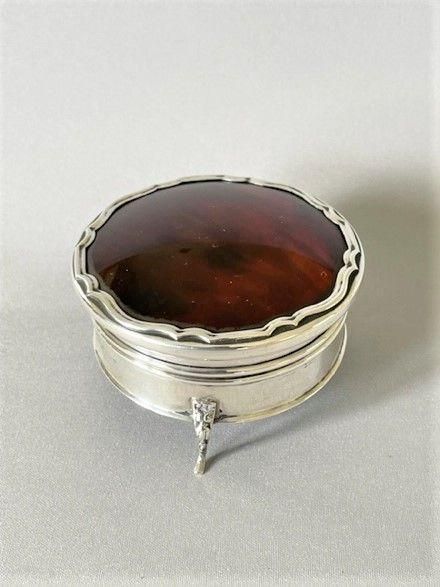
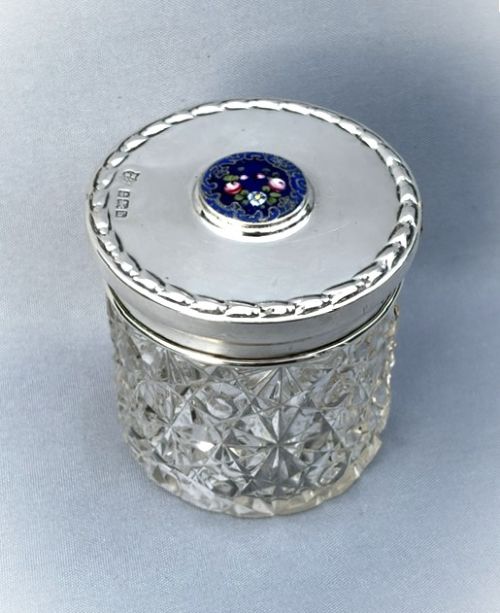
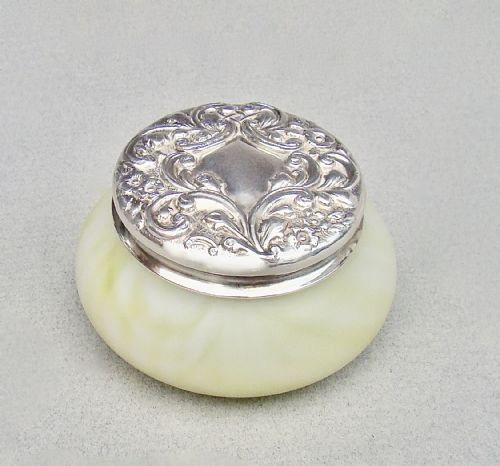
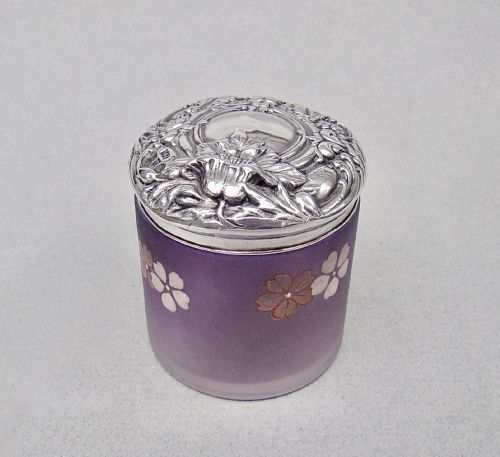
An edwardian silver dressing pot is a small container designed for a dressing table, taking the form of a trinket box, vanity jar, or pot pourri box. Most examples feature a sterling silver lid paired with a base of cut glass, cut crystal, satin glass, or coloured glass.
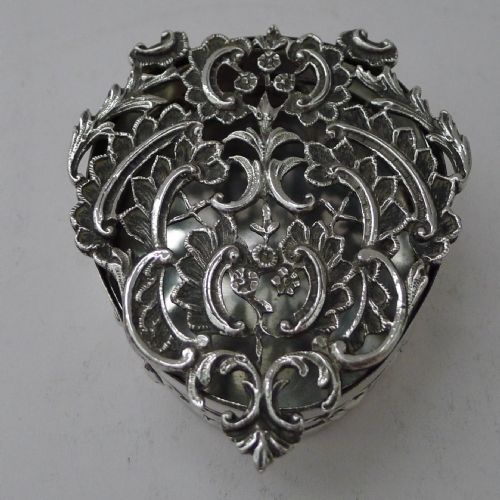
While the Edwardian period provides the core style, the selection spans from the late Victorian era through the George V period and into the Art Deco years. Forms range from simple cylindrical jars to heart-shaped boxes and spot-hammered Arts and Crafts designs.
How they were made
Makers combined sterling silver lids with heavy moulded or cut glass and crystal bases, often adding inner collars or mounts to secure the fitting. Lids frequently received surface decoration through repoussé work, spot-hammering, or engine-turning.
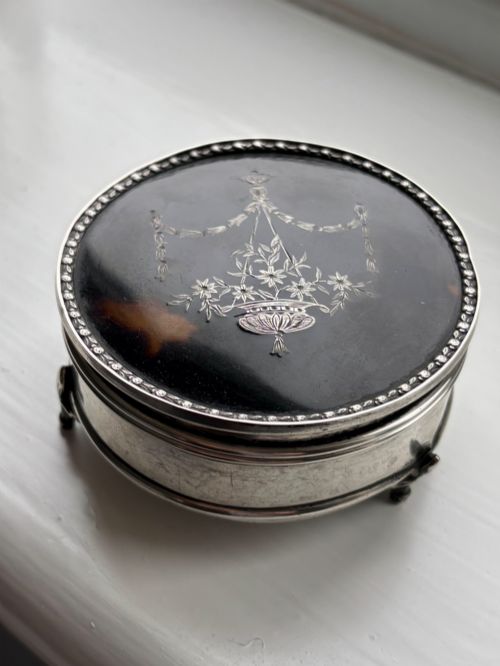
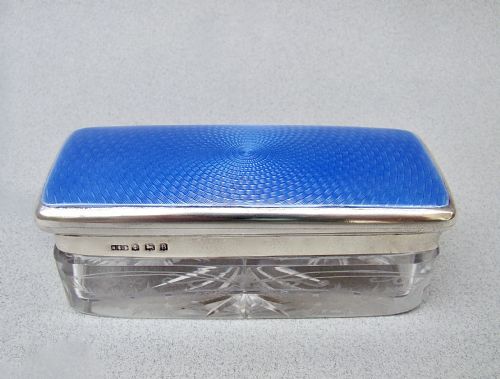
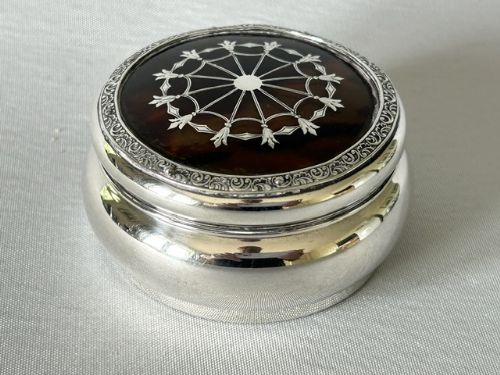
Many pieces incorporate organic and decorative inlays into the silver lids, such as enamel, guilloché enamel, tortoiseshell, faux tortoiseshell, and delicate piqué work.
Materials across these listings include sterling silver, cut crystal, tortoiseshell, enamel, and satin glass spanning the Edwardian to Art Deco periods.
What varies in quality
The weight and thickness of the sterling silver lid dictate much of the quality, alongside the depth and crispness of repoussé or spot-hammered ornamentation. Thicker silver resists denting and holds hallmarks more clearly.
The clarity and weight of the glass or crystal base also separate standard items from finer pieces, particularly where glass is deeply cut, overlaid, or paired with high-grade enamel and tortoiseshell inserts.
Ollivant and Botsford·Henry Clifford Davis·Goldsmiths and Silversmiths Company·A. Bromet and Co·Asprey and Co·William Comyns·Nathan and Hayes·Henry Williamson Ltd
The Edwardian Silver Dressing Pot Glossary
- Sterling silver
- A silver alloy containing 92.5 percent pure silver and 7.5 percent other metals, typically copper. This standard composition appears on the vast majority of British dressing table mounts.
- Guilloché enamel
- A decorative technique where a precise, intricate pattern is engraved mechanically beneath a translucent enamel layer. It frequently appears on Art Deco lids.
- Piqué work
- The practice of inlaying tiny points or pins of gold or silver into tortoiseshell or ivory. It appears on select luxury vanity boxes.
- Pot pourri box
- A specialised lidded container featuring a pierced or perforated top designed to diffuse scent from dried plant material. These share the same construction as standard trinket jars.
Edwardian Silver Dressing Pot: Frequently Asked Questions
What were dressing pots used for?
These vessels held pins, rings, cosmetics, or scented mixtures on dressing tables in bedrooms and boudoirs.
They kept small personal items organised and protected from dust in daily use.
How do I identify an Edwardian piece?
Check the hallmarks stamped on the silver lid or collar for assay office symbols and date letters corresponding to the Edwardian decade.
Stylistic cues like Art Nouveau curves or floral repoussé work also point to the period.
Are the glass bases always crystal?
Base materials vary widely between heavy cut crystal, pressed glass, satin glass, and coloured glass vessels.
Some pieces also utilise amethyst glass or cranberry glass paired with matching enamel work.
How should I clean the silver?
Use a soft cloth and a gentle silver polish designed for antique items to preserve the surface details.
Keep moisture away from tortoiseshell and enamel inserts during cleaning to prevent damage.