
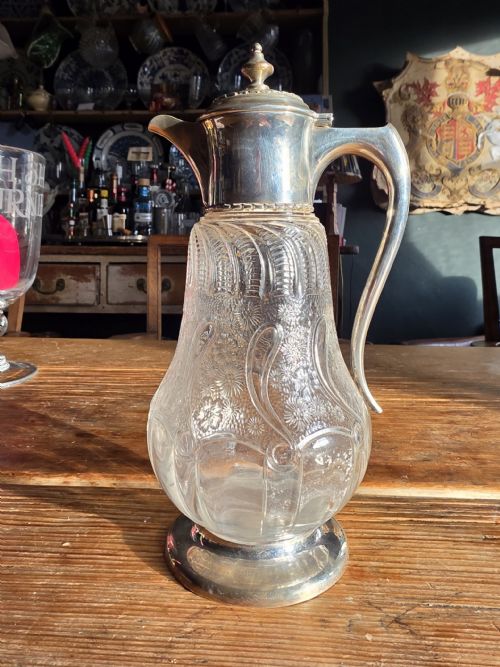
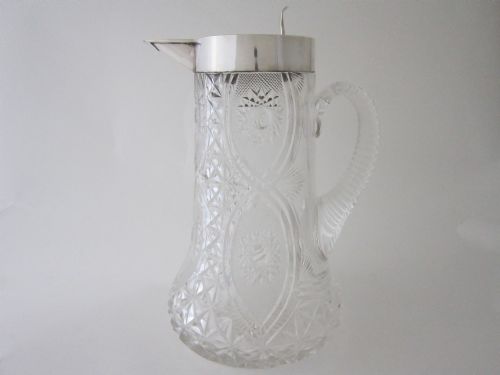
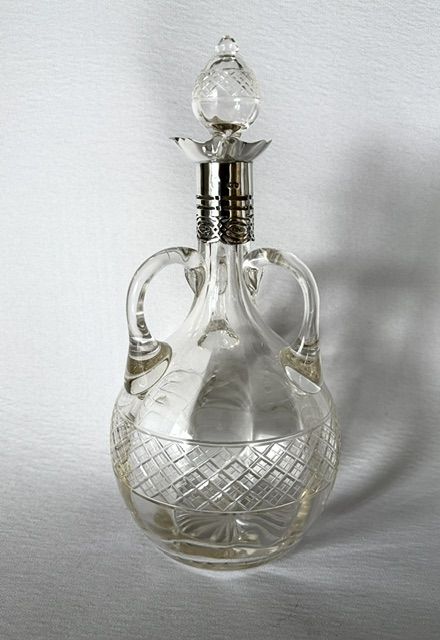
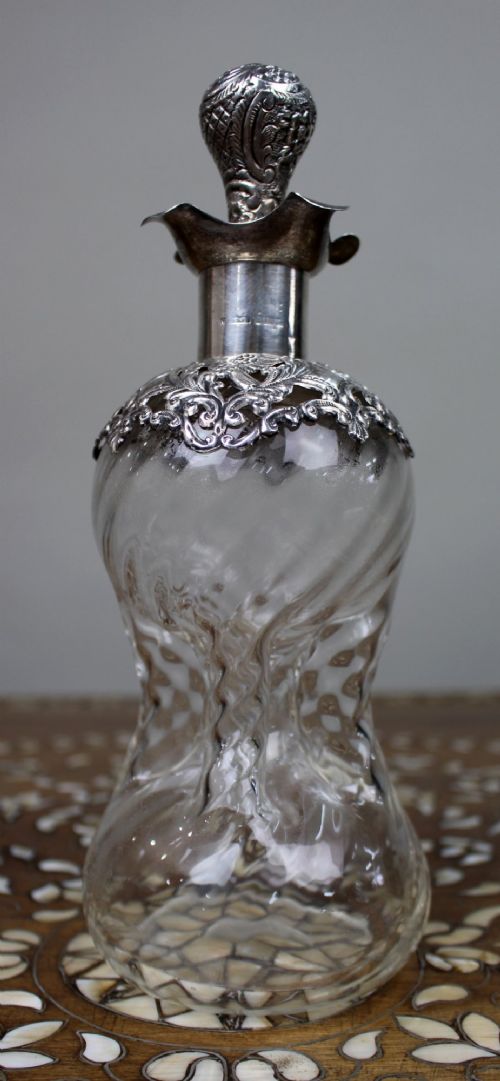
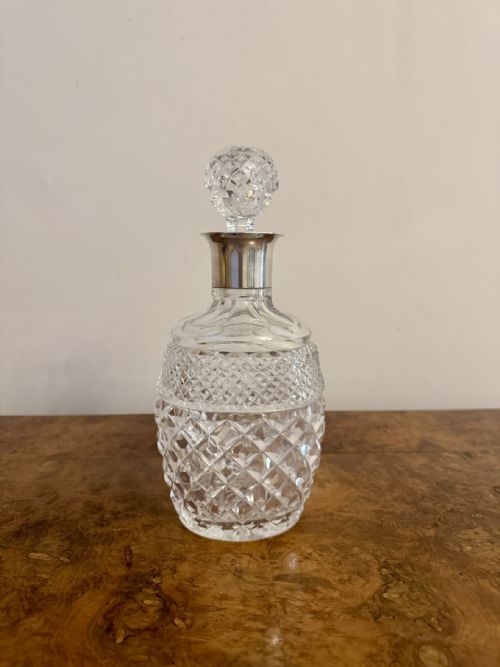
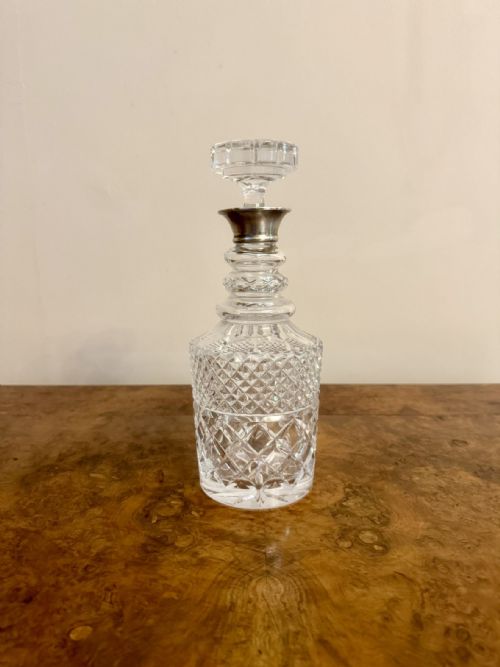


Edwardian Silver Decanter Collar
Edwardian silver decanter collars draw the eye instantly, uniting bright sterling silver mounts with heavy cut glass bodies.
Edwardian Silver Decanter Collar
An Edwardian silver decanter collar sits firmly around the neck of a glass vessel, often bearing hallmarks that date the piece precisely to the early twentieth century. You will frequently encounter these collars mounted upon cut glass decanters, spirit bottles, and claret jugs originating from the Edwardian period.
The selections span traditional forms including ships decanters, whisky noggins, and tall claret jugs alongside smaller scent bottles. While the majority belong to the Edwardian era, related examples stretch from the late Victorian period into the Art Deco years.
Materials and Construction
Makers formed these pieces by pairing sterling silver mounts with heavy cut glass, crystal, or cranberry glass bodies. Silversmiths shaped the collars to fit snugly around the glass necks, frequently adding hallmarks to verify the metal standard and assay office.
Cut glass and crystal bodies received deep geometric incisions or floral patterns to catch the light, while specialised items incorporated hinged lids, locking mechanisms, or associated silver labels.
Some adventurous bottles take the form of a Scottish thistle or a locking spirit decanter to keep the household port safe from thirsty guests.
Judging Quality
Quality rests upon the crispness of the glass cutting and the weight of the silver collar. Superior examples display deep, sharp facets on the crystal and substantial silver mounts that fit the glass neck securely.
The presence of clear hallmarks, original stoppers, and well-known maker marks elevates an item, whereas thin metal or worn glass facet work shifts a piece toward the simpler end of the range.
William Comyns·Archibald Knox for Liberty·Barnsley and Co·William Davenport·Hukin and Heath
The Edwardian Silver Decanter Collar Glossary
- Hallmark
- Official stamps pressed into the silver that indicate the metal standard, assay office, and year of manufacture. These tiny marks provide the primary evidence for dating an antique piece.
- Claret Jug
- A tall pouring vessel designed specifically for serving red wine, typically featuring a handle and a hinged silver mount across the rim and neck.
- Whisky Noggin
- A small spirit decanter or single-serving jug popular during the Edwardian period, often accompanied by a matching silver label.
- Ships Decanter
- A bottle with a wide, heavy base designed to prevent tipping on the rolling tables of a ship at sea.
Edwardian Silver Decanter Collar: Frequently Asked Questions
What is an Edwardian silver decanter collar?
An Edwardian silver decanter collar is the metal band fitted around the neck of a glass bottle, holding the opening secure. These collars are typically made of sterling silver and date from the early twentieth century.
They appear on various vessels including claret jugs, whisky noggins, and scent bottles. The silver mount frequently carries hallmarks showing the exact year and assay office of production.
How do I date a silver decanter collar?
Dating relies primarily upon the hallmarks stamped directly into the silver mount. These official marks record the assay office, silver standard, and a date letter corresponding to a specific year.
Style also offers clues, as Edwardian pieces often share specific decorative motifs with Victorian and later Art Deco designs. Comparing the cut glass pattern alongside the silver marks confirms the era.
Were decanter collars made for everyday use?
These pieces were designed for formal dining and entertaining in affluent Edwardian homes. They held spirits and wines safely while adding bright metal accents to the dinner table.
Today they function both as decorative dining accessories and practical containers for serving port, whisky, and claret. Careful handling ensures the silver mount and glass body remain intact during use.
How do I care for silver and glass?
Cleaning requires gentle washing of the glass body by hand while avoiding harsh polishes on the silver collar. Polish cloths should be used sparingly around the silver to prevent abrasive contact with the glass.
Stoppers should be stored separately or removed when not in use to prevent sticking. Keeping the pieces away from extreme temperature changes protects both the metal and the crystal.