



Edwardian Silver Christening
These edwardian silver christening pieces are solid sterling gifts and presentation items intended to mark a child's birth or baptism.
Edwardian Silver Christening
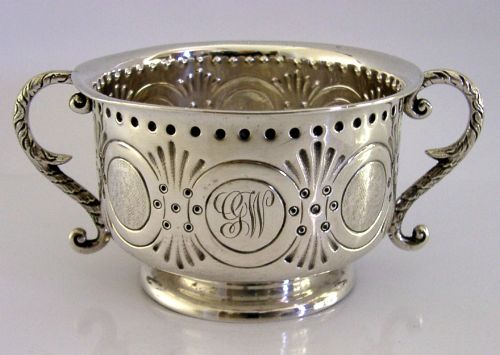
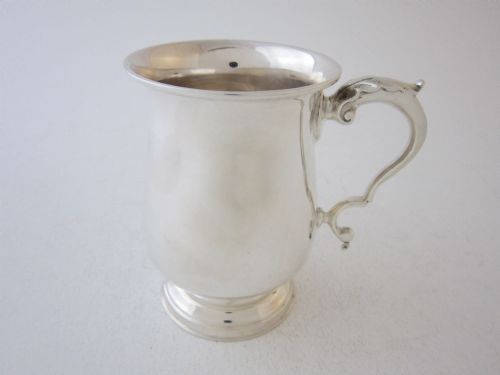
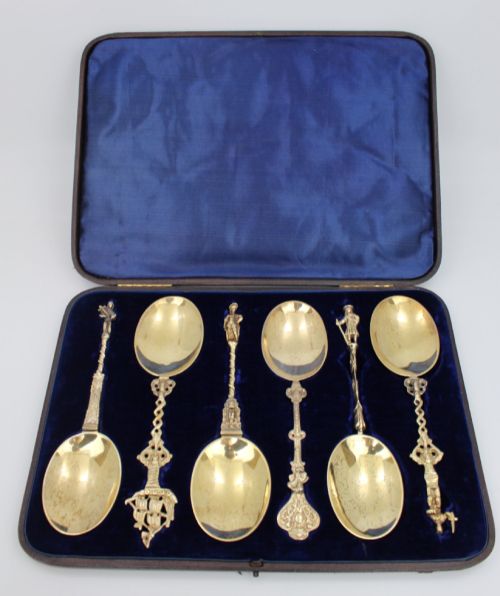
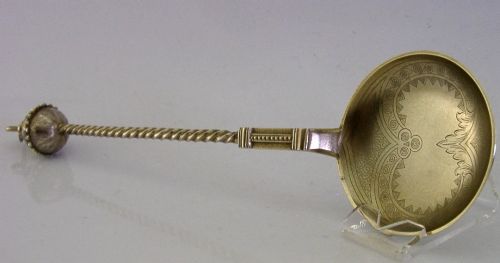
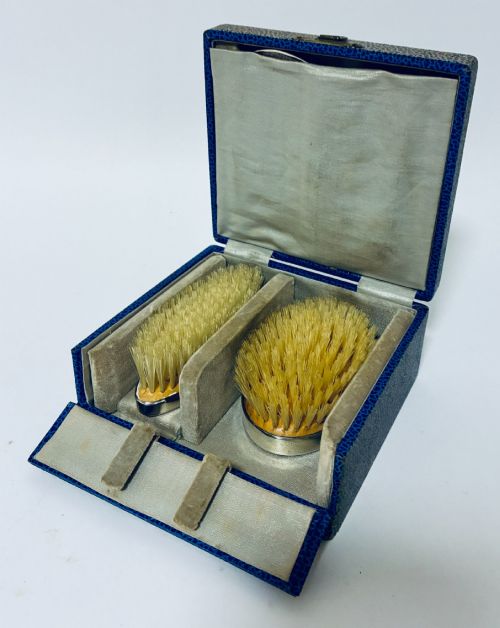
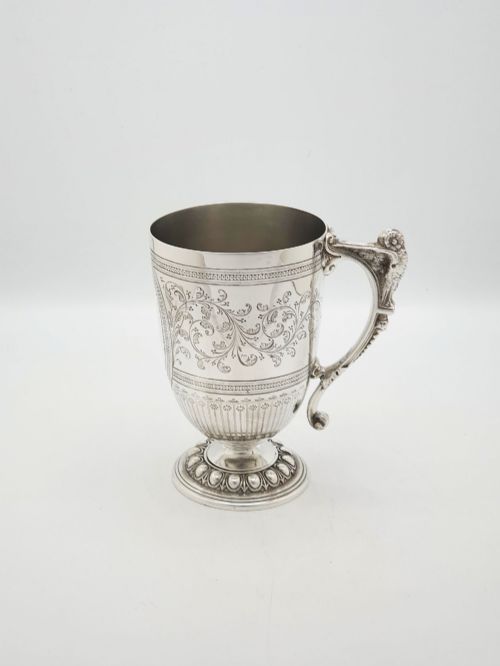
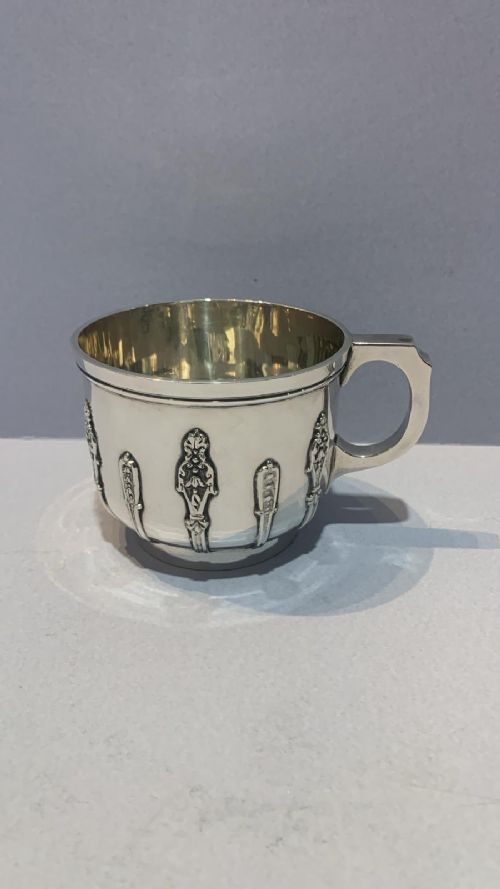
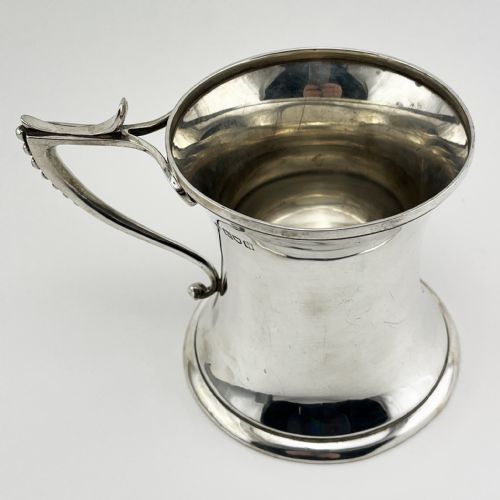
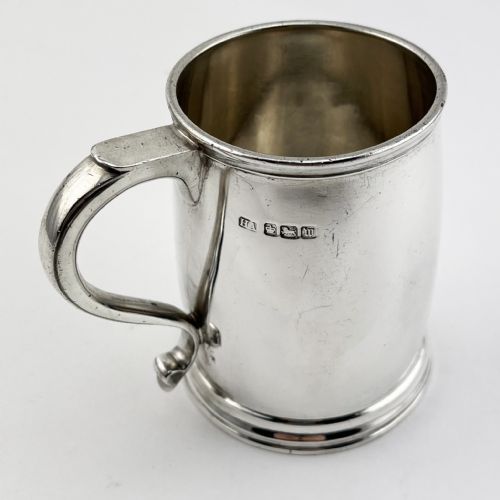
When you search for edwardian silver christening items, you encounter a selection of solid silver mugs, porringers, cutlery sets and baptismal spoons dating primarily from the early twentieth century alongside adjacent Victorian and George V examples. The most common forms on this page are christening mugs and boxed cutlery sets, often featuring traditional scroll handles or fitted presentation cases lined with silk and velvet.
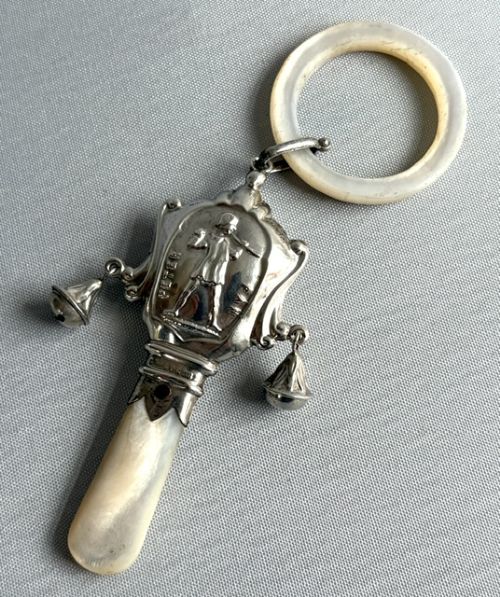
Makers and retailers of the period produced both individual presentation pieces and matching sets designed to be kept as lifelong keepsakes. Alongside standard sterling mugs and spoons, the selection includes specialised items such as Apostle spoons, silver-gilt baptism spoons, napkin rings and even novelty pieces incorporating mother-of-pearl teothers.
While the majority of items align with the Edwardian era and the reign of George V, occasional pieces stretch back into the late Victorian period or forward to mid-century designs. Forms range from simple circular porringers and tankards with owl handles to ornate reproduction bowls modelled on seventeenth-century prototypes.
How they were made
The objects are constructed predominantly from sterling silver and solid silver-gilt, utilising traditional silversmithing techniques such as raising, spinning and casting for handles and mounts. Many items bear hallmarks indicating manufacture in regional assay offices including Birmingham and Chester, alongside pieces bearing the marks of prominent retailers and makers.
Presentation presentation items often incorporate fitted containers constructed from wood or card covered in leather, leatherette, silk and velvet to protect the polished metal within. Decorative details range from simple planished surfaces characteristic of the Arts and Crafts style to cast figural elements and intricate parcel-gilt finishes.
Edwardian Silver Christening Retail Price Guide 2026
Typical asking prices for edwardian silver christening among the pieces listed under this phrase on Sellingantiques today, from the lower quarter to the upper quarter. They describe what is for sale here now, not the wider market.
Listings span the late Victorian period through the Edwardian era and into the mid-twentieth century, utilising sterling silver, silver-gilt, leather and silk.
What varies in quality
Quality in these pieces is determined by the weight of the metal, the crispness of the hallmarks and the skill involved in any hand-chased decoration or cast attachments. Substantial gauge silver mugs and heavy porringers demonstrate a higher standard of manufacture than lighter, mass-produced alternatives.
The integrity of the original fitted case also influences the overall character of a set, particularly when the internal silk and velvet linings remain clean and intact alongside matching cutlery or spoons. Maker attribution plays a significant part, with pieces originating from established workshops or renowned retailers commanding particular interest.
Asprey·Deakin & Francis·Tiffany & Co
The Edwardian Silver Christening Glossary
- Porringer
- A shallow two-handled bowl used historically for porridge or broth, often chosen as a christening gift. These vessels frequently feature pierced or scroll handles and a circular body.
- Silver-gilt
- Silver that has been coated with a thin layer of gold on its surface, also known as vermeil. This technique imparts a rich golden hue to spoons and bowls.
- Apostle spoon
- A spoon featuring the figure of an apostle or saint cast on the terminal of the handle. Sets of these spoons were traditional gifts for christenings.
- Hallmark
- An official mark stamped on precious metals to indicate the standard of purity, the assay office, and the year of manufacture. British silver relies on these stamps to establish date and origin.
- Planished
- A metal surface finish showing the controlled, flat hammer marks left by the silversmith. This texture is frequently seen on Arts and Crafts style silver.
Edwardian Silver Christening: Frequently Asked Questions
What is a silver christening mug used for?
These mugs served as traditional gifts presented to a child upon their birth or baptism, intended to be kept as a lifelong keepsake rather than for everyday use.
Over generations, many families displayed them on sideboard shelves or utilised them purely for ceremonial display rather than dining.
How do I identify an Edwardian silver piece?
You identify the period by examining the hallmarks stamped on the silver, which record the assay office and date letter corresponding to the early twentieth century.
Stylistic indicators such as restrained Edwardian ornamentation or Arts and Crafts influence also help distinguish these items from Victorian or later productions.
Why are some spoons gilt?
Silver-gilt or parcel-gilt spoons have a micro-layer of gold applied to the surface to enhance the appearance and protect the silver from tarnishing.
This finish was frequently applied to Apostle spoons and serving items to create a rich contrast between the polished gold and silver elements.
Are christening sets always boxed?
Many surviving sets retain their original fitted presentation cases lined with silk and velvet, designed specifically to protect the spoons or mugs during storage.
However, individual items like mugs or porringers were often given unboxed or have simply become separated from their original containers over time.