






Edwardian Silver Burner
An edwardian silver burner brings genuine elegance to a table, combining practical warmth with the fine craftsmanship of the early twentieth century.
Edwardian Silver Burner
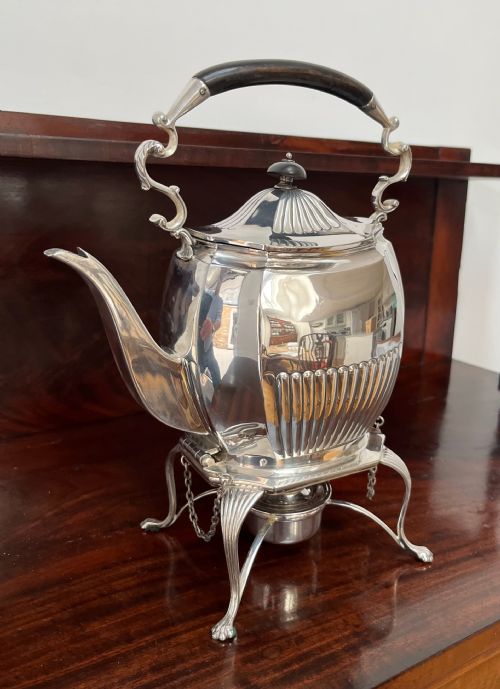
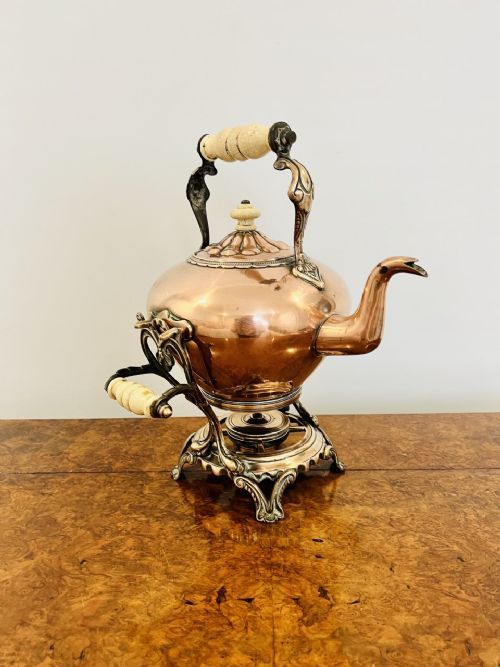
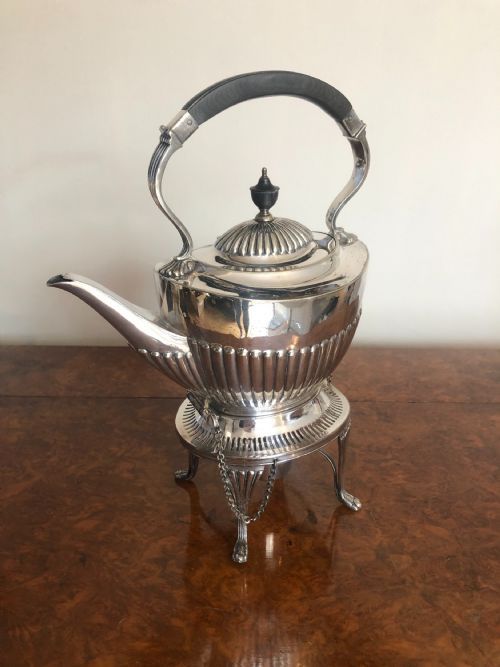
When you search for an edwardian silver burner, you encounter an array of sophisticated serving vessels designed to keep food and liquids warm at the table. Spirit kettles on stands dominate the selections here, alongside pot pourri boxes, egg warmers, food warmers, and table lighters.
The objects stem predominantly from the Edwardian period, though variations reach back into Victorian production and forward into the nineteen-twenties and thirties. Most examples combine sterling silver or silver plate with functional frames, often utilising ebony, bone, or ceramic components for insulation.
The forms serve specific dining rituals, from boiling water for tea at the sideboard to gently maintaining the temperature of entrees and breakfast dishes. Spirit kettles feature dedicated burners suspended beneath the vessel, while smaller table lighters and pot pourri bowls focus on ambient utility and scent.
What varies in quality
Subtlety of form and the crispness of chased or cast ornamentation separate the finer examples from standard production. Heavier gauge metal provides structural integrity, ensuring that stands remain balanced and burners fit securely without wobble.
The integrity of the original plating or solid silver thickness determines longevity, while intact insulating handles of ebony or bone preserve authenticity. Completeness matters greatly, particularly the presence of matching burners, original stands, and functional ceramic inserts.
Edwardian Silver Burner Retail Price Guide 2026
Typical asking prices for edwardian silver burner among the pieces listed under this phrase on Sellingantiques today, from the lower quarter to the upper quarter. They describe what is for sale here now, not the wider market.
Walker & Hall·Mappin and Webb·Fenton Brothers
The Edwardian Silver Burner Glossary
- Spirit kettle
- A water vessel mounted on a metal stand with an underlying burner fueled by spirit or alcohol. It kept water hot during long tea services.
- Silver plate
- A layer of silver bonded to a base metal such as copper or nickel silver. It offered the appearance of solid silver at a lower cost.
- Electroplated nickel silver
- Often abbreviated as EPNS, this base alloy received an electrochemical coating of silver. It became the standard method for durable tableware.
- Pot pourri box
- A decorative container with a pierced lid designed to hold dried flowers and spices. These boxes perfumed Edwardian drawing rooms.
- Table lighter
- A small, portable device fueled by spirit or gas used for lighting cigars and cigarettes at the dining table.
Edwardian Silver Burner: Frequently Asked Questions
How do you use a spirit kettle?
The burner beneath the kettle is filled with methylated spirit and lit to maintain the temperature of the water inside the vessel during tea service.
The stand holds the kettle securely at a safe distance above the flame while allowing easy access to the tap or pourer.
What is an egg warmer used for?
An egg warmer serves to keep boiled eggs hot at the breakfast table through enclosed heated compartments or hot water jackets.
These pieces typically feature hinged lids and fitted interior racks designed to cradle individual eggs safely.
How do I clean silver plated tableware?
Cleaning requires a soft cloth and a gentle silver polish formulated to protect thin plating from excessive abrasion.
Avoid harsh chemical dips that strip the underlying metal and ruin the dark patination in recessed decorative areas.
How can I tell Edwardian pieces apart from Victorian ones?
Edwardian items tend to feature lighter, airier designs influenced by Georgian and neoclassical revivals rather than the heavier, ornate styles of the Victorian era.
Maker marks and hallmarks stamped into the metal provide the most reliable evidence for dating individual pieces accurately.