



Edwardian Seascape Art
Edwardian seascape art captures coastal views and maritime scenes in oil and watercolour from the early twentieth century.
Edwardian Seascape Art
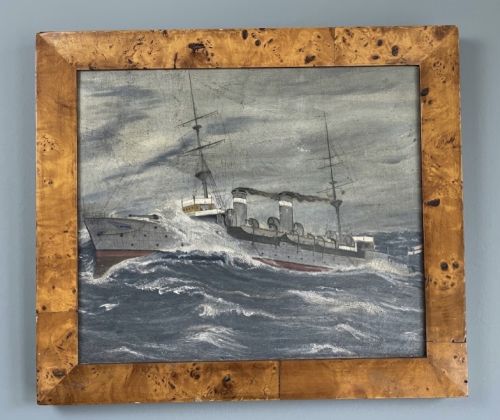
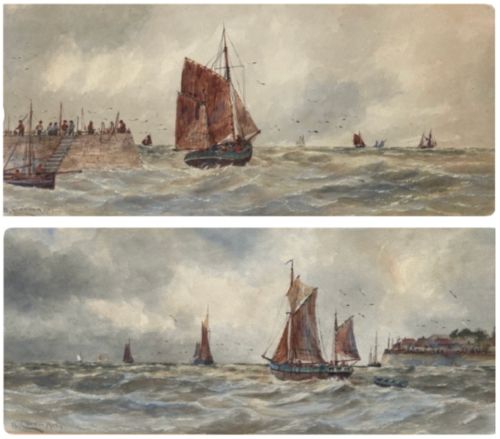
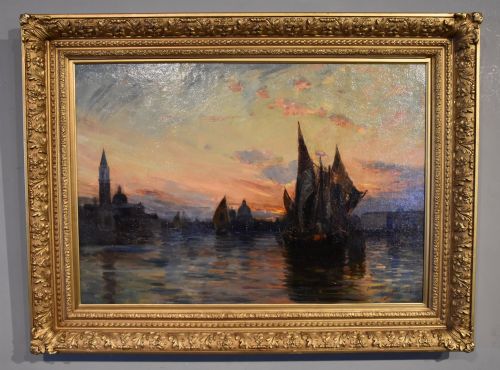
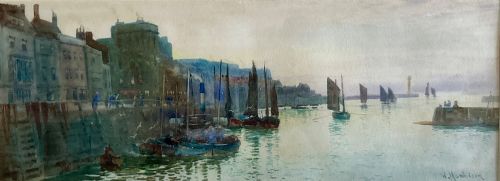
Edwardian seascape art comprises paintings executed around the opening decades of the twentieth century, focusing on coastal views, harbours, and maritime subjects. These works document maritime life, from fishing boats and trading vessels to dramatic coastal shorelines.
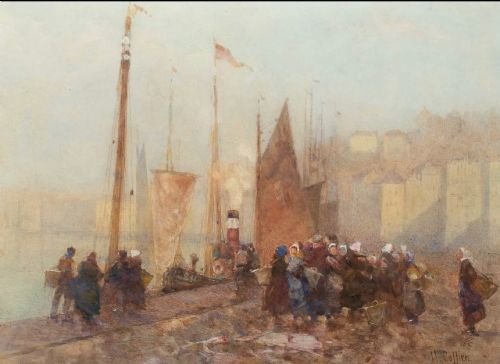
The pieces on this page typically present framed watercolours or oil paintings on canvas and panel. British impressionism and traditional marine art dominate the visual styles, often recording specific locations such as Whitby, St Ives, and various international ports.
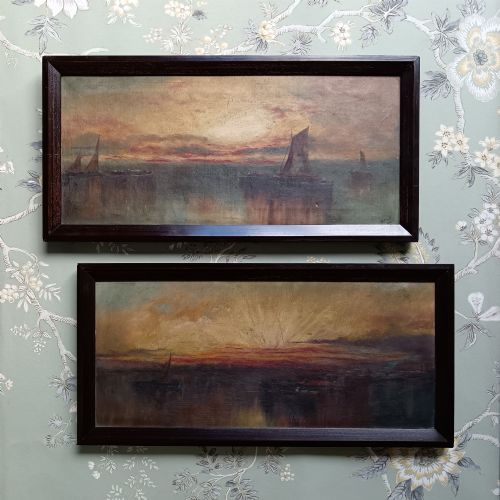
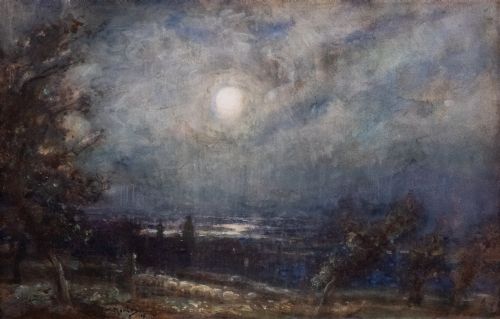
While many examples originate from the Edwardian period proper, the selection extends to related Victorian and early twentieth-century works. These paintings range from quiet moonlit coastal landscapes to bustling scenes of ships in choppy seas.
Materials and techniques
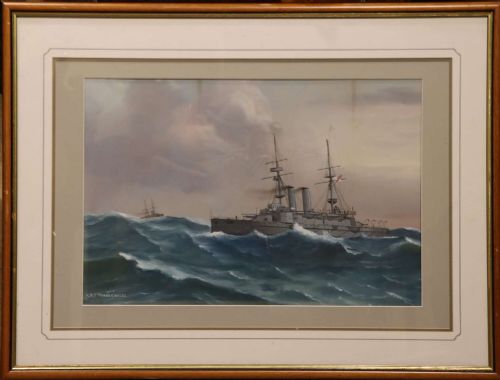
Artists of this era relied primarily on oil paint applied to canvas or wood panels, alongside watercolour pigment worked onto paper. Gouache also appears in specific maritime compositions to add opaque highlights.
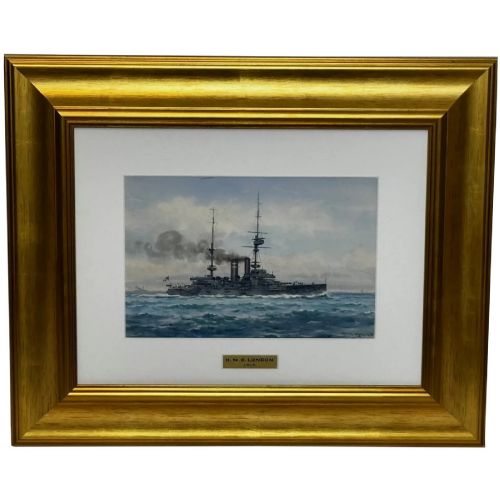
Framing forms an integral part of these artworks, utilising wood surrounds that often complement the period aesthetic. Pigments and supports reflect traditional studio practices of the late nineteenth and early twentieth centuries.
Edwardian Seascape Art Retail Price Guide 2026
Typical asking prices for edwardian seascape art among the pieces listed under this phrase on Sellingantiques today, from the lower quarter to the upper quarter. They describe what is for sale here now, not the wider market.
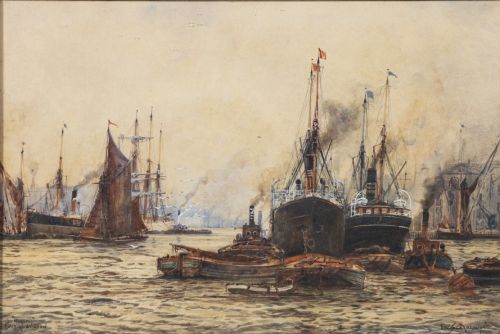
Several canvases record specific maritime moments, capturing smoke from passing steamships alongside traditional tall masts.
Distinctions in quality
Quality in these paintings rests on the artist's handling of light, atmosphere, and movement, particularly in rendering water and sky. Stronger works demonstrate confident brushwork and accurate perspective regarding vessels and coastal architecture.
Condition plays a significant role in overall merit, with well-preserved pigment and stable canvas supports distinguishing superior examples. Signed works by established painters generally represent the more accomplished end of the range.
GM Avondale·William Cannon·B Nash·Frank Watson Wood·Thomas William Morley·Frank William Scarbrough·Hector Caffieri·William Matthison·Thomas Hodgson Liddell·Charles Napier Hemy·Richard Harry Carter·Pieter Cornelis Dommersen·Daniel Sherrin·Stanley Leader·Edward Henry Eugene Fletcher·Fred Waugh·Ah Hee Studio·John Bell·James Webb·Ernest F Hill·Frederick Stuart Richardson·E Tucker·Percy Brooke·Charles Dixon·William Kay Blacklock
The Edwardian Seascape Art Glossary
- Watercolour
- A painting method where fine pigment is suspended in a water-based solution and applied to paper. It produces transparent washes often seen in coastal sketches.
- Oil on canvas
- A technique using pigments bound in a drying oil applied to a stretched cloth surface. This medium allowed artists to build rich textures in maritime scenes.
- Gouache
- An opaque water-based paint that includes a white pigment additive for solid coverage. Artists used this to capture bright highlights on water and sails.
- Maritime art
- Works depicting ships, harbours, and coastal views. This category forms the core of marine painting traditions.
Edwardian Seascape Art: Frequently Asked Questions
What subjects appear in Edwardian seascape art?
These works typically depict fishing boats, tall ships, harbours, and coastal shorelines. Artists recorded both local British scenes and international waters.
Common motifs include vessels navigating choppy seas, tranquil Venetian canals, and quiet morning ports.
How do I care for a watercolour painting?
Watercolour works on paper require protection from direct sunlight to prevent fading. Framing behind glass with conservation mounting safeguards the delicate pigment.
Displaying pieces in rooms with stable humidity levels helps preserve the paper support.
What is the difference between oil and watercolour marine works?
Oil paintings utilise pigments bound in oil on canvas or panel, offering thick textures and deep colour saturation. They generally require less fragile framing than works on paper.
Watercolours employ water-soluble pigments on paper, presenting a luminous and transparent quality suited to atmospheric coastal light.
How are periods verified in these paintings?
Dating relies on artist signatures, exhibition dates, period framing styles, and biographical records of the painters. Many works bear contemporary inscriptions on the reverse.
stylistic indicators such as vessel types and clothing also help anchor the piece within the early twentieth century.