

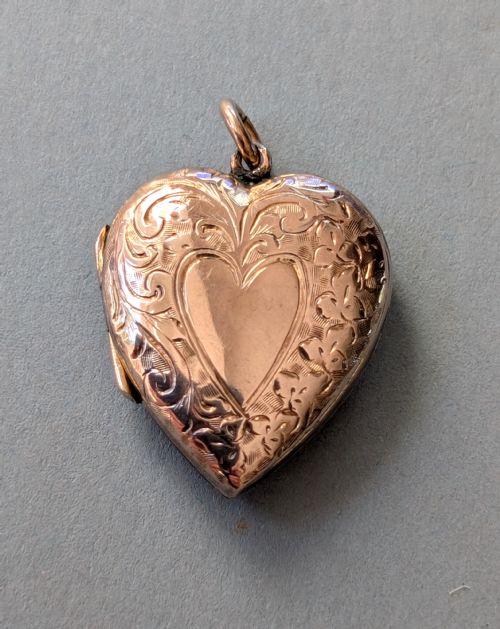


Edwardian Scroll Pendant
An edwardian scroll pendant brings delicate openwork filigree and organic curves to the neck, offering refined early twentieth-century elegance.
Edwardian Scroll Pendant
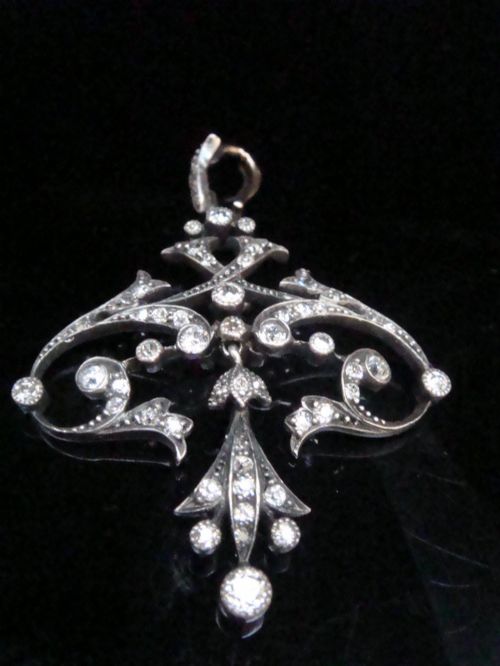
An edwardian scroll pendant is a piece of jewellery defined by curved, vegetal motifs typical of the period around nineteen hundred. These pieces combine lightweight metalwork with stones or drop elements to create a balanced silhouette.
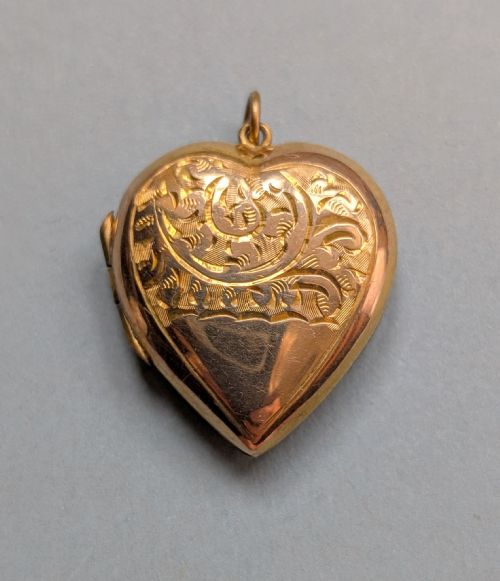
While the search term points specifically to pendants, the inventory shows related forms like lavalieres and lockets sharing the same stylistic vocabulary. Most examples you meet here date from the Edwardian era through to the early decades of the twentieth century, sometimes overlapping with Victorian or later revivals.
The construction typically relies on pierced gold or silver plates forming sweeping tendrils and volutes. Central settings often feature diamonds or coloured stones held securely within the open metal framework.
How they were made
Goldsmiths of this period utilised nine-carat and eighteen-carat gold alongside silver, often combining metals to highlight specific details of the scrollwork. Piercing and engraving techniques allowed artisans to remove surplus metal from the backplate, creating a light, lace-like structure.
Gemstones such as diamonds, garnets, and pearls were flush-set, bezel-set, or mounted in claw settings that followed the natural curves of the design. The reverse side of the pendant often received the same careful attention to finish as the front, ensuring a clean appearance from every angle.
Edwardian Scroll Pendant Retail Price Guide 2026
Typical asking prices for edwardian scroll pendant among the pieces listed under this phrase on Sellingantiques today, from the lower quarter to the upper quarter. They describe what is for sale here now, not the wider market.
What varies in quality
The distinction between standard commercial pieces and finer work lies in the crispness of the hand-pierced openwork and the depth of the engraved lines. Superior examples show fluid, confident scrolls where the metal maintains an even thickness throughout the intricate design.
Stone selection and setting precision also separate grades of quality. Better pendants use well-matched gemstones secured tightly within their bezels, whereas simpler versions rely on stamped metal details that simulate the look of hand-carved relief.
The Edwardian Scroll Pendant Glossary
- Scroll
- An ornamental motif formed in a spiral or rolling wave shape. It provides the primary decorative structure for Edwardian metalwork.
- Lavaliere
- A pendant featuring a central stone or drop suspended lower than the main necklace chain attachment. This drop style gained immense popularity during the Edwardian era.
- Filigree
- Fine wirework soldered into intricate open patterns. It gives pendants a delicate, textile-like appearance.
- Bezel
- A collar of metal pushed or hammered down over the edge of a gemstone to hold it in place. This secure setting method protects the stone edges during daily wear.
- Vesta
- A small pocket container for matches, often decorated with matching scroll engraving. Though not a pendant, it shares the metalworking style seen in the jewellery.
Edwardian Scroll Pendant: Frequently Asked Questions
What is an edwardian scroll pendant?
An edwardian scroll pendant is a decorative neck ornament featuring curved, flowing metal motifs produced during the early twentieth century.
These pieces typically employ gold or silver openwork to create light, floral-inspired patterns that reflect the aesthetic tastes of the Edwardian period.
How do I wear one today?
You can suspend your pendant from a fine gold or silver chain that matches the metal colour of the setting. Pairing it with simple necklines allows the intricate scrollwork and any set stones to remain the focal point of your outfit.
Because these items are delicate historic pieces, removing them before swimming or heavy physical activity helps preserve the fine metal joints and stone settings.
How are periods told apart?
Distinguishing between Victorian and Edwardian pieces involves looking at the weight and lightness of the metalwork. Victorian designs often appear heavier and more robust, whereas Edwardian pieces favour lighter, airier openwork and brighter gemstone combinations.
Hallmarks stamped on the jump rings or reverse sides provide official assay office symbols and date letters that confirm the exact year of manufacture.
What materials were used?
Jewellery makers of the era primarily worked with nine-carat gold, eighteen-carat gold, and silver. These metals provided the necessary ductility to form delicate scrolls without snapping under tension.
Gemstones such as diamonds, pearls, and garnets frequently accent the metal framework, adding texture and contrast to the pierced designs.