


Edwardian Scottish Brooch
An edwardian scottish brooch brings together regional motifs and hardstones, offering distinct character for daily wear.
Edwardian Scottish Brooch
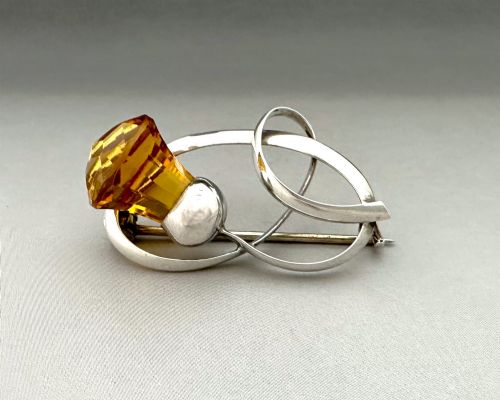
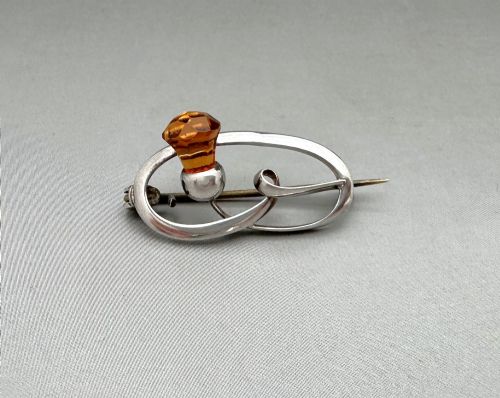
An edwardian scottish brooch combines traditional regional motifs with materials such as silver, gold, agate, and citrine. The selection spans distinct forms including thistle designs, broadsword kilt pins, and circular pebble brooches. Pieces connect directly to the wider Victorian Scottish Revival and Celtic Revival movements.
Collectors frequently encounter works featuring Montrose agate and banded stones alongside silver settings. Forms range from functional kilt pins and jabot pins to padlock locket pendants and traditional brooches. Origins trace through periods including the Edwardian era and Victorian times.
How they were made
Silversmiths and jewellers utilised sterling silver and nine-carat gold to set hardstones into secure metal mounts. Agate and jasper stones were cut, shaped, and polished by hand to fit intricate silver frameworks.
Makers integrated traditional Scottish motifs such as thistles and broadswords using cast and chased metal techniques. Gemstones including citrine and amber glass were securely mounted to catch the light within heavy silver and gold frames.
What varies in quality
The standard of cutting and polishing on the agate and jasper stones sets finer examples apart from simpler pieces. Precise stone matching within patterned settings reveals the skill involved in the assembly.
The weight and detail of the silver or gold work indicate the maker's proficiency. Well-defined chasing on thistle leaves and sword hilts elevates a piece above standard mass production.
Charles Horner
The Edwardian Scottish Brooch Glossary
- Agate
- A form of chalcedony showing coloured bands or zones, frequently utilised in regional Scottish jewellery. These stones were polished smooth to highlight natural patterns.
- Thistle
- The national floral emblem of Scotland, frequently rendered in silver or gold within revival jewellery. This motif appears widely across brooches and kilt pins.
- Jabot pin
- An ornamental pin designed to secure the jabot ruffle on historical garments. These long pins often feature decorative terminals similar to brooch faces.
- Sgian dubh
- A small traditional Scottish knife worn with Highland dress, miniature versions of which inspired specific brooch forms. These pieces replicate the distinctive hilt shape in miniature.
- Celtic Revival
- An artistic movement drawing on ancient interlacing patterns and manuscript ornament during the nineteenth and twentieth centuries. This style heavily influenced regional jewellery design.
Edwardian Scottish Brooch: Frequently Asked Questions
What materials make up these brooches?
These pieces utilise sterling silver, nine-carat gold, and natural hardstones including agate, jasper, and citrine. Glass elements occasionally appear in place of gemstones.
Settings rely heavily on solid silver and gold mounts designed to secure heavy banded stones.
How were these pieces worn historically?
Owners fastened these items to plaid shawls, heavy woollen jackets, and traditional Highland attire. Certain variants served specifically as kilt pins or secured jabot neckwear.
Everyday use combined decorative appeal with functional garment fastening.
How do I distinguish Edwardian from Victorian pieces?
Victorian examples often display heavier silver mounts and darker banded agates associated with the early Scottish Revival. Edwardian pieces tend to feature lighter settings and refined stone arrangements.
Assay marks and stylistic shifts between Victorian revivalism and Edwardian delicacy help clarify dating.
Are these brooches suitable for daily wear?
Solid silver and gold construction combined with sturdy pin mechanisms makes them robust enough for regular use on thick fabrics. Agate and jasper are durable hardstones that withstand careful handling.
Securing the clasp properly ensures safety when fastening to coats or heavy jumpers.