


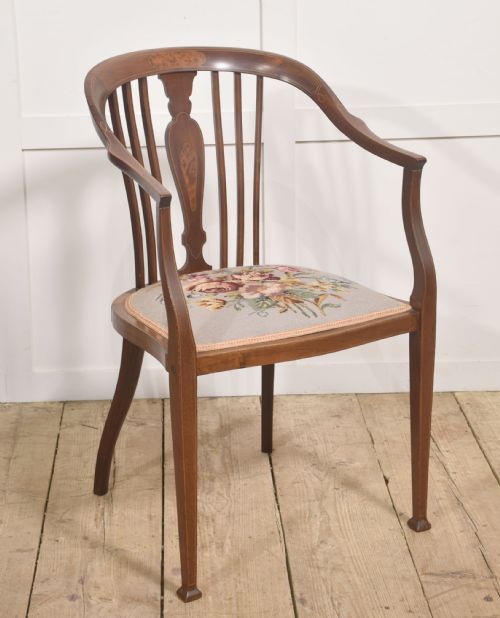


Edwardian Satinwood Inlay Chairs
Edwardian satinwood inlay chairs combine light-reflecting timbers with delicate classical motifs to bring refined elegance to any interior.
Edwardian Satinwood Inlay Chairs
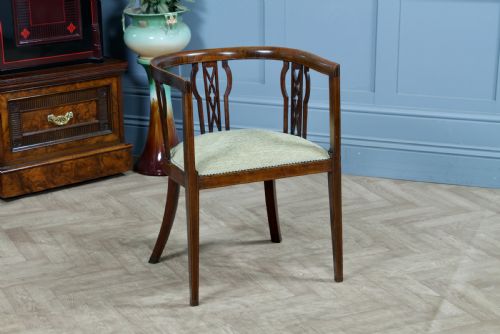
Edwardian satinwood inlay chairs encompass a diverse selection of seating, including armchairs, dining chairs, side chairs, occasional chairs, and salon suites produced around the turn of the twentieth century. These pieces reflect revivalist tastes, drawing heavily on Sheraton and Hepplewhite idioms through graceful proportions and balanced geometry.
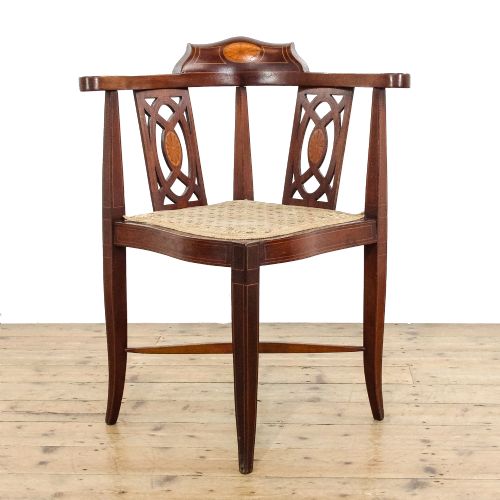
The most common examples encountered on this page are mahogany frames enriched with satinwood inlay, stringing, and contrasting marquetry details. Forms range from compact bedroom and nursing chairs to substantial elbow chairs and matched dining sets.
Originating largely from the Edwardian era and the late Victorian period, these seats served varied domestic functions in parlours, drawing rooms, and chambers. Their enduring appeal lies in the crisp contrast between dark primary woods and luminous pale veneers.
Factors Governing Quality and Execution
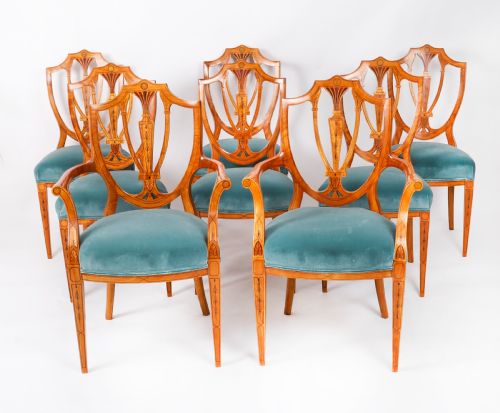
The distinction between standard commercial seating and exceptional cabinetwork rests on the precision of the inlay and the crispness of the carved details. Finer examples display tightly fitted veneers without gaps, alongside well-proportioned shieldback or open-arm silhouettes that demonstrate academic adherence to revival styles.
Integrity of the timber frame and the retention of original upholstery textiles or harmonious re-covering influence the overall standing of a piece. Subtle refinements such as slender tapered legs and balanced stringing separate ordinary production from superior workshop output.
Edwardian Satinwood Inlay Chairs Retail Price Guide 2026
Typical asking prices for edwardian satinwood inlay chairs among the pieces listed under this phrase on Sellingantiques today, from the lower quarter to the upper quarter. They describe what is for sale here now, not the wider market.
Cowtan And Sons·Shoolbred
The Edwardian Satinwood Inlay Chairs Glossary
- Satinwood inlay
- A decorative technique where contrasting light-toned satinwood is set flush into the surface of a darker primary timber to create geometric or pictorial patterns. This method defines the visual character of many turn-of-the-century revival pieces.
- Sheraton Revival
- A late nineteenth and early twentieth-century design movement inspired by the neoclassical furniture of George Sheraton. It is characterised by straight tapered legs, delicate proportions, and refined classical motifs.
- Stringing
- Thin lines of contrasting wood inlay used to outline panels, legs, and crest rails on cabinet furniture. This linear detailing adds subtle definition without overwhelming the primary timber.
- Shieldback
- A chair back design shaped in the form of an inverted shield, frequently pierced and carved with classical ornamentation. It is commonly found on dining and occasional chairs from revival periods.
- Salon chair
- A light, decorative chair designed for entertaining and social use in reception rooms rather than heavy everyday seating. These pieces often feature exposed wood frames and upholstered seats.
Edwardian Satinwood Inlay Chairs: Frequently Asked Questions
How do I care for satinwood inlay?
Keep these chairs away from direct sunlight and excessive heat sources to prevent the delicate satinwood veneers and stringing from drying out or lifting over time. Gentle dusting with a dry, soft cloth is sufficient for routine maintenance.
Avoid using harsh chemical polishes or excessive moisture, which can degrade old polish and damage the wood inlay. A micro-layer of quality wax applied sparingly will help preserve the timber's natural lustre.
Were these chairs used at dining tables?
Many examples on this page served as dining chairs, particularly sets designed in the Sheraton and Hepplewhite revival styles during the late nineteenth and early twentieth centuries. Their sturdy mahogany frames made them practical for daily meals.
Other variations, such as occasional and salon chairs, were intended for lighter use in parlours, bedrooms, and drawing rooms rather than formal dining settings.
How do I distinguish Edwardian from Victorian pieces?
Edwardian seating generally displays lighter proportions, brighter wood tones, and restrained neoclassical decoration influenced by the Sheraton Revival. The transition from late Victorian production often shows a shift towards airier forms and less heavy carving.
Late Victorian examples tend to be slightly heavier in construction and darker in primary wood colour, though both periods frequently overlap in their use of satinwood inlay and classical motifs.
Are upholstered parts usually original?
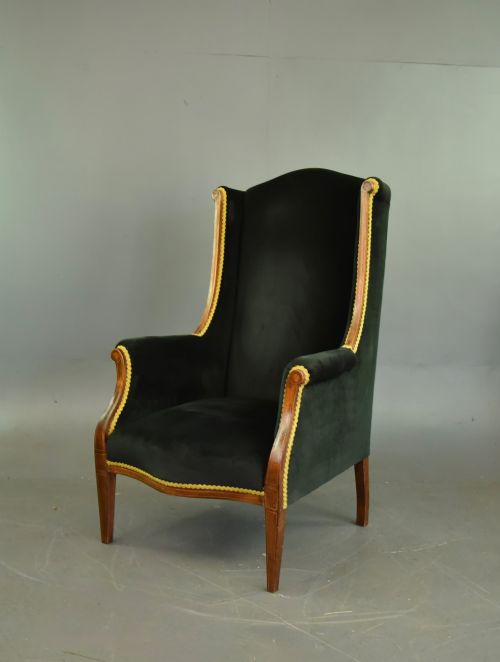
Most chairs of this age have undergone reupholstery during their lifespan to maintain their usability and visual appeal. Materials such as silk, velvet, and leather are frequently renewed while retaining the underlying frame structure.
When examining a piece, look closely at the webbing and padding techniques, as these often reveal whether the upholstery dates to the original period of manufacture or represents a later refurbishment.