
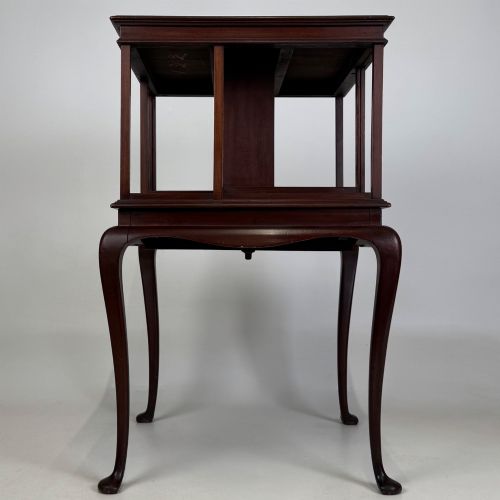
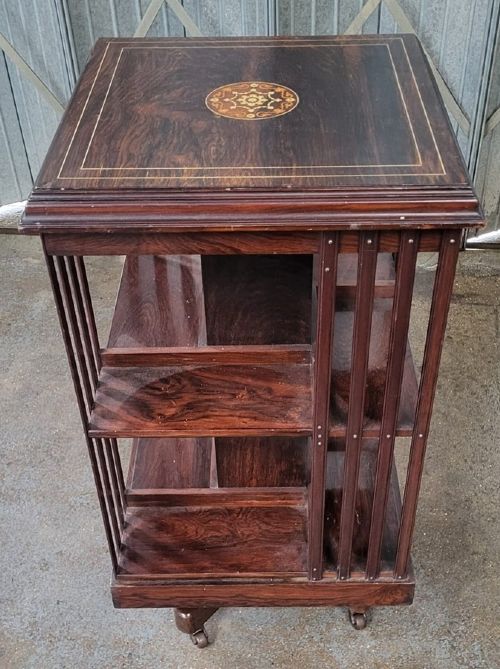
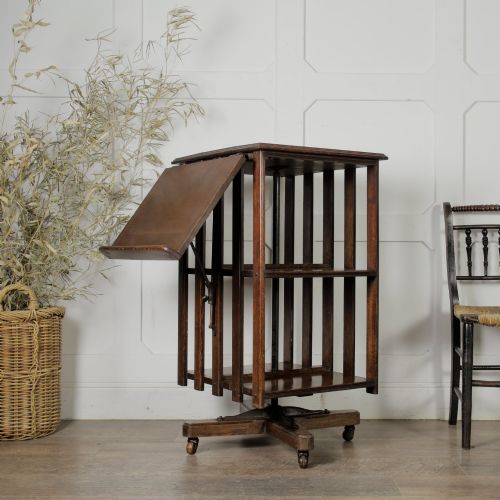
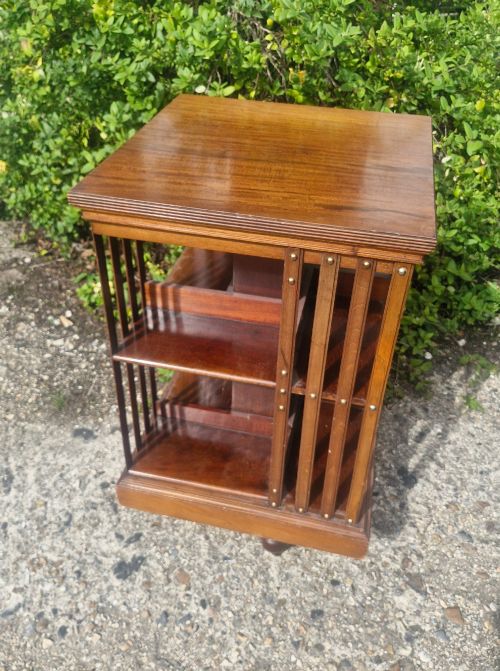
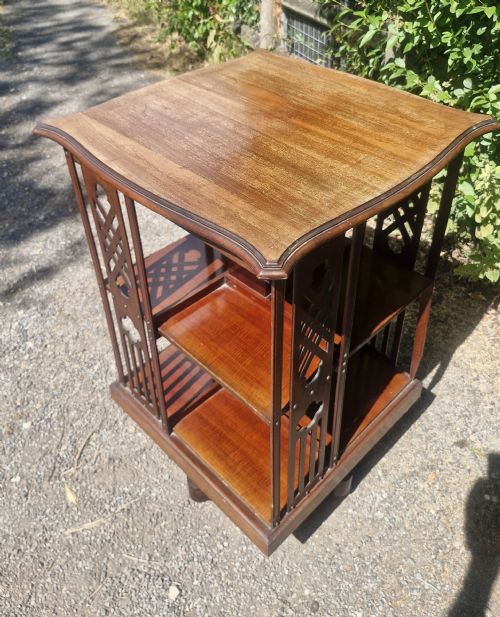
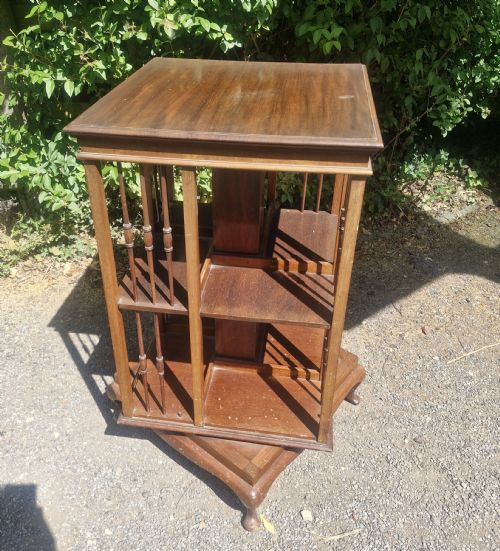
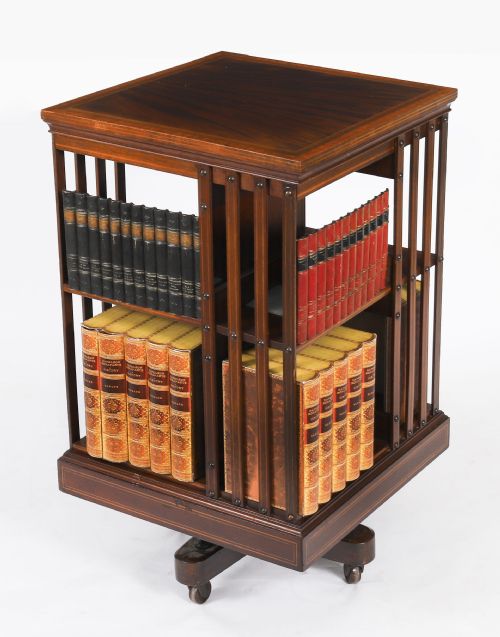
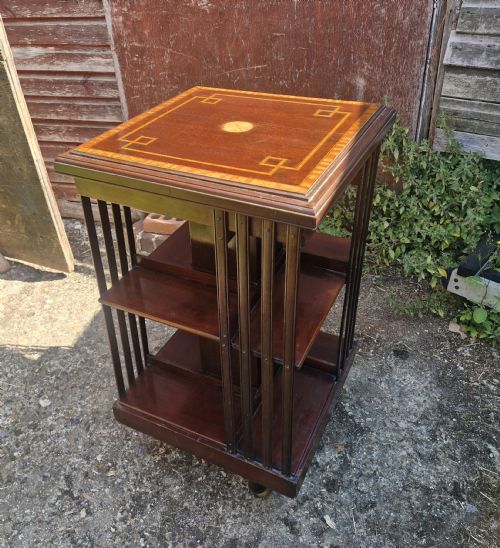
Edwardian Rotating Bookstand
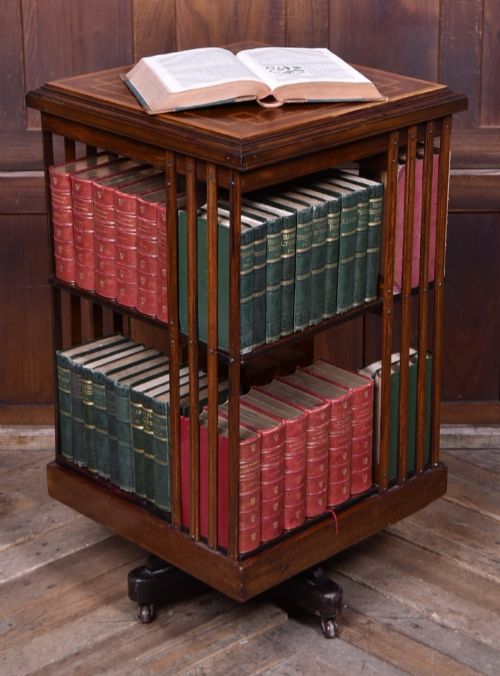
An edwardian rotating bookstand turns smoothly on its axis, bringing a library within arm's reach beside a favourite armchair.
Edwardian Rotating Bookstand
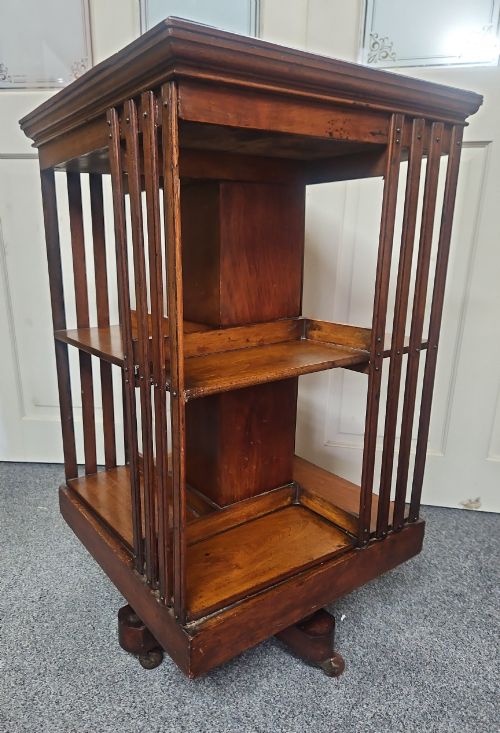
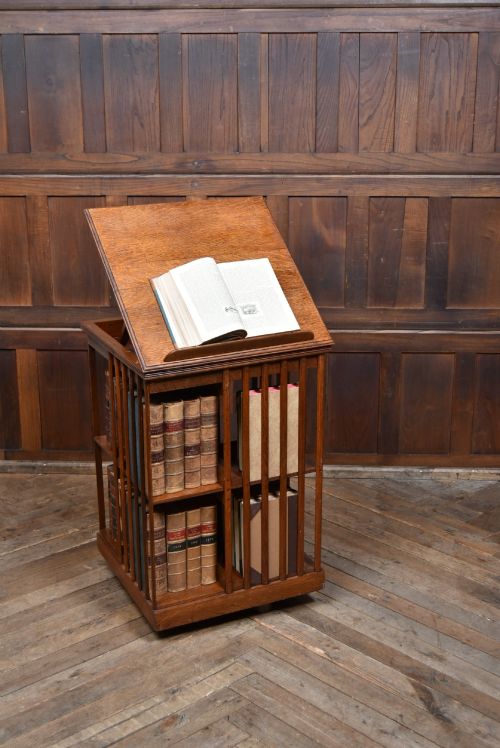
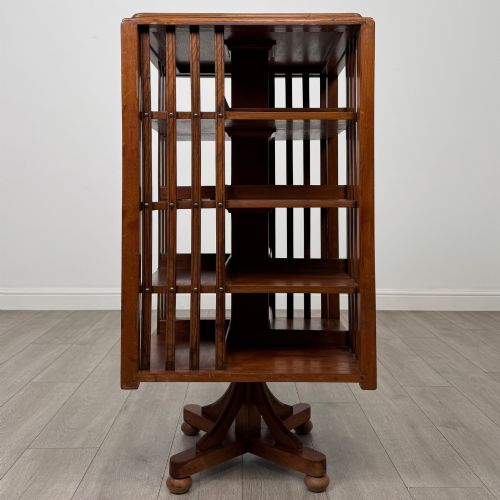
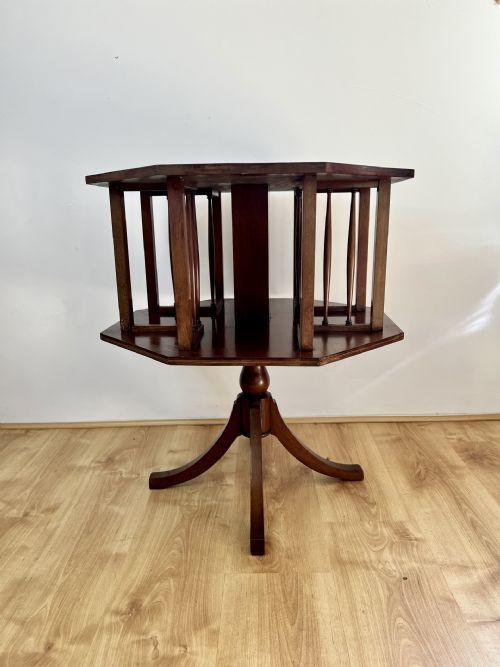
When you search for an edwardian rotating bookstand, you find timber furniture designed to hold volumes upright while turning on a central spindle. These pieces served studies, libraries, and drawing rooms where quick access to reference books or novels mattered.
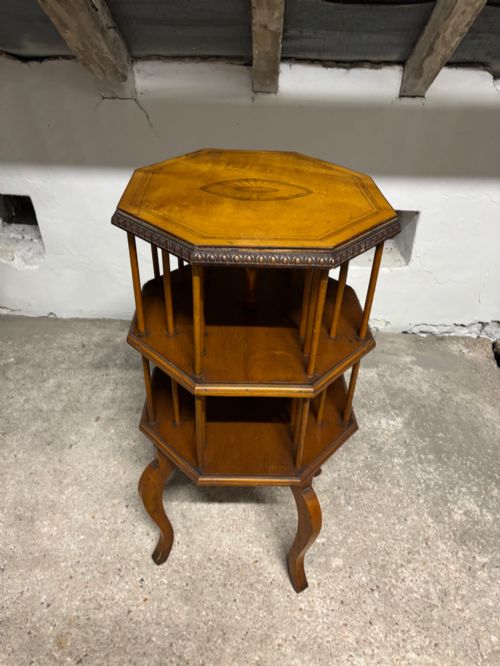
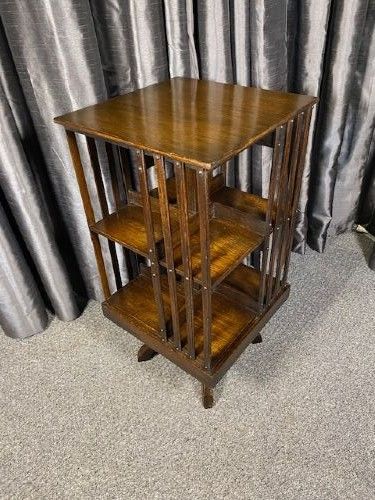
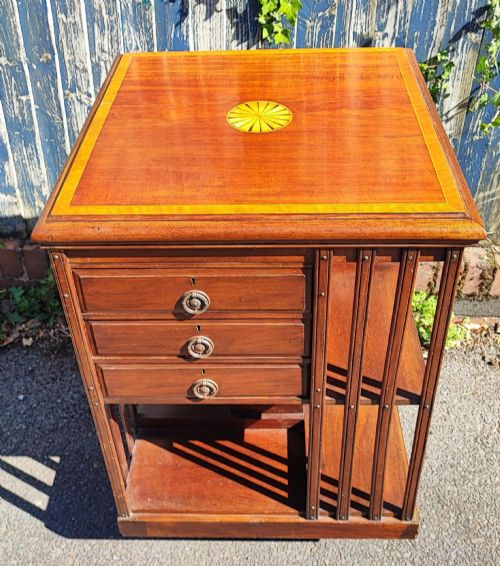
The version you are most likely to meet on this page is constructed from mahogany, often decorated with satinwood inlay or built from solid oak. They range from compact table-top models to tall, multi-tiered floor-standing units created during the Edwardian period and the late Victorian era.
How they were made
Cabinet makers utilised dense hardwoods like mahogany, walnut, and oak to withstand the weight of heavy volumes and constant turning. Timber was selected for grain pattern, seen in flame mahogany panels or quarter-sawn oak rays.
Internal mechanisms relied upon cast iron and brass to ensure smooth rotation without jamming. Inlay work incorporated satinwood and rosewood stringing, while surfaces received French polish to seal and protect the wood.
Some models feature discreet bookends built into the slats to keep volumes from sliding off mid-spin.
What varies in quality
The integrity of the internal revolving mechanism dictates how smoothly the tiers spin and whether the balance holds under uneven loads. A superior mechanism operates silently and keeps the entire structure plumb.
Craftsmanship shows in the crispness of the inlay, the thickness of the timber used for the slatted sides, and the stability of the base. Plain utility pieces contrast with Sheraton-style examples featuring elaborate marquetry and polished brass fittings.
Maple and Co
The Edwardian Rotating Bookstand Glossary
- Flame mahogany
- A veneer cut from timber where the branches join the trunk, producing a rippled, flickering pattern. It appears on the top surfaces of finer Edwardian cases.
- Satinwood inlay
- Contrasting pale timber inserted into recesses within darker wood to form geometric lines or floral motifs. This technique defines the Sheraton Revival style.
- Revolving mechanism
- The hidden iron or brass assembly beneath the tiers that permits 360-degree rotation. It rests upon ball bearings or a central spindle.
- Arts and Crafts
- A design movement prioritising honest construction, visible grain, and simple oak forms over applied ornamentation. These examples emphasise utility and solid build.
- Sheraton Revival
- A style popular in the Edwardian period drawing on late 18th-century neoclassical lightness, slender proportions, and delicate stringing.
Edwardian Rotating Bookstand: Frequently Asked Questions
How do I check the mechanism?
Spin the tiers gently while listening for any scraping or grinding sounds from the concealed pivot below. A balanced stand continues to rotate smoothly for a few moments after you let go.
Ensure the structure does not wobble or lean to one side when loaded with books. The weight should distribute evenly across the base without catching on the carpet.
Can these hold heavy books?
Most floor-standing models handle heavy volumes easily due to their robust hardwood construction and cast iron internal support. Table-top versions suit lighter octavos and novels rather than massive atlases.
Distribute heavier volumes on the bottom tier to maintain a low centre of gravity when turning the stand. This prevents tipping and protects the central spindle from strain.
Where should I place one?
Position your stand beside an armchair or desk where you can reach the titles without standing up. They also fit well in empty corners or between windows where light falls across the spines.
Keep the timber away from direct heat sources such as radiators to prevent the mahogany or oak from drying and splitting. Allow sufficient clearance on all sides for the 360-degree rotation.
How do I date the piece?
Look to the overall style, timber choices, and secondary woods like pine or oak used inside the carcass. Edwardian pieces often display lighter mahogany veneers, satinwood stringing, or Arts and Crafts simplicity.
Late Victorian examples tend to be heavier in build, utilising darker oak or plain mahogany without inlay. Screws, fixings, and the style of the internal ironwork also offer clues to the decade of manufacture.