



Edwardian Rosewood Bookcases
Edwardian rosewood bookcases are finely timbered display pieces and shelving units that bring warmth and refined storage to a room.
Edwardian Rosewood Bookcases
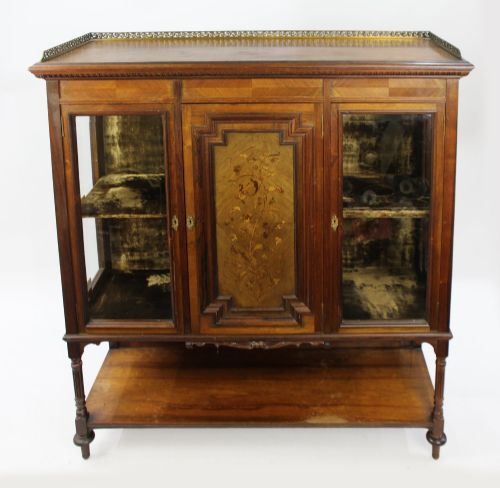
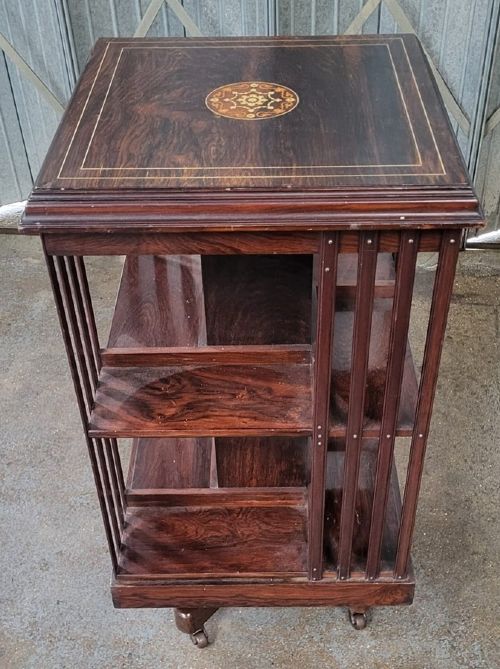
Edwardian rosewood bookcases and related display pieces span revolving designs, waterfall shelves, and larger cabinets that combine shelving with glazed or open storage. Most examples encountered here date from the Edwardian era or the late Victorian period, frequently incorporating satinwood, boxwood inlay, and mahogany elements.
Makers and workshops of the period produced versatile forms ranging from compact revolving units to substantial side cabinets and display stands. These pieces served both functional library needs and the display of decorative objects in formal rooms.
How they were made
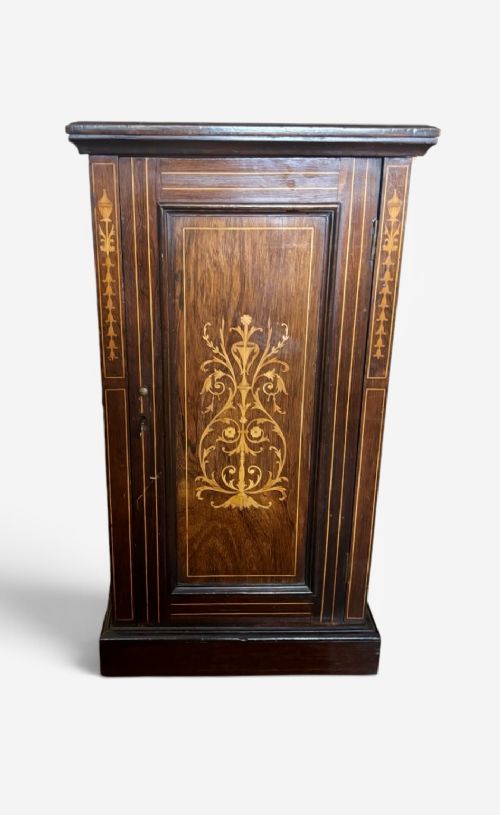
Cabinet makers utilised dense rosewood timber as the primary carcase material, often enhanced with contrasting satinwood and boxwood inlay or marquetry details. Structural elements frequently incorporated mahogany alongside the principal rosewood veneers.
Glazing, brass hardware, and occasional mirror panels complete the construction of these cabinets and bookcases. Artisans applied sophisticated inlay techniques to flat surfaces and door panels to create geometric and floral motifs.
Edwardian Rosewood Bookcases Retail Price Guide 2026
Typical asking prices for edwardian rosewood bookcases among the pieces listed under this phrase on Sellingantiques today, from the lower quarter to the upper quarter. They describe what is for sale here now, not the wider market.
Listings span multiple periods including Regency, Victorian, Edwardian, and William IV, with rosewood, mahogany, and glass as recurrent materials.
What varies in quality
The sophistication of the inlay work and the choice of supplementary timbers dictate the standing of individual cabinets. Finer pieces demonstrate precise boxwood and satinwood stringing alongside well-figured rosewood grain.
Proportion and structural integrity separate standard utility pieces from workshop items bearing attribution to notable makers. The crispness of marquetry details and the quality of the brass fittings further distinguish the upper tier.
Edwards & Roberts
The Edwardian Rosewood Bookcases Glossary
- Rosewood
- A dense, heavily figured timber with dark grain patterns prized for high-end cabinet making. It forms the primary visible surface on these bookcases and display cabinets.
- Inlay
- A technique where contrasting woods such as boxwood and satinwood are embedded into the rosewood surface to form patterns. This decorative method defines the Sheraton Revival and late Victorian aesthetic.
- Marquetry
- Elaborate decorative veneer work assembled into pictorial or symmetrical designs. It appears on the door panels and friezes of several cabinets listed here.
- Waterfall bookcase
- A tiered shelving unit where each successive shelf is slightly deeper than the one above it. This form provides open storage suited to smaller collections of books.
- Revolving bookcase
- A compact shelving structure mounted on a rotating base to allow access from multiple angles. Edwardian makers utilised this design for functional library use.
Edwardian Rosewood Bookcases: Frequently Asked Questions
What is an Edwardian rosewood bookcase?
These pieces are timber shelving units and display cabinets produced during the Edwardian period, often featuring contrasting wood inlays and glazed doors.
They combine practical book storage with decorative display space for the home.
How do I identify an Edwardian bookcase?
Look for characteristic Edwardian and late Victorian design traits, including rosewood veneers, boxwood stringing, and satinwood inlay work.
Construction methods and timber choices help separate pieces from this era from earlier Regency or William IV examples.
Where were these bookcases used?
Original owners placed them in parlours, libraries, and drawing rooms to house leather-bound volumes and display ornaments.
Today, they function well in similar domestic settings to add period character and storage.
What materials are used in these pieces?
The primary timber is rosewood, frequently paired with secondary woods like mahogany and decorated with boxwood and satinwood inlay.
Glass panels, brass fittings, and occasional mirrors also feature in the construction.