
Edwardian Revival Seating
Edwardian revival seating brings together classic forms and early twentieth-century craftsmanship, offering sturdy mahogany dining sets and satinwood armchairs for the home.
Edwardian Revival Seating
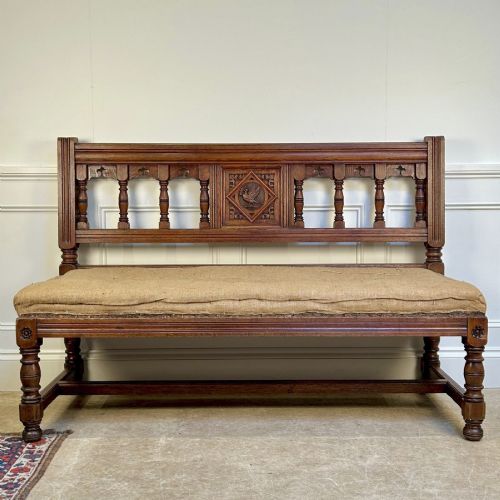
Edwardian revival seating covers a wide range of household furniture, spanning dining chairs, armchairs, settees, and stools produced around the early twentieth century and the late nineteenth century. When you search for edwardian revival seating, you encounter mahogany dining sets, oak hall benches, and inlaid satinwood salon chairs influenced by earlier Georgian, Chippendale, and Sheraton styles.
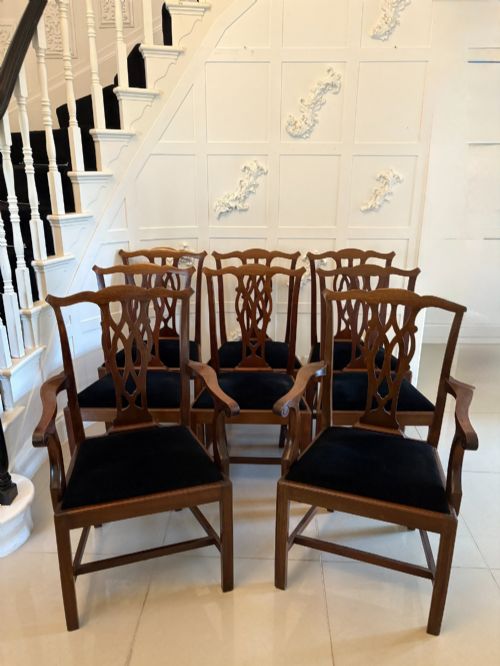
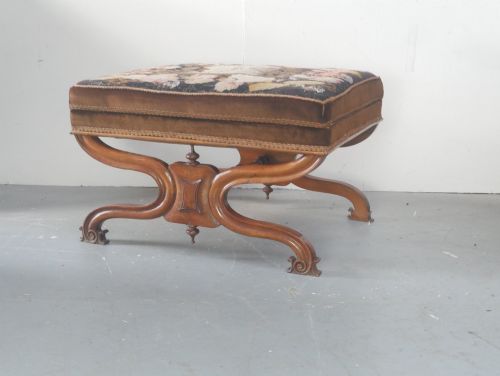
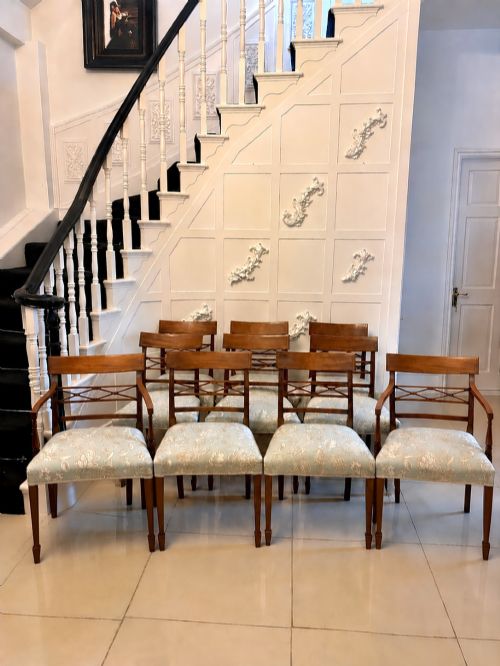
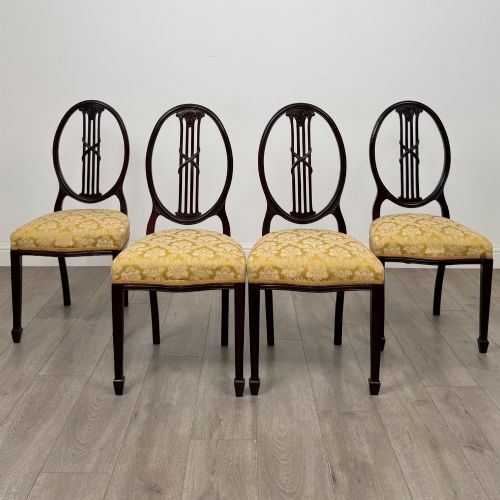
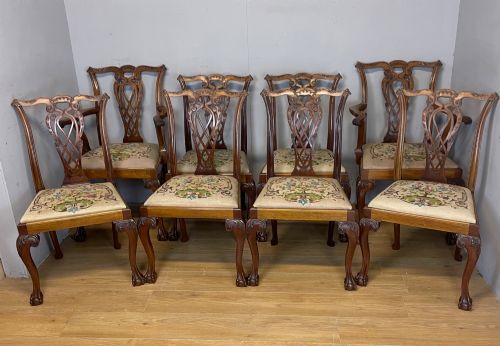
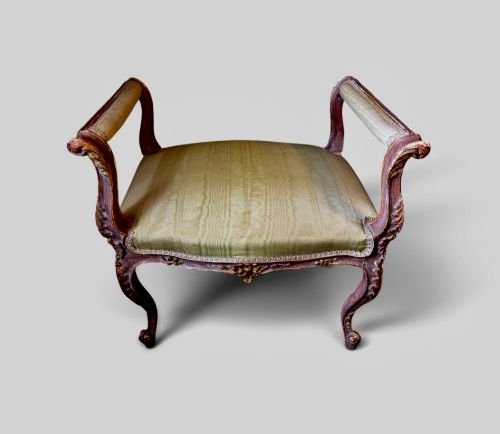
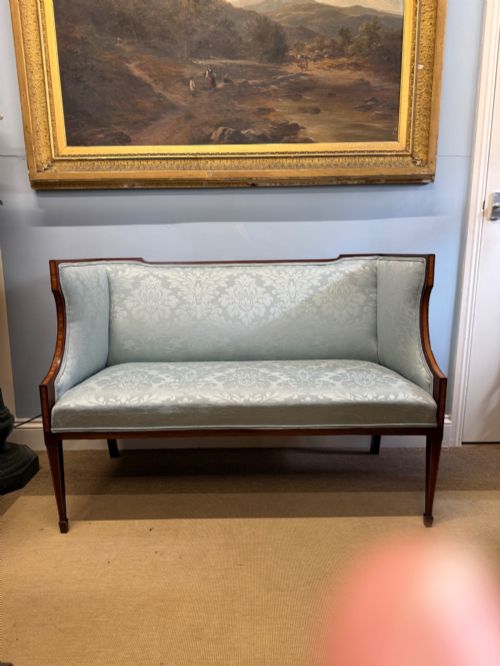
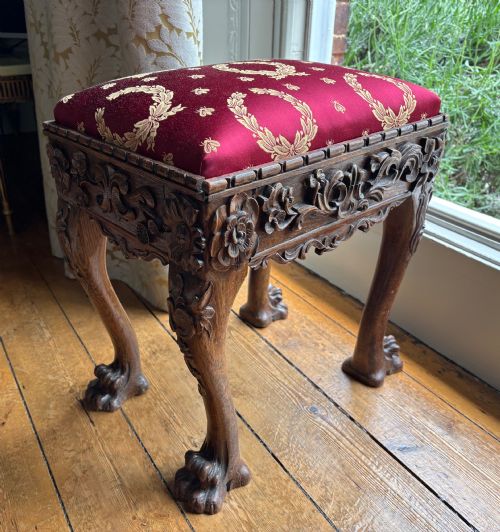
The most common pieces on this page are dining chairs and armchairs constructed in sets or pairs, often incorporating revival motifs like carved cabriole legs or ribbon backs. Alongside these, smaller items such as piano stools, window seats, and two-seater sofas appear frequently in mahogany, oak, and walnut.
Materials and Construction Techniques
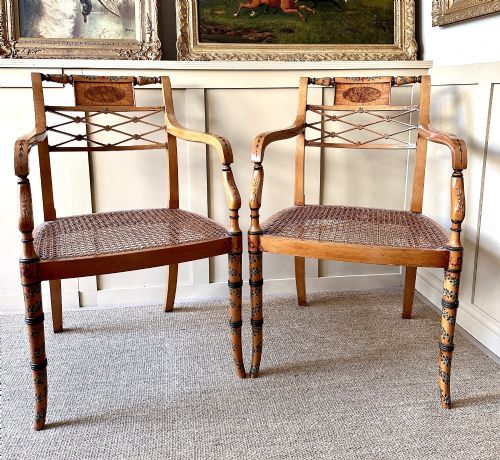
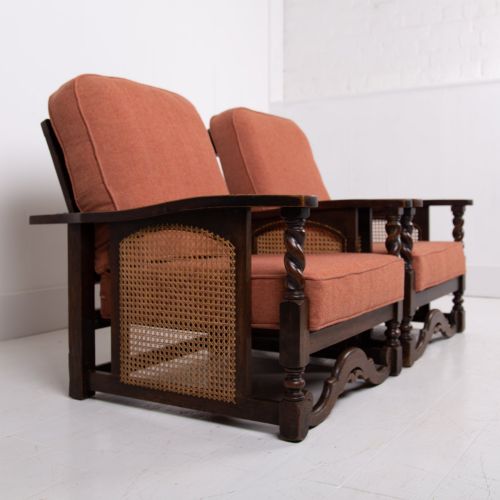
Makers of edwardian revival seating relied heavily on solid hardwoods such as mahogany, oak, and walnut, frequently enhancing surfaces with satinwood inlay, brass accents, and painted decoration. Cane panels and textile upholstery, including velvet and modern fabrics, provide the seating surfaces across armchairs, library chairs, and window seats.
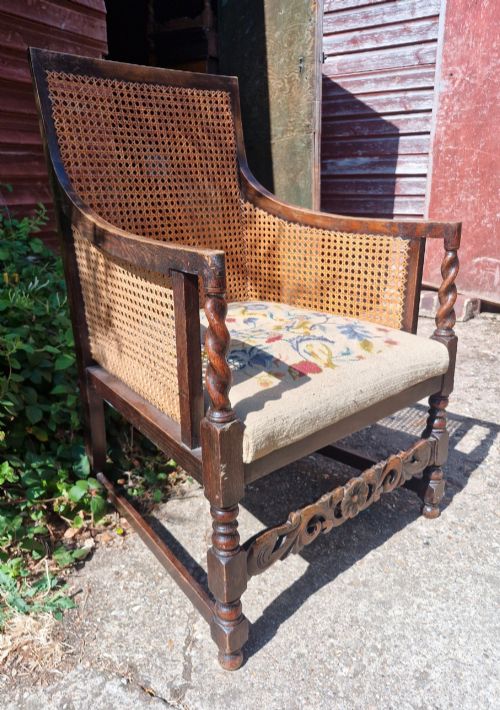
Joinery methods combine traditional framing techniques with period revival ornamentation, such as Gothic trefoil details, twist legs, and carved crest rails. Workshops utilised both hand-carving and turning lathes to replicate historical eighteenth and nineteenth-century aesthetic standards.
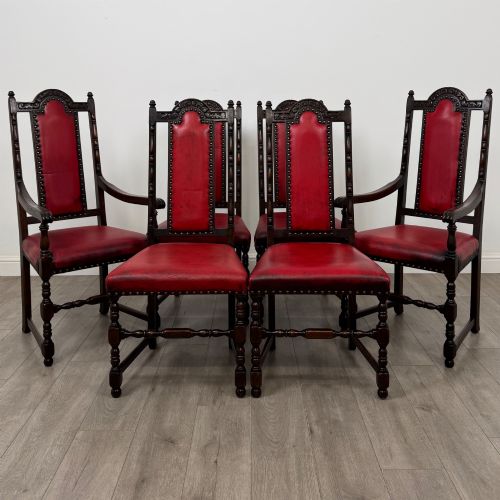
The inventory includes dining chair sets, window seats, and library armchairs displaying Chippendale, Sheraton, and Jacobean revival styles.
Assessment of Quality in Revival Furniture
Quality in edwardian revival seating rests on the selection of timber, the precision of decorative inlay, and the structural integrity of the frame. Dense mahogany and figured walnut with crisp, deep carving distinguish higher grade examples from simpler utility pieces.
The integration of materials also defines the standard, seen in the tightness of cane work, the delicacy of satinwood stringing, and the weight of the timber used in dining sets and armchairs.
Warings·GIllows
The Edwardian Revival Seating Glossary
- Sheraton Revival
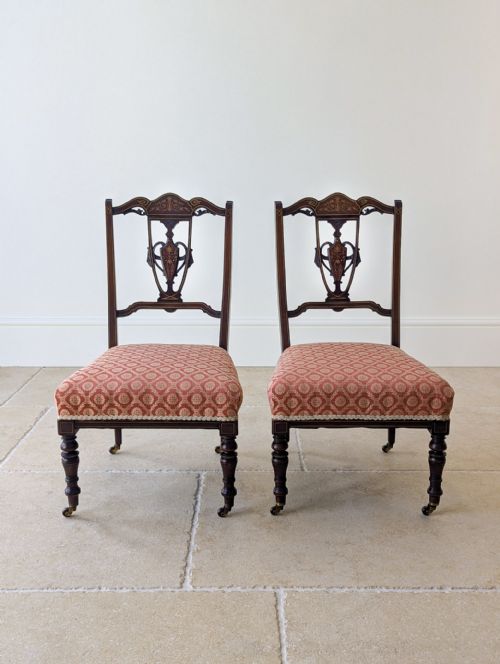
- A lighter neoclassical style inspired by George Sheraton, prominent in Edwardian drawing room furniture. This work frequently employs satinwood, painted floral motifs, and tapered legs.
- Bergere
- An enclosed upholstered armchair with wooden framing and cane sides or back panels. These seats appeared often in twentieth-century drawing rooms and libraries.
- Jacobean Revival
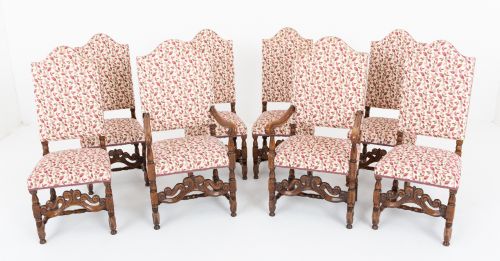
- A heavy oak style drawing on seventeenth-century motifs such as turned twist legs and panelled backs. Pieces in this category include dining chairs and hall benches.
- Carver Armchair
- A dining chair with armrests, traditionally placed at the head of a dining table and matched with a set of armless side chairs.
Edwardian Revival Seating: Frequently Asked Questions
What is edwardian revival seating?
Edwardian revival seating encompasses chairs, sofas, and stools manufactured around the early twentieth century that imitate earlier historical periods like the Georgian and Jacobean eras.
These pieces use traditional timbers like mahogany and oak while reflecting the interior tastes of the Edwardian period.
How do I identify a sheraton revival chair?
Sheraton revival chairs usually feature light timbers such as satinwood, often decorated with painted floral motifs or fine stringing inlay.
They commonly display slender, tapered legs and geometric back designs characteristic of late eighteenth-century neoclassical furniture.
Were these chairs made in sets?
Makers produced many dining chairs in larger matched groups, often comprising six to ten side chairs alongside accompanying carver armchairs with matching upholstery.
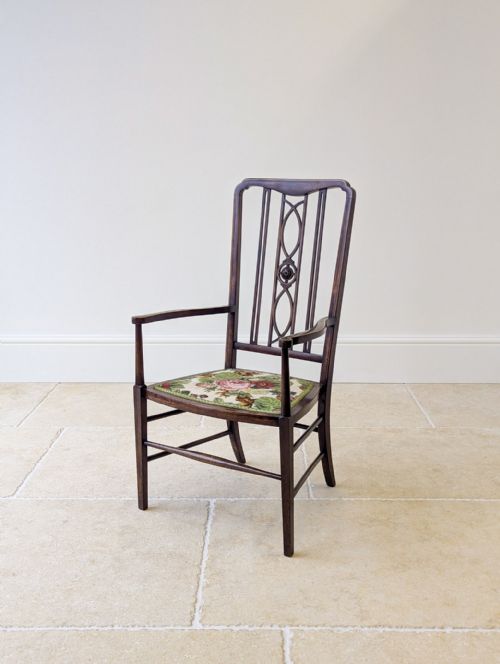
Smaller seating forms like salon chairs and armchairs were typically made as individual items or in balanced pairs.
What woods were used for these seats?
Mahogany served as the primary timber for formal dining sets and library armchairs, while oak appeared frequently in hall benches and Gothic revival pieces.
Cabinet makers also incorporated satinwood, walnut, rosewood, and cane panels into decorative drawing room furniture.