


Edwardian Religious Jewellery
Edwardian religious jewellery brings together delicate gold crosses, lockets, and enamel pendants from the early twentieth century.
Edwardian Religious Jewellery
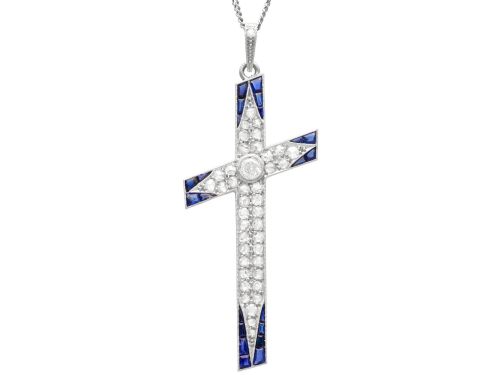
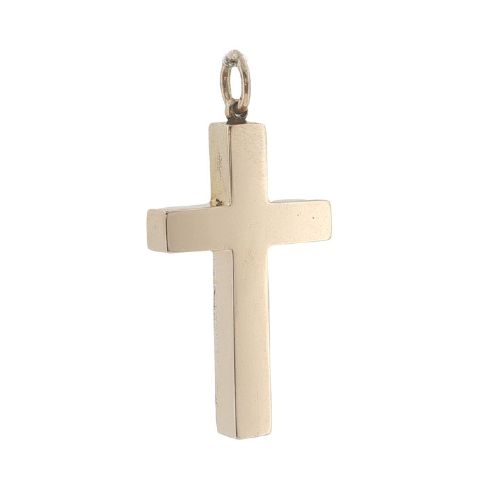
Edwardian religious jewellery centres on devotional pieces such as crosses, lockets, and medals depicting the Virgin Mary or Saint Christopher. These items combine faith with the intricate design aesthetics of the early twentieth century, spanning periods from the late Victorian era through the Edwardian years.
Buyers most frequently encounter gold and silver cross pendants suspended from fine chains, alongside silver or gold lockets and brooches. The selection draws on Edwardian, Victorian, and Arts and Crafts styles, reflecting a period of refined craftsmanship.
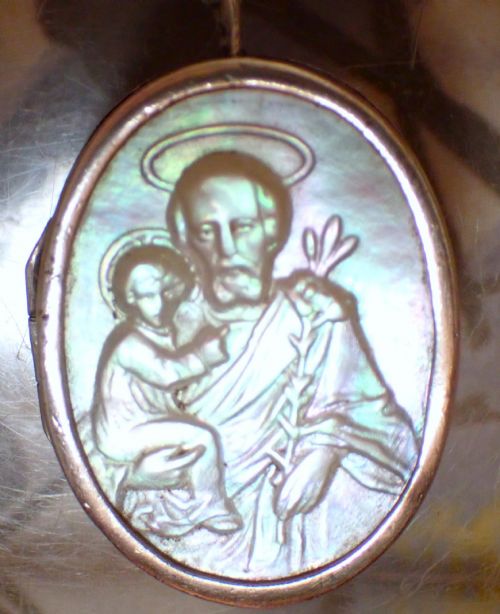
The objects serve both as personal items of devotion and as wearable pieces of history, utilising traditional motifs adapted to the tastes of the early nineteen hundreds. Pieces often incorporate symbolic imagery, from carved mother of pearl to detailed enamel work.
Materials and construction
Goldsmiths utilised 9ct gold, 18ct yellow gold, and sterling silver as the primary metals for forming pendants, crosses, and frames. These metals provided a durable yet ductile base for intricate engraving and stone setting.
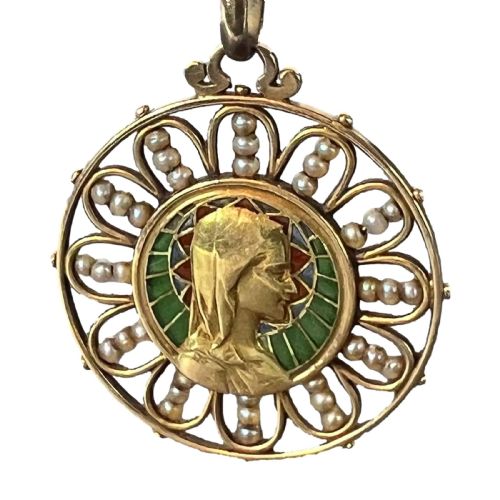
Artisans applied enamel techniques, including plique-a-jour, to create translucent colour within gold frameworks, while seed pearls, diamonds, and sapphires were set by hand to accent the central religious motifs. Carved mother of pearl also appears as a principal material for specific figural subjects.
Listings feature items dated from 1900 through 1930, encompassing Victorian, Edwardian, Arts and Crafts, and Mid-Century French styles.
Factors of quality
Quality separates in the precision of the metal engraving and the delicacy of the enamel work, where superior examples exhibit sharp lines and flawless vitreous fusion. The choice of gemstones, ranging from rose-cut diamonds to matched seed pearls, also dictates the distinction between standard and finer pieces.
The integration of specific artistic movements, such as recognizable Arts and Crafts hand-hammered details or distinct French plique-a-jour technique, elevates the standing of an individual pendant or medal.
Omar Ramsden and Alwyn Carr
The Edwardian Religious Jewellery Glossary
- Plique-a-jour
- An enamelling technique where the enamel is applied without a backing, allowing light to shine through the transparent or translucent colour much like stained glass. This method requires considerable skill to prevent the enamel from cracking during firing.
- Seed pearl
- Very small, naturally occurring or early cultured pearls often used in clusters or borders on Edwardian pendants. Their uniform size and creamy lustre contribute to the delicate appearance of the jewellery.
- Cross pendant
- A devotional ornament shaped in the Christian cross designed to be suspended from a neck chain. These pieces often feature surface engraving or gemstone embellishments.
- Medal
- A flat piece of metal stamped or cast with a sacred image, such as the Virgin Mary or Saint Christopher, worn as a pendant or charm for protection or remembrance. These frequently originate from French workshops.
- Arts and Crafts
- A design movement emphasising handcraftsmanship, simple forms, and traditional guild methods rather than mass production. Items from this movement display visible hand-wrought textures and thoughtful integration of materials.
Edwardian Religious Jewellery: Frequently Asked Questions
What metals were used in Edwardian religious jewellery?
Makers utilised 9ct gold, 18ct yellow gold, and sterling silver for the structure of crosses, lockets, and medals. These metals offered the necessary durability for daily wear while accommodating fine decorative engraving.
Silver appears frequently in Arts and Crafts pieces, whereas gold forms the basis for finer gem-set pendants incorporating diamonds and sapphires.
How do I identify an Edwardian religious piece?
Look for characteristic stylistic markers such as light gold frameworks, delicate seed pearl accents, and Edwardian or Arts and Crafts design motifs. Hallmarks stamped on the metal often provide specific assay office marks and date letters.
Subject matter typically includes traditional crosses, lockets with mother of pearl, and enamel depictions of the Virgin Mary or Saint Christopher.
Are these pieces suitable for daily wear?
Devotional items from the early twentieth century are generally robust enough for regular use, provided they receive careful handling. Gold and silver settings securely hold small seed pearls and diamonds during normal activities.
Enamel elements require extra caution to prevent chipping against hard surfaces, making them better suited for occasional wear.
What is plique-a-jour enamel?
Plique-a-jour is a specialised technique where enamel is fired within an open metal cell framework without a backing plate. This lets light pass directly through the coloured glass, creating a stained-glass effect.
It is commonly found on French religious medals and pendants from the early nineteen hundreds.