



Oval Silver Pendant Locket
An oval silver pendant locket brings together intimate portraiture and metalwork, worn close to the heart across the Victorian, Edwardian, and Art Deco periods.
Oval Silver Pendant Locket
When you search for an oval silver pendant locket, you encounter hinged jewellery designed to hold photographs, hair, or small miniatures. These pieces span from the Georgian era through the Victorian period and into the early twentieth century.
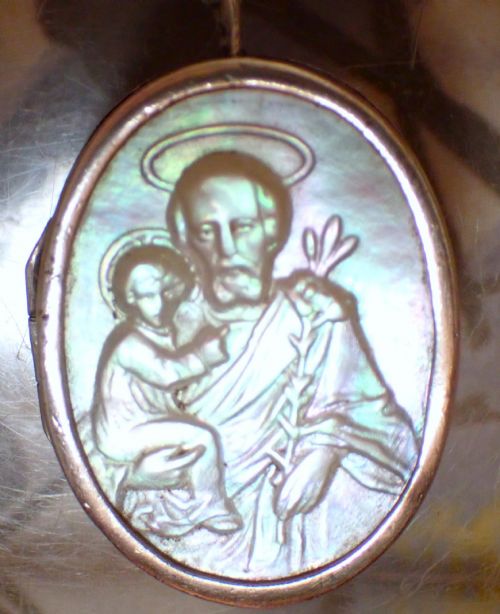
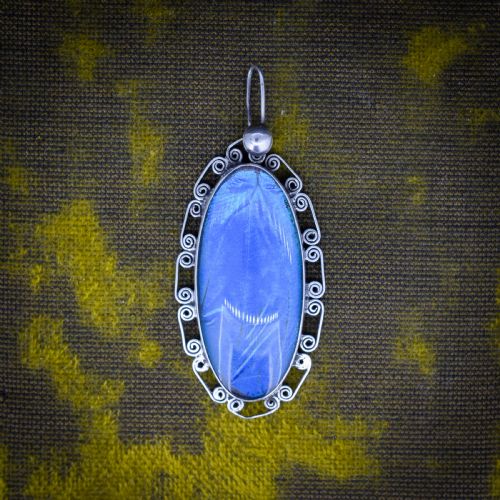
The form ranges from simple engraved sterling silver cases to elaborate examples decorated with enamel, seed pearls, mother-of-pearl, and butterfly wing. Many pieces suspend from matching silver chains, functioning as both personal mementoes and wearable art.
Materials and construction
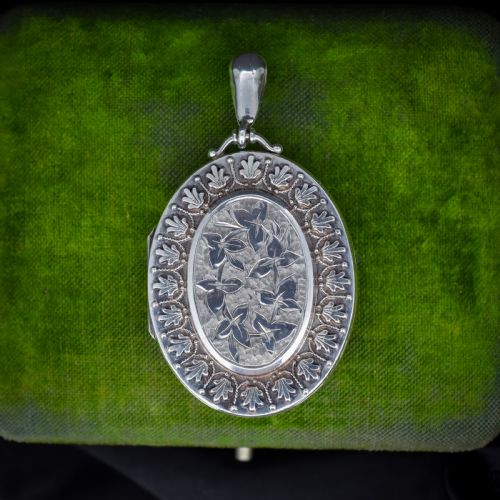
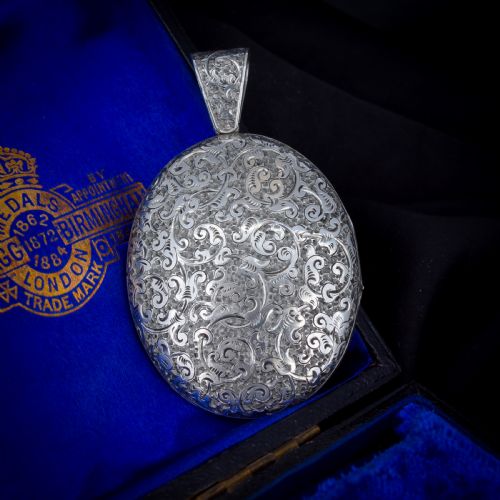
Makers utilised sterling silver and solid silver as the primary body material, often shaping the metal into distinct oval proportions. Engraving, hand-carved mother-of-pearl, and black enamel added surface detail and contrast to the metal.
Internal compartments frequently housed glass panels to protect delicate watercolours, photographic prints, or braided hair. Additional decorative elements such as seed pearls, paste stones, and butterfly wing panels were set into the silver housings by hand.
Object forms include pendant lockets, portrait miniatures, crucifix lockets, and necklaces featuring engraved botanical and avian motifs.
Evaluating craftsmanship and condition
Quality in an oval silver pendant locket depends upon the crispness of the hand engraving and the security of the hinged closure. Finer examples display deep, detailed botanical or figurative carving rather than shallow machine stamping.
The integration of decorative elements like enamel, seed pearls, and hand-painted miniatures separates standard production from exceptional work. Well-preserved internal bezels and original glass covers maintain the integrity and original function of the piece.
The Oval Silver Pendant Locket Glossary
- Sterling silver
- A silver alloy containing 92.5 percent pure silver and 7.5 percent other metals, usually copper, ensuring durability for jewellery. This standard metal appears frequently across nineteenth-century silver lockets.
- Seed pearl
- A very small, naturally occurring pearl often used in Victorian jewellery design. These tiny pearls form delicate floral and geometric patterns on the face of a locket.
- Aesthetic Movement
- A late nineteenth-century design style emphasising visual beauty over narrative or moral themes. Motifs from this period include swallows, natural flora, and stylised Japanese influences.
- Paste
- Hand-cut and polished glass designed to imitate gemstones in antique jewellery. Old cut paste provides the sparkle of diamonds without the use of precious stones.
- Portrait miniature
- A small, highly detailed painting on ivory, vellum, or card, often executed in watercolour. These intimate portraits were frequently housed inside pendant lockets during the Georgian and Victorian eras.
Oval Silver Pendant Locket: Frequently Asked Questions
What fits inside an antique locket?
These pieces were originally designed to hold small photographic prints, painted miniatures, or locks of human hair. Many retain their internal glass covers and metal rims to secure these mementoes safely.
Modern wearers often use them to keep tiny photographs of loved ones close, utilising the existing internal frames and compartments.
How do I date a silver locket?
Dating relies on stylistic clues, decorative motifs, and occasional hallmarks stamped onto the silver. Victorian pieces often feature deep floral engraving, black enamel, or specific aesthetic movement symbols.
Later Edwardian and Art Deco examples introduce materials like carved mother-of-pearl or butterfly wing panels, alongside cleaner geometric lines.
Can I wear a locket every day?
Antique silver lockets are robust enough for regular wear provided the hinge and clasp remain secure. Taking care to avoid exposing enamel or delicate internal watercolours to moisture preserves the materials.
Checking the tiny hinge pin and locking mechanism periodically ensures the locket stays shut while suspended from a chain.
Were lockets always worn on chains?
While many pieces connect directly to silver chains or necklaces, others were suspended from chatelaines or ribbons in the nineteenth century. The presence of a sturdy jump ring or bail usually indicates how the piece hung from its original mount.
Collectors today frequently pair antique lockets with matching period silver chains to complete the ensemble.