

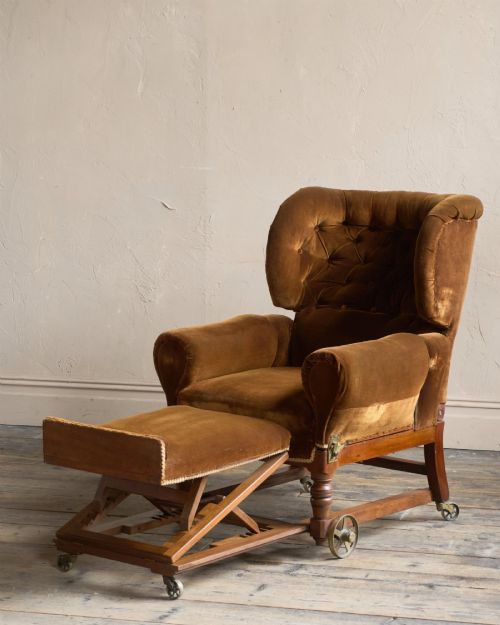
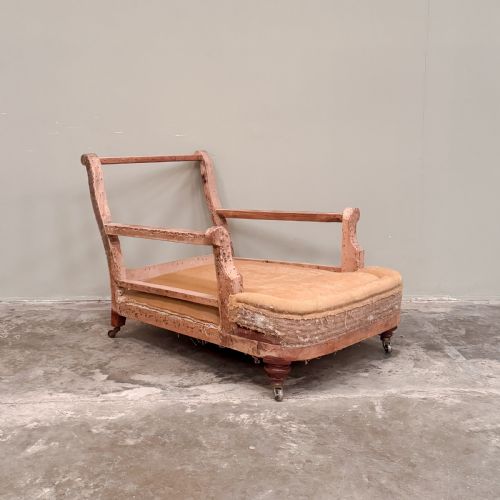
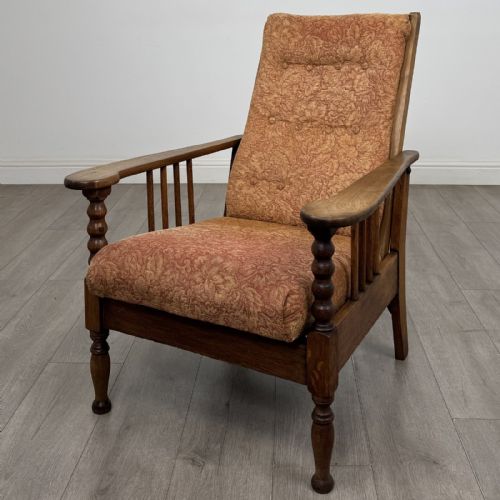
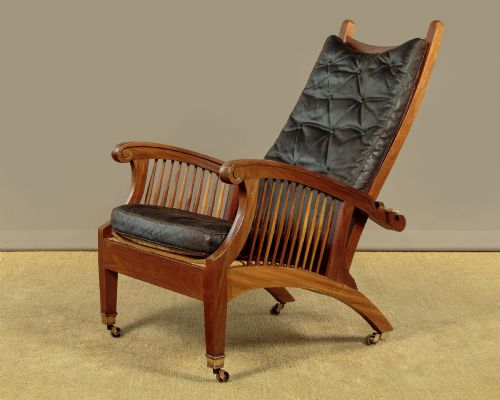
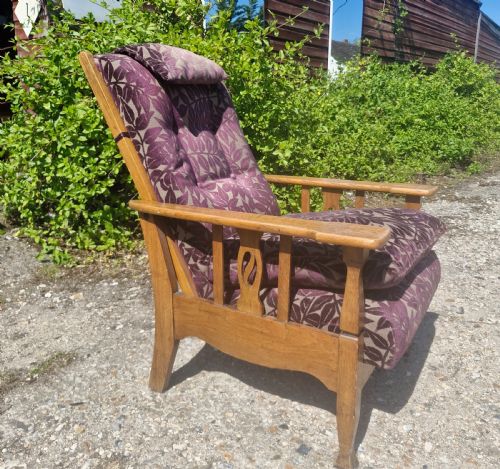


Edwardian Recliner Chair
An edwardian recliner chair brings mechanical ingenuity and heavy timber frames together for adjustable comfort.
Edwardian Recliner Chair
When buyers search for an edwardian recliner chair, they encounter versatile seating designed for adjustable repose, predominantly emerging from the early twentieth century alongside overlapping Victorian and Arts and Crafts examples. These pieces typically take the form of heavy timber armchairs fitted with pivoting backs or extending foot mechanisms to alter the sitter's posture.
The selections on this page lean heavily towards oak and mahogany framing, occasionally incorporating cane panels or leather upholstery. Makers from the period drew on earlier mechanical traditions, resulting in robust lounge seats and library chairs built for functional longevity.
Materials and construction
The structural framework relies on solid hardwoods such as oak, walnut, and mahogany, chosen for their load-bearing strength during mechanical adjustment. Metal components, including brass hinges, ratchets, and castors, facilitate the pivoting movement of the backrest and the mobility of the chair.
Upholstery materials range from plain fabric and velvet to supple leather and woven cane inserts. These elements are fastened to heavy timber frames designed to withstand the constant shifting of weight inherent in an adjustable seat.
Edwardian Recliner Chair Retail Price Guide 2026
Typical asking prices for edwardian recliner chair among the pieces listed under this phrase on Sellingantiques today, from the lower quarter to the upper quarter. They describe what is for sale here now, not the wider market.
The styles span Victorian and Arts and Crafts aesthetics alongside campaign and metamorphic designs.
Distinguishing quality in adjustable seating
Quality separates pieces through the complexity and smoothness of the mechanical action, distinguishing robust proprietary ratchets from simple hinged adjustments. The precision of the timber joinery and the retention of original brass hardware indicate higher workshops.
The preservation of the primary materials, whether polished mahogany, turned oak, or intact cane work, defines the upper tier of surviving examples. Secondary alterations or replaced mechanisms alter the historical integrity of the piece.
Minter·J Foot & Son·John Ward·Foot and Son
The Edwardian Recliner Chair Glossary
- Bergère
- An enclosed armchair with a wooden frame where the sides and back are filled with woven cane. This technique lightens the visual weight of heavy timber frames.
- Metamorphic
- A descriptive term for furniture that transforms from one form into another, such as an armchair converting into a reclining lounger.
- Campaign style
- Portable furniture designed for travel and easy dismantling, typically featuring brass corners and folding elements.
- Castor
- A small wheel mounted on a swivel attached to the legs of heavy chairs, allowing for easy movement across floors.
Edwardian Recliner Chair: Frequently Asked Questions
How do these reclining mechanisms operate?
The mechanisms usually involve a ratchet system or a pivoting backrest controlled by side levers or arm adjustments. These systems allow the user to lock the seat into multiple fixed angles.
Heavier timber frames use internal metal rods to distribute weight safely when the chair is tilted backward.
Are these chairs suitable for daily use?
Most examples are constructed from solid hardwoods like oak and mahogany, making them structurally robust for regular seating. Their adjustable nature requires gentle handling of the moving wooden and metal parts.
Placing them in a living space simply demands attention to the clearance needed behind the backrest when reclined.
What is the difference between a steamer chair and a library chair?
Steamer chairs typically feature folding wooden slats, often in walnut or oak, designed for portability on ships or verandas. Library chairs are heavier stationary armchairs built for indoor reading rooms, frequently with leather upholstery and brass castors.
Both types may incorporate adjustable reclining backs, but their intended environments dictate their framing and weight.
How do I identify Arts and Crafts influences?
Arts and Crafts pieces emphasise exposed construction, plain oak surfaces, and straightforward joinery rather than ornate carvings. They often reflect simple, functional forms associated with workshops of that era.
The absence of excessive decoration and the focus on honest timber grain mark this particular design approach.