



Edwardian Quartetto Set
An edwardian quartetto set is a nested group of four stacking tables designed to save space, offering clever versatility for entertaining.
Edwardian Quartetto Set
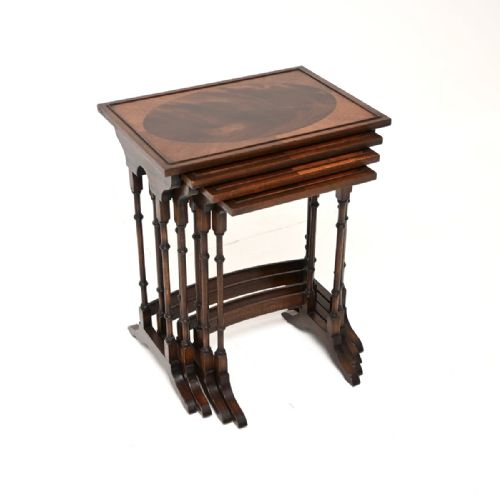
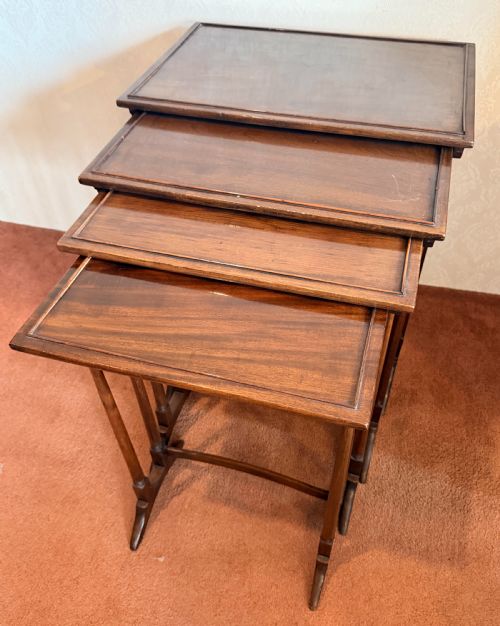
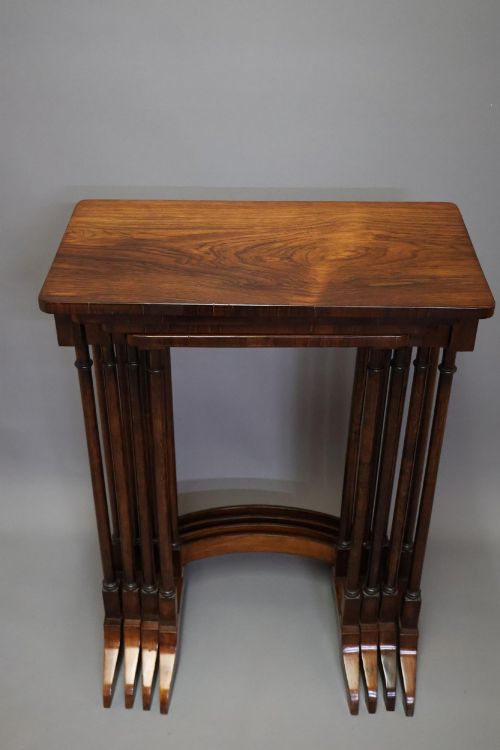
When you examine an edwardian quartetto set, you are looking at a nested group of four tables designed to slide neatly beneath one another. These tables appear most frequently from the Edwardian period, alongside examples originating in the nineteenth century and the Regency era.
The primary forms take shape as nesting tables or occasional side tables, often utilised as lamp, coffee, or wine tables. Makers produced them in various stylistic interpretations, including Sheraton style, Regency design, French style, and Jacobean revival.
The evidence shows sets constructed predominantly for domestic convenience, scaling from the largest top table down to the smallest under-tier. Walnut, mahogany, and rosewood dominate the surviving pieces recorded in past and present listings.
Materials and Technique
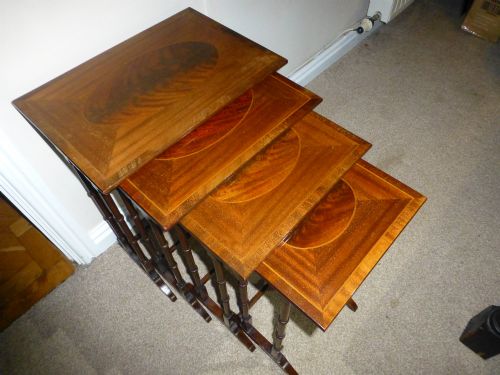
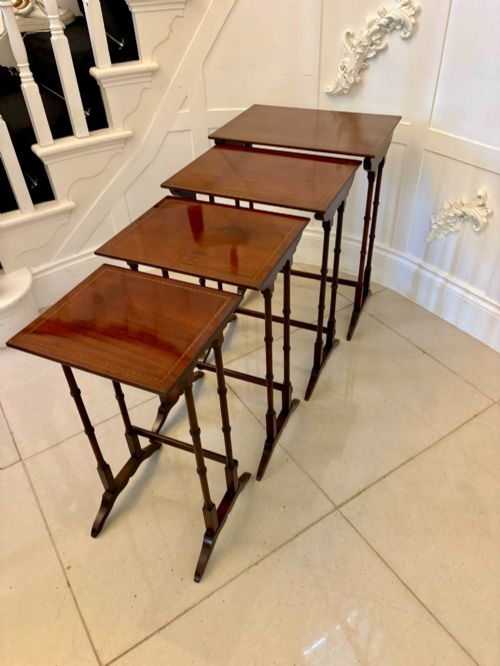
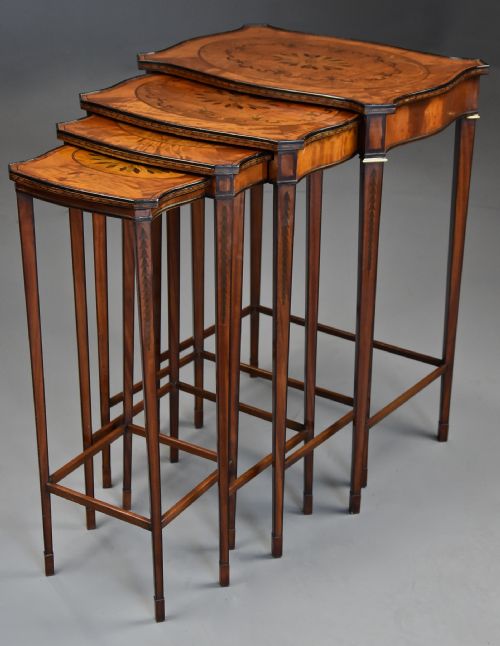
Craftsmen built these sets using solid timbers and decorative veneers, selecting mahogany, walnut, rosewood, oak, and teak as the structural foundations. Satinwood inlay and satinwood cross banding frequently embellish the tops, creating contrast along the edges.
Joinery methods include square tapered legs and precise frame construction to ensure each table slides smoothly into the next. Brass inlay and French style decorative elements appear on selected pieces to elevate the visual detail of the set.
Evaluating Quality
Quality rests upon the selection of timber and the precision of the nested fit, where tighter tolerances separate finer sets from standard production. Figured veneers, such as burr walnut or richly grained mahogany, indicate a higher grade of material selection by the maker.
The delicacy of the inlay work and the restraint shown in proportions distinguish superior examples from simpler utilitarian pieces. Sets retaining their original finish and structural integrity demonstrate better preservation through the decades.
Gillows
The Edwardian Quartetto Set Glossary
- Quartetto
- A set of four nesting tables designed to fit progressively one inside another. This nineteenth-century term originates from musical quartets.
- Cross banding
- A strip of veneer applied to the border of a table top with the grain running perpendicular to the centre panel. This decorative technique frames the primary wood.
- Satinwood
- A durable hardwood yielding a yellowish lustre, frequently employed for stringing and contrasting inlay work on mahogany furniture. It provides a bright decorative accent.
- Serpentine
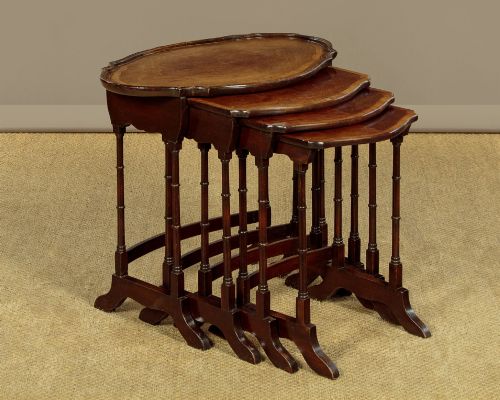
- A gently undulating curved outline shaping the front or top edge of a table. This contour adds fluidity to the furniture design.
Edwardian Quartetto Set: Frequently Asked Questions
How were quartetto tables used?
These tables served primarily as versatile furniture for drawing rooms, allowing servants or hosts to pull out smaller surfaces for tea, writing, or holding lamps.
When not needed, the graduating sizes slid completely under the main table to occupy the floor space of a single small stand.
What is the difference between a quartetto set and nesting tables?
A quartetto set specifically designates a group of four tables designed to stack sequentially. Standard nesting tables may comprise sets of three or more pieces without the specific four-table convention implied by the Italian musical term.
Both terms describe space-saving stacking furniture, but quartetto specifically denotes the four-tier arrangement common in the Edwardian era.
How do I identify an Edwardian set?
Edwardian sets often display lighter timbers, refined satinwood inlay, and Sheraton revival influences reflecting the tastes of the early twentieth century. The proportions tend to be slender and delicate compared to heavier Victorian predecessors.
Makers of this period favoured mahogany and walnut carcasses enhanced by precise banding and square tapered supports.
Can these tables support heavy items?
Quartetto tables are built with light frames intended for lamps, books, cups, and occasional decorative objects rather than heavy loads. The smaller tables in the set possess slender legs and joints engineered for stability under moderate weight.
Placing excessively heavy objects on the smaller tiers can strain the delicate glue joints and thin timber tops.