


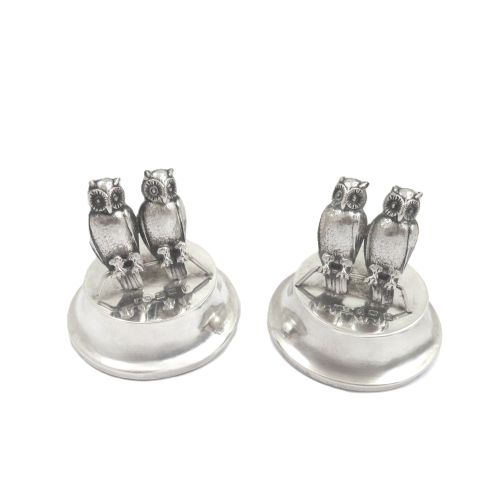


Edwardian Place Card Clip
An edwardian place card clip sits on the dining table to hold menus and markers, bringing small silver sculpture to formal dinners.
Edwardian Place Card Clip
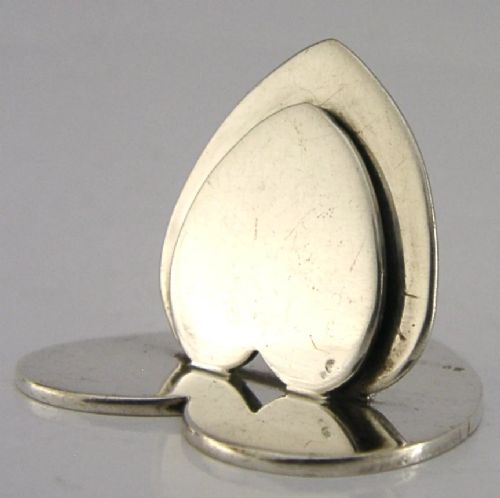
The edwardian place card clip encompasses small sterling silver table accessories designed to hold place cards and menus during formal meals. Most examples take the form of miniature novelties or architectural mounts that secure small cards upright.
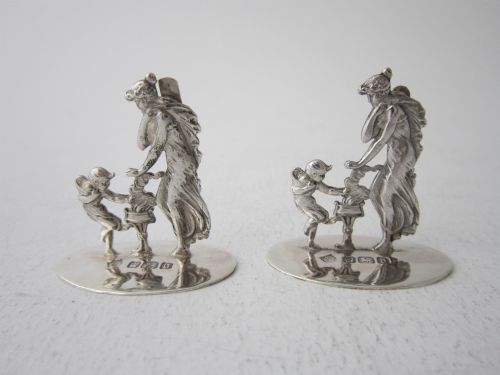
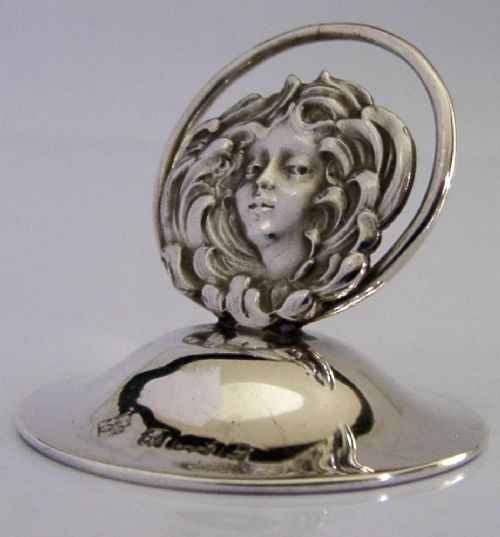
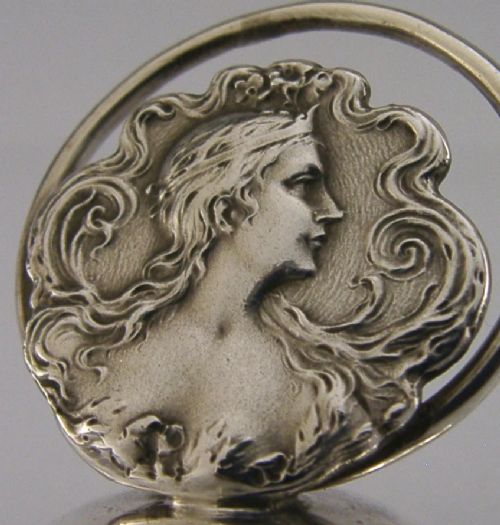
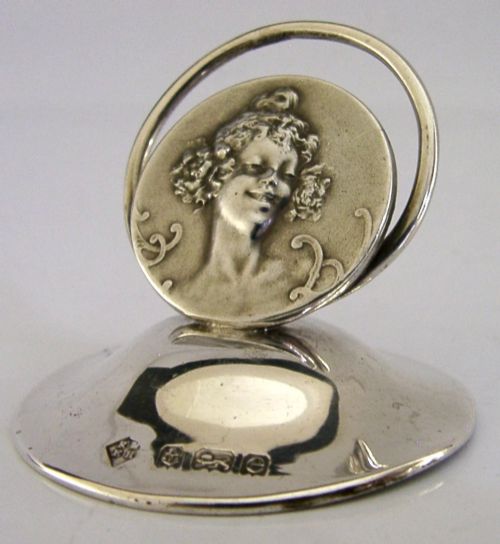
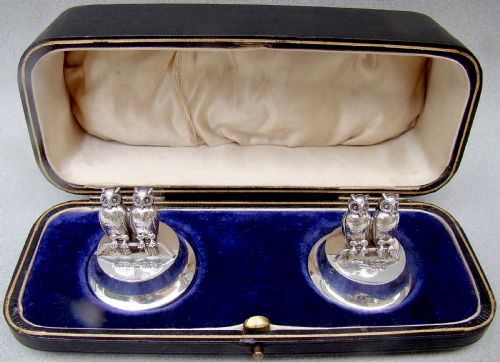
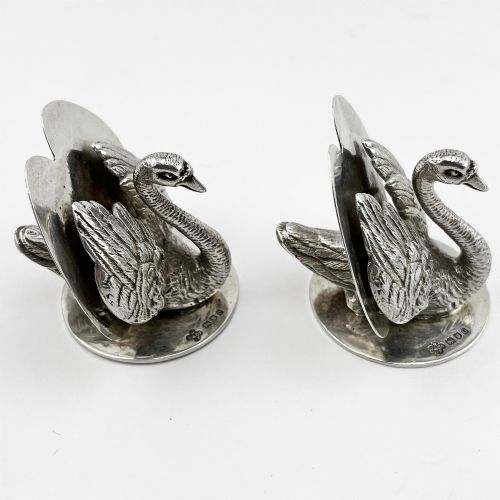
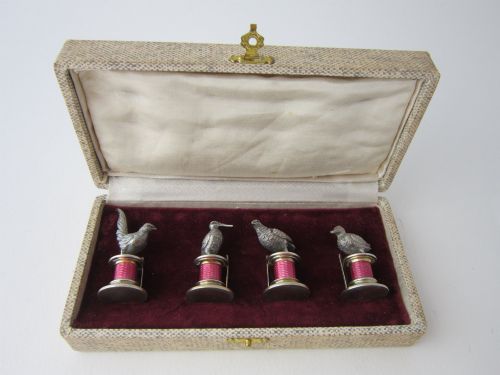
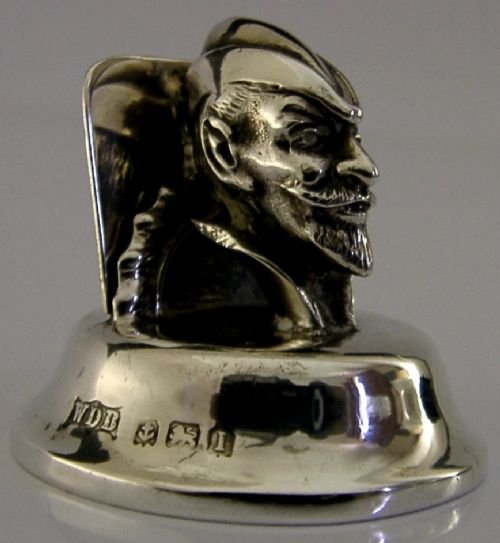
The pieces appearing on this page date predominantly from the Edwardian period, with stylistic overlaps into Art Nouveau and Art Deco designs. Common motifs include animals, birds, and figural subjects such as maidens or literary characters.
Makers produced these items as single pieces or matched pairs and sets for hosting dinner parties. Their diminutive scale meant silversmiths could indulge in playful and intricate designs without excess weight.
How they were made
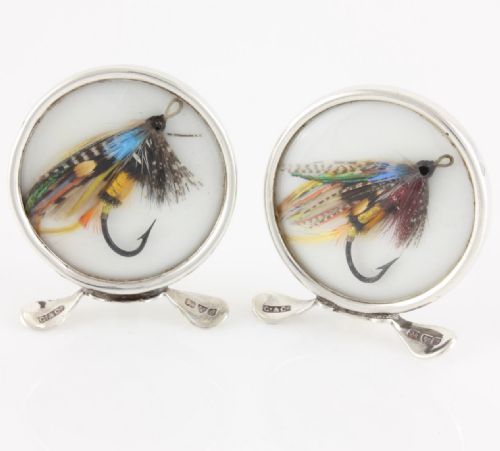
Silversmiths utilised sterling silver cast in detailed moulds or hand-hammered into specific forms, adding weighted bases to keep the clips stable on the tablecloth. Many pieces incorporate enamel work to add colour to flags, birds, or floral motifs.
Edwardian Place Card Clip Retail Price Guide 2026
Typical asking prices for edwardian place card clip among the pieces listed under this phrase on Sellingantiques today, from the lower quarter to the upper quarter. They describe what is for sale here now, not the wider market.
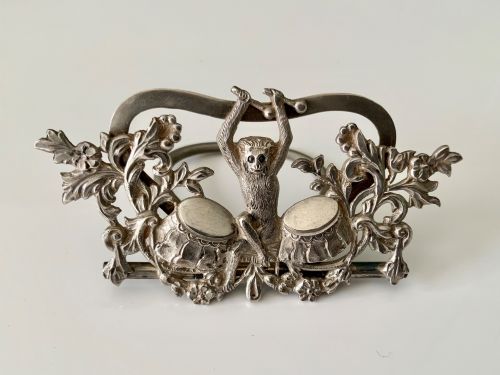
Dining tables gained a theatrical touch when guests found their names held aloft by silver monkeys playing drums or figures from Alice in Wonderland.
What varies in quality
The presence of undamaged enamel work affects the integrity of decorated pieces, as does the continued spring tension in the clip mechanism. Matched sets command greater interest than assembled groups.
Levi & Salaman·A. Wilcox·Grey & Co.·Sampson Mordan
The Edwardian Place Card Clip Glossary
- Sterling silver
- A silver alloy containing 92.5 percent pure silver and 7.5 percent other metals, typically copper, used for durability in tableware.
- Assay office
- A body that tests the purity of precious metals and stamps items with hallmarks. Towns such as Birmingham and Chester held distinct offices.
- Novelty silver
- Small silver items shaped to resemble animals, people, or everyday objects. These pieces combined utility with humour for Edwardian dining.
- Enamel
- A glassy substance fused to the surface of metal through firing for decoration. It provides colour highlights on small silver accessories.
- Chasing
- A technique where a silversmith hammers metal from the front to push details into relief. This method creates texture on the surface of figural pieces.
Edwardian Place Card Clip: Frequently Asked Questions
What is an edwardian place card clip?
An edwardian place card clip is a small silver tabletop accessory designed to hold paper menus or guest name cards upright during formal meals.
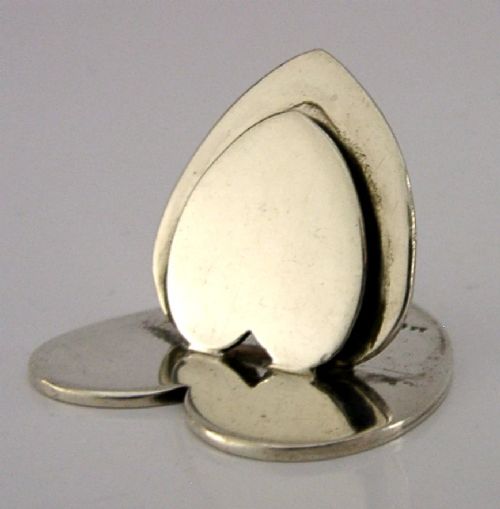
These pieces combine functional metal clips with decorative figures, animals, or geometric shapes characteristic of the early twentieth century.
How were they used on the table?
Hosts placed them beside each setting or shared them along the length of the dining table to display menu choices and seating arrangements.
The spring mechanism gripped the paper securely without tearing, allowing guests to read the evening's offerings easily.
How do I clean silver clips?
Clean them gently with a soft cloth and a reputable silver polish, avoiding abrasive pads that can wear away fine chased details.
Enamelled pieces require particular care to prevent harsh chemicals from damaging the coloured glass surfaces.
Can I use them for modern cards?
Modern place cards fit securely into the original spring mechanisms as long as the paper thickness matches the gap of the clip.
They function just as effectively on contemporary dining tables as they did during Edwardian dinner parties.
How do I identify the period?
Hallmarks stamped on the silver provide the exact assay office, standard mark, and date letter corresponding to the year of manufacture.
Stylistic elements like Art Nouveau curves or Edwardian novelty subjects also point directly to the early 1900s.