

Edwardian Pedestal Cabinet
These edwardian pedestal cabinet examples combine compact proportions with refined timber work, offering practical storage and distinct period character for modern rooms.

Edwardian Pedestal Cabinet
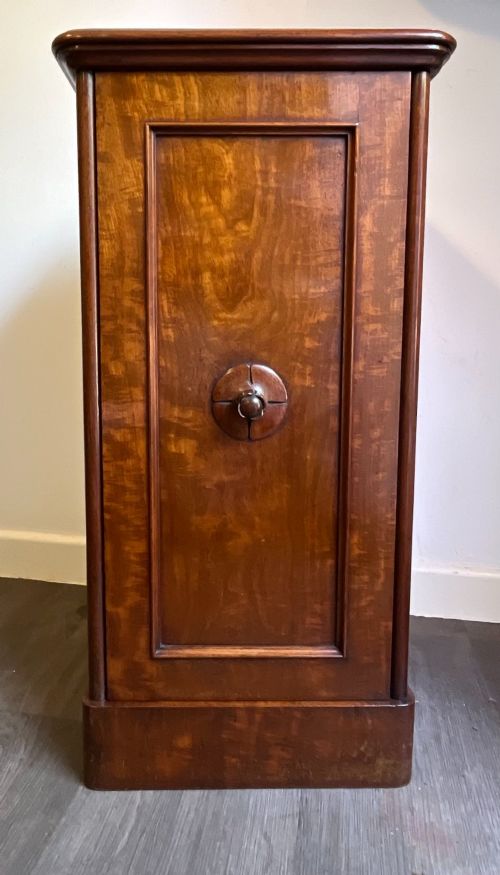
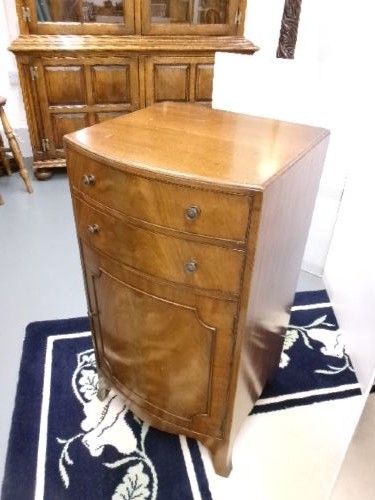
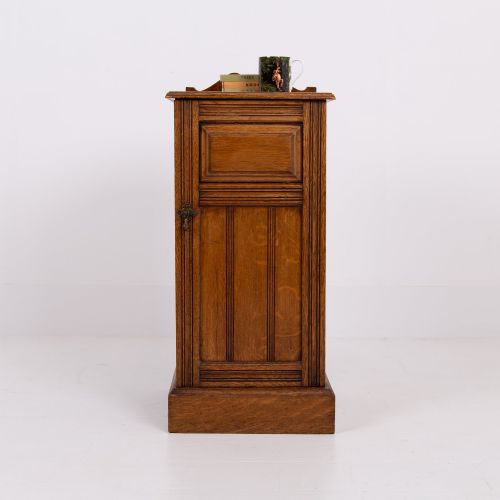
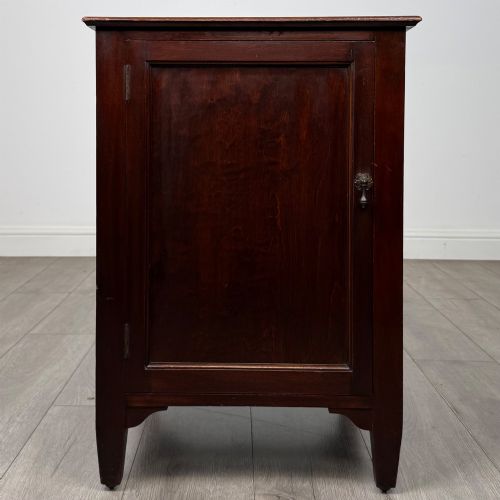
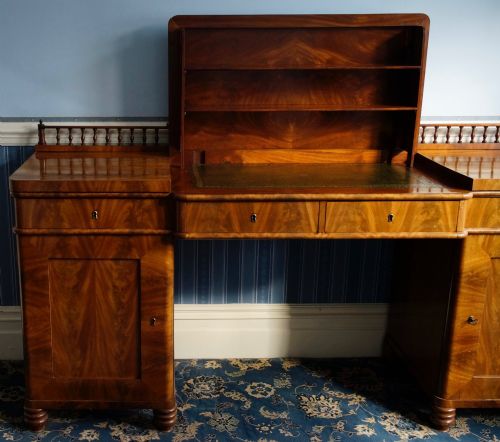
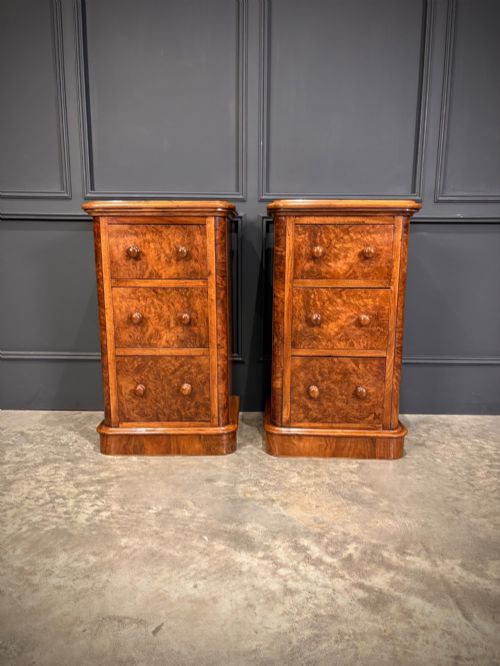
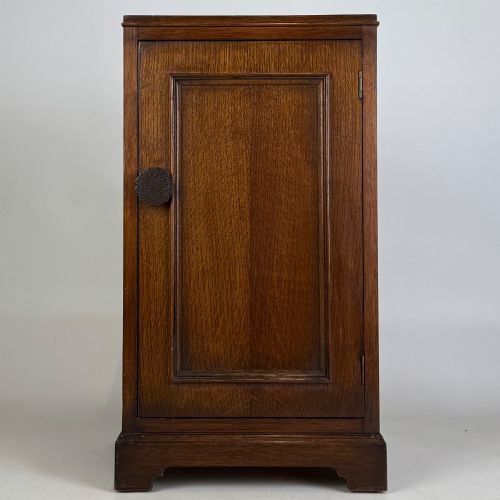
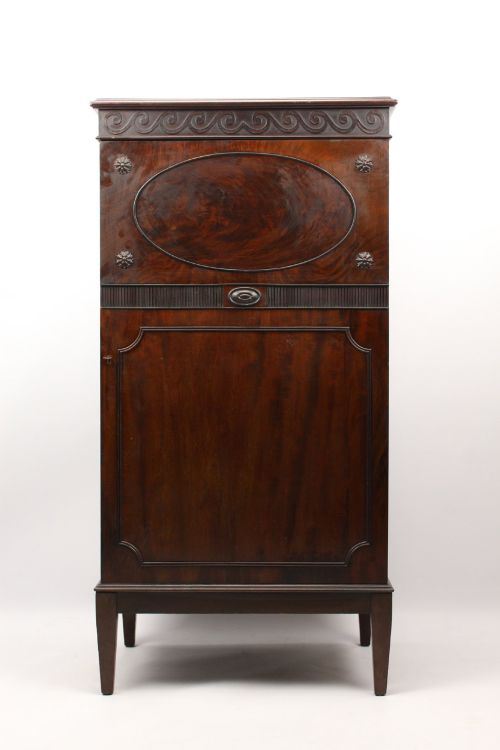
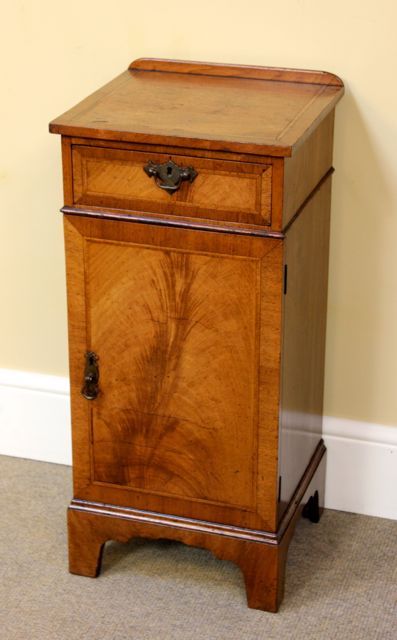
When searching for an edwardian pedestal cabinet, buyers encounter upright single-door cupboards, bedside chests, and slender display pieces designed for compact spaces. The most frequently met examples on this page are mahogany or satinwood bedside cabinets and tall display vitrines dating from the early twentieth century.
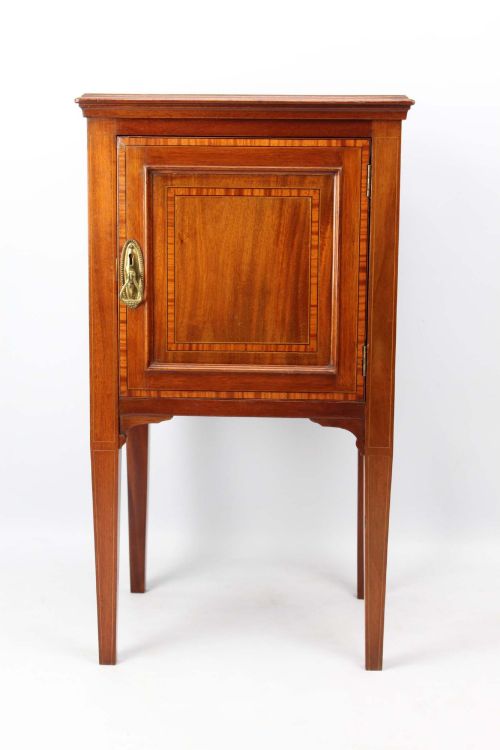
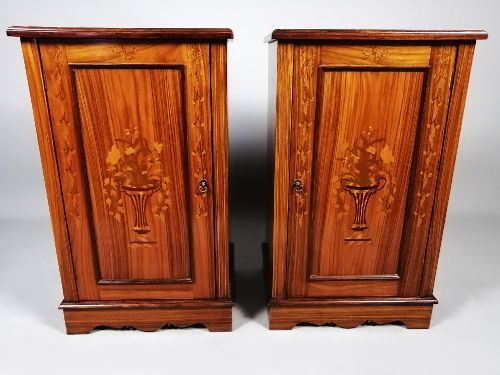
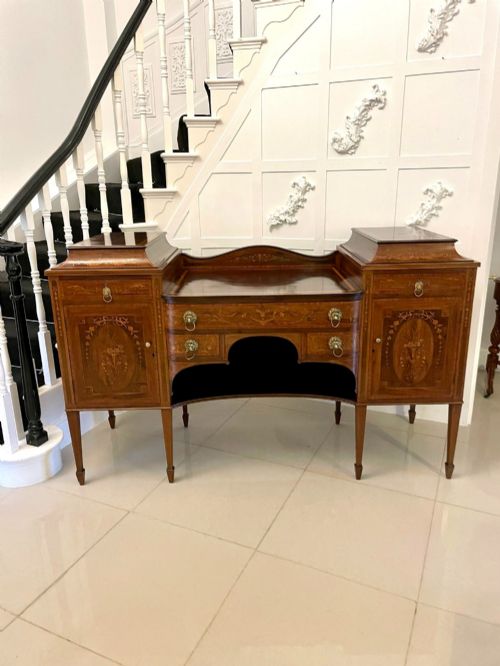
The form developed from nineteenth-century bedside cupboards and larger side cabinets, adapting traditional storage into narrower footprints. Makers of the period drew upon Sheraton Revival and Georgian design vocabulary, applying satinwood inlay and marquetry to upright carcasses.
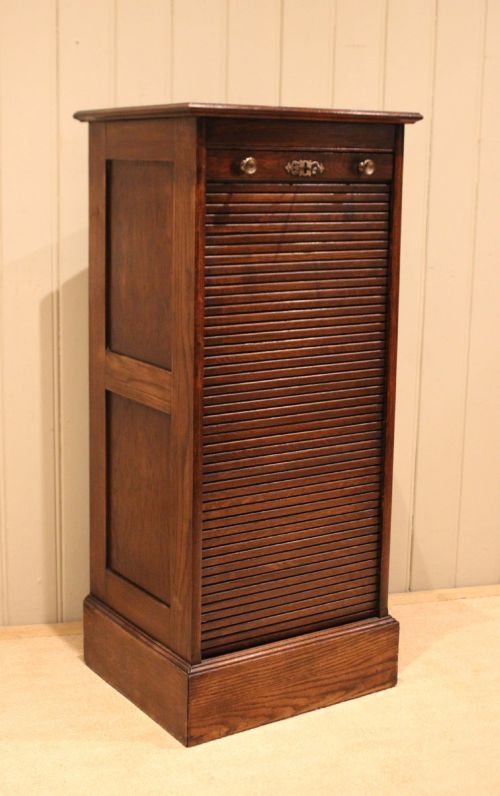
While many pieces serve as bedside tables, the evidence includes specialised forms such as tambour front filing cabinets and glass-sided bijouterie stands. Buyers select these items for their versatility in contemporary interiors as much as for their period authenticity.
How they were made
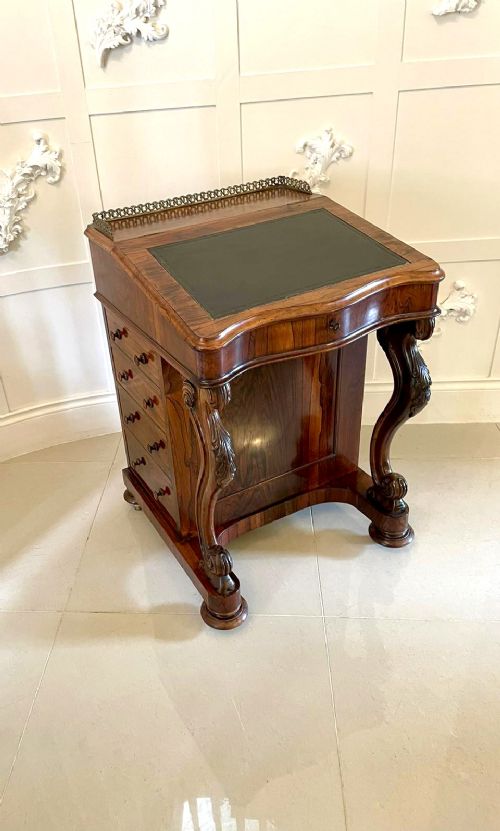
Makers constructed these cabinets using a solid timber frame or carcase veneered in figured mahogany, walnut, or satinwood, often enhanced by contrasting stringing and marquetry motifs. Brass handles, hinges, and occasional gallery rails provide functional metallic accents against the polished wood surfaces.
Display variants incorporate clear glass panels and mirrored backs to showcase contents, whilst utilitarian forms employ sturdy oak or teak. Joinery techniques relied on precise mortise and tenon joints to ensure stability in tall, narrow proportions.
Some Edwardian specimens double as cunning shoe cabinets disguised with stately inlaid mahogany doors.
What varies in quality
Quality reveals itself in the choice of timber veneers, where highly figured burr walnut, rich mahogany, or finely grained satinwood elevate a standard carcase into a distinguished piece. The crispness of inlaid banding and the delicacy of hand-cut marquetry distinguish workshop production from simpler output.
Construction details such as dovetailed drawer linings, original brass hardware, and well-fitted doors that hang true demonstrate superior cabinet-making standards. The integration of fine glass panels and polished marble tops further separates standard utility pieces from exhibition-grade furniture.
Hewetsons London·Denby and Spinks·Morant and Co London
The Edwardian Pedestal Cabinet Glossary
- Marquetry
- Decorative patterns formed by inserting thin slices of wood, shell, or ivory into a veneered surface. This technique creates pictorial or geometric designs on cabinet doors and tabletops.
- Satinwood
- A lustrous, yellowish timber native to India and Ceylon, frequently utilised in fine eighteenth and nineteenth-century cabinet-making. It provides a bright, contrasting surface for stringing and panel inlay.
- Tambour
- A flexible shutter constructed from narrow vertical strips of wood glued to canvas, allowing a sliding door to curve around the corner of a cabinet.
- Vitrine
- A glass-fronted display cabinet designed for exhibiting porcelain, curiosities, or jewellery. These freestanding upright stands often feature glazed sides to maximise light penetration.
- Stringing
- Thin inlay lines of contrasting wood or light-coloured veneers set flush into the surface of furniture to frame panels and drawers.
Edwardian Pedestal Cabinet: Frequently Asked Questions
What rooms suit an edwardian pedestal cabinet?
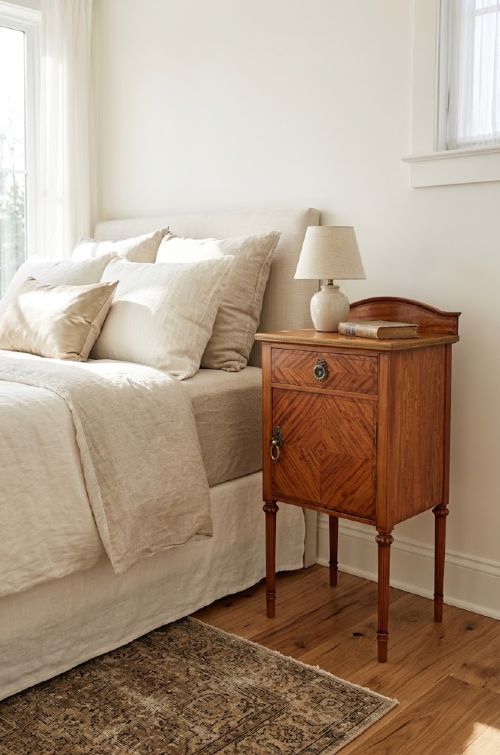
These compact pieces fit easily beside a bed, in a narrow hallway, or as an accent table in a living room. Their upright proportions provide useful storage without overwhelming smaller spaces.
Because they originate from an era focused on versatile domestic furniture, they blend naturally with both traditional and modern interior schemes.
How do I care for polished mahogany surfaces?
Dust regularly with a soft, dry cloth and avoid placing wooden cabinets in direct sunlight or near heat sources. Applying quality beeswax occasionally helps nourish the grain and maintain the polished finish.
Keep humidity levels stable in the room to prevent timber shrinkage or veneer lifting over time.
Are these cabinets sturdy enough for daily use?
Solid construction methods, including traditional dovetail joints and sturdy internal framing, make these vintage pieces durable for everyday storage. Drawers and doors operate smoothly when maintained properly.
Care should be taken not to overload shelves in display cabinets or expose marble tops to harsh chemical cleaners.
How can I distinguish Edwardian from Victorian styles?
Edwardian furniture generally exhibits lighter proportions, brighter satinwood or mahogany timbers, and refined neoclassical or Sheraton Revival influences. Victorian pieces often feature darker, heavier woods like rosewood or heavy figured mahogany with more robust, assertive silhouettes.
Inlay work on Edwardian items tends to be delicate and precise, whereas earlier Victorian work frequently relies on bold grain patterns and substantial mouldings.