


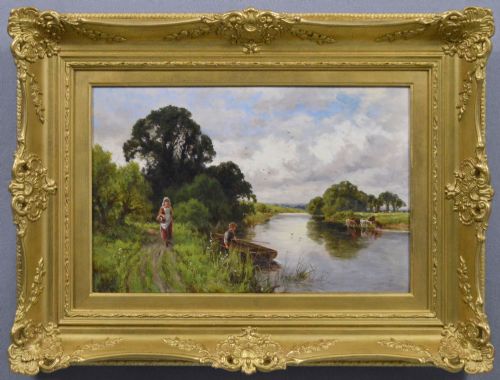


Edwardian Pastoral Scene
An edwardian pastoral scene brings the quiet of rural fields, riverbanks and farmyards directly into the home through brush and pigment.
Edwardian Pastoral Scene
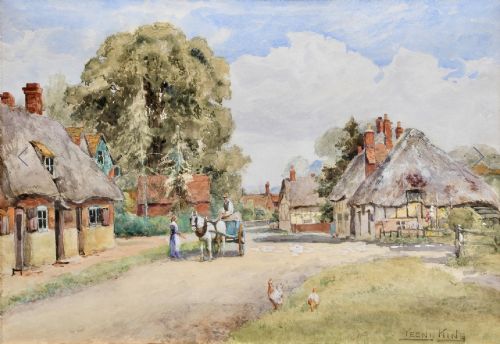
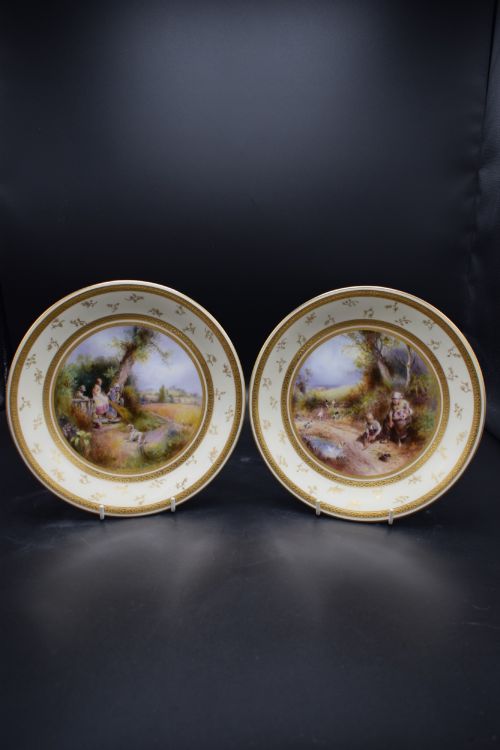
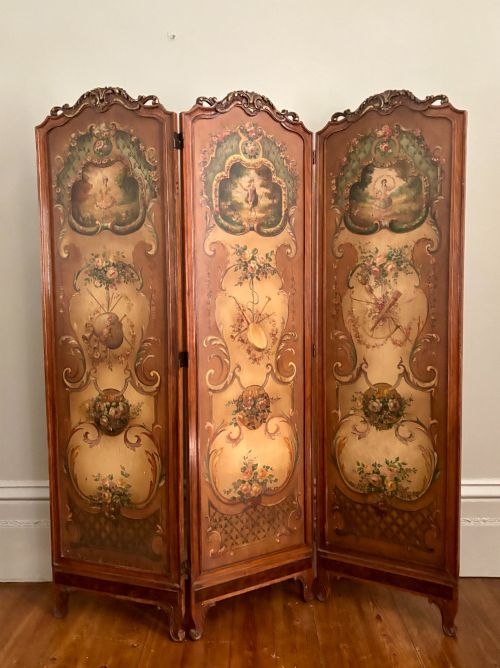
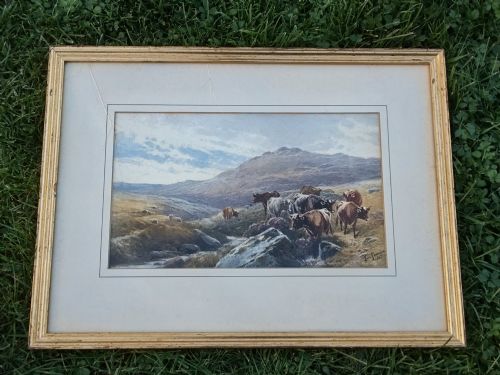
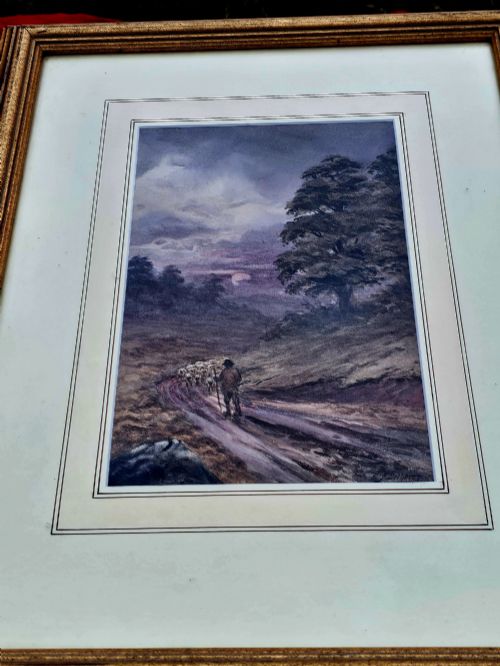
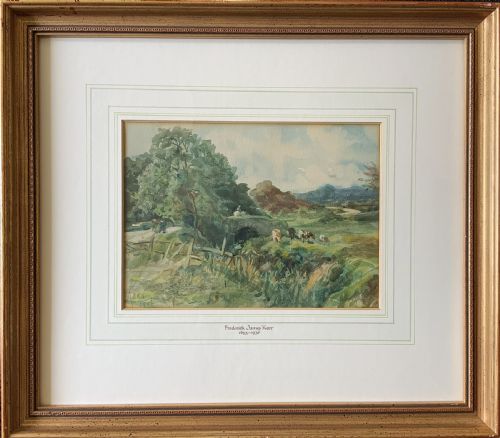
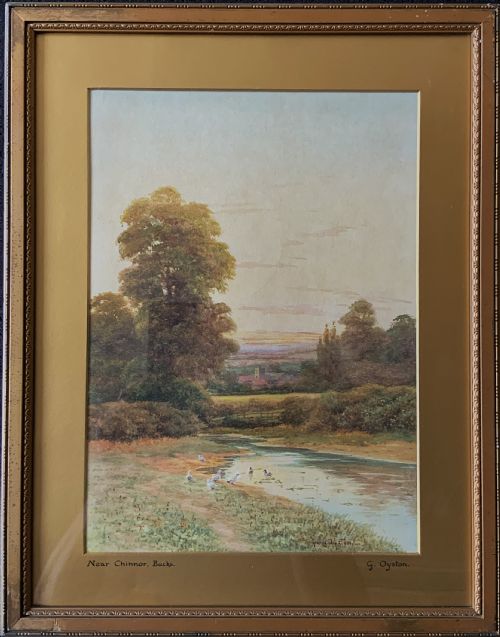
An edwardian pastoral scene encompasses framed paintings, watercolours, decorative plates, folding screens and glass windows depicting rural life. The pieces on this page span the late nineteenth century through to the mid twentieth century, with a strong representation of Edwardian and early twentieth-century works.
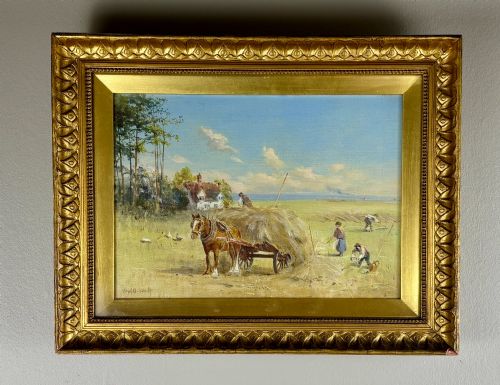
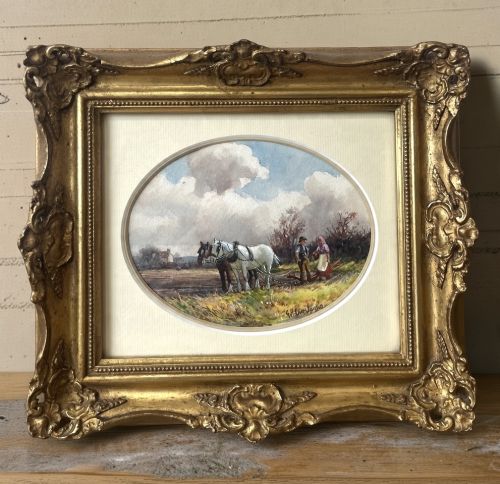
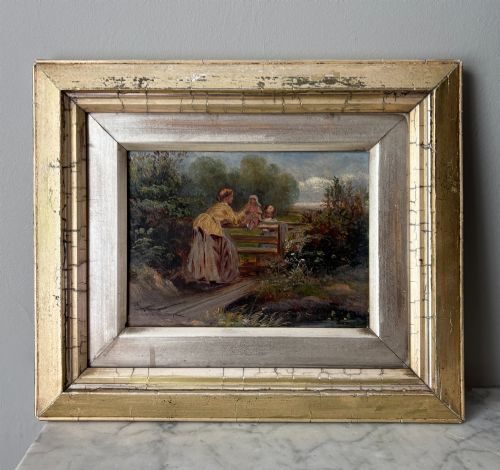
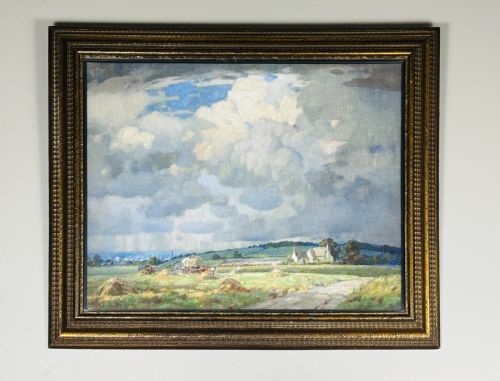
The dominant subjects are figures in the countryside, farm labourers, cottage doorways, cattle, sheep and river landscapes. These portrayals draw upon British Impressionism, Arts and Crafts sensibilities and Victorian pastoral traditions.
Most examples originate from British artists and makers working in oil or watercolour, capturing a nostalgic view of rural labour and tranquil fields.
Materials and Techniques
Artists painted primarily with oil paint on canvas or board, and watercolour pigment on paper, utilising the specific qualities of each medium to render light on water, foliage and animal coats. Watercolours often employ delicate washes while oils build richer textures.
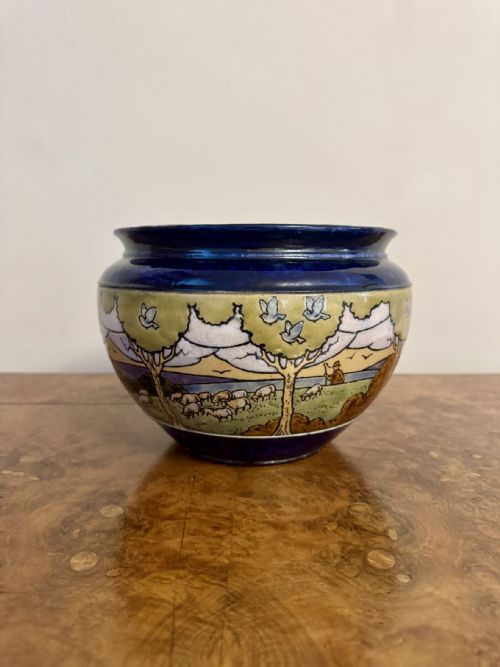
Other items incorporate leaded glass windows with hand-painted countryside scenes, ceramic surfaces such as Royal Doulton stoneware and Royal Worcester porcelain plates, and wooden folding screens inset with painted panels.
Original framing in wood protects these fragile works on paper and canvas, preserving the integrity of the surface.
Edwardian Pastoral Scene Retail Price Guide 2026
Typical asking prices for edwardian pastoral scene among the pieces listed under this phrase on Sellingantiques today, from the lower quarter to the upper quarter. They describe what is for sale here now, not the wider market.
The periods represented stretch from the nineteenth century through the Edwardian era up to the mid-twentieth century.
Evaluating the Work
Quality rests upon the artist's ability to capture natural light, atmosphere and anatomical proportion in figures and livestock, distinguishing accomplished academic or exhibiting painters from lesser practitioners.
The preservation of the pigment matters greatly, particularly in watercolours where fading or foxing on paper can dull the composition, and in oils where the stability of the paint layer preserves the original depth.
George Hamilton Constantine·Miles Birkett Foster·Harry Martin·George Oyston·Royal Worcester·Royal Doulton·Henry H Parker·John Sanderson Wells·James William Booth·Ernest Pile Bucknall·Walter J Watson·Alfred Grey·Ernest Higgins Rigg·George Soper·Arthur Winter Shaw·Harry Sylvester Stannard·Robert Hollands Walker·Basil Bradley·Thomas James Lloyd·Claude Cardon·Herbert Royle·Peter Jackson·William Miller Frazer·Joseph Kirkpatrick·Frederick J Knowles
The Edwardian Pastoral Scene Glossary
- Watercolour pigment
- Finely ground colour mixed with a water-soluble binder, applied in translucent washes on paper.
- Oil on canvas
- Pigment suspended in drying oil, applied to a stretched woven fabric support that allows for layered texture and depth.
- Stoneware
- A robust ceramic fired at high temperatures, impervious to liquid and suited for decorative vessels like jardinieres.
- Leaded glass
- Small panes of glass held together by strips of lead cames to form a decorative window panel.
Edwardian Pastoral Scene: Frequently Asked Questions
What subjects appear in these scenes?
These works typically depict rural life, including cattle and sheep grazing, farm hands at harvest, thatched cottages by streams, and figures fishing or conversing in village streets.
The settings draw upon British rivers, farmlands and coastal or inland countryside views from the Victorian and Edwardian eras.
How should watercolours be displayed?
Works on paper require protection from direct sunlight to prevent the watercolour pigments from fading over time.
Keeping them away from damp environments ensures the paper and any original framing remain stable.
Are these pieces original works?
Many examples listed are original hand-painted watercolours and oil paintings created by named British artists of the period.
Others include hand-painted ceramics and decorative glass panels produced by established potteries and makers.
How do I identify an Edwardian piece?
Dating relies on artist signatures, exhibition records, stylistic traits associated with British Impressionism, and materials characteristic of the early twentieth century.
Framing and backing boards often provide further clues to the period of creation.