

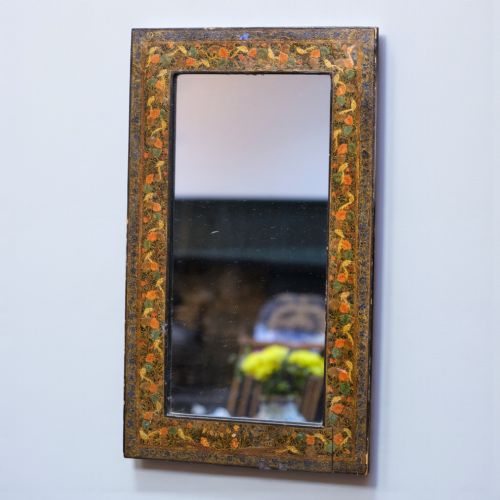
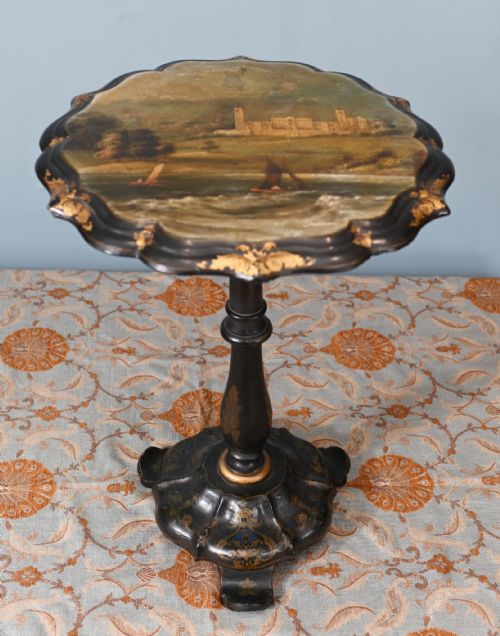
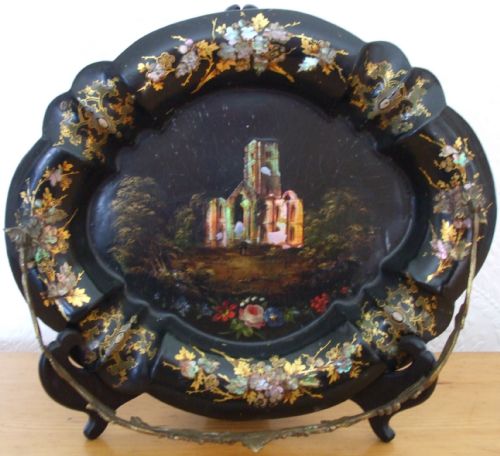


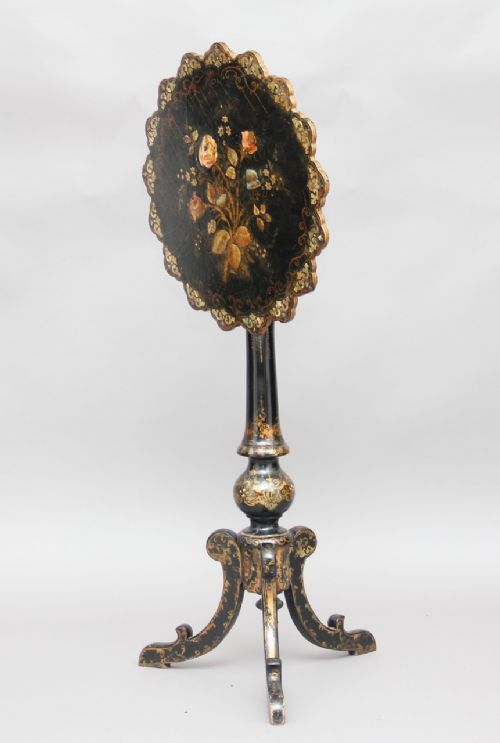





Edwardian Papier Mache
These edwardian papier mache and related lacquer pieces bring painted surface and structured form together, offering practical utility with distinctive decorative presence.
Edwardian Papier Mache
When you search for edwardian papier mache, you encounter items shaped from pressed paper pulp or layered sheets alongside related lacquer and painted wooden furnishings. The selection spans decorative trays, occasional tables, dressing screens, and smaller items rather than a single uniform category.
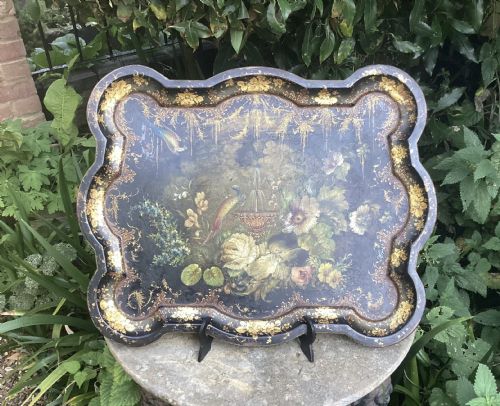
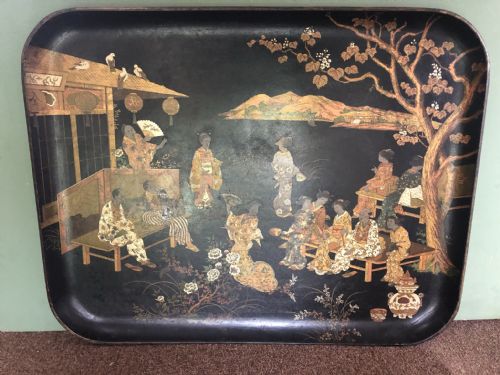
The objects draw heavily upon Victorian, Regency, and Chinoiserie traditions, frequently featuring black lacquer surfaces, painted motifs, and gilded borders. Pieces range from large kidney-shaped trays and folding screens to lidded pots and side tables.
While the literal date span stretches from the Regency era through to the early twentieth century, these wares share a distinct lineage of applied ornament and painted finish. Their survival rests on the durability of the lacquered or varnished paper base when kept away from moisture.
Materials and construction
Makers formed the core structure by pressing layers of paper pulp or paper sheets together with glue, sizing, or resin, then baking and smoothing the resulting board to create a rigid foundation. Wood was frequently employed alongside or beneath the papier-mâché to build weight and structural support for items like tables and screens.
Surfaces received multiple coats of dark lacquer or black paint, which were polished to a hard finish before artists applied hand-painted details, gilt embellishments, and occasionally inlaid elements. Brass fittings and glass components were integrated where necessary for hardware or protective elements.
Edwardian Papier Mache Retail Price Guide 2026
Typical asking prices for edwardian papier mache among the pieces listed under this phrase on Sellingantiques today, from the lower quarter to the upper quarter. They describe what is for sale here now, not the wider market.
Listings feature paper-mâché alongside wood, brass, glass, and paint, spanning the nineteenth century into the Edwardian period.
Distinctions in craftsmanship and finish
Quality reveals itself in the precision of the painted detail and the depth of the lacquer surface rather than the mere presence of decoration. Superior examples display crisp gilt work and controlled brush execution across trays, screens, and tables.
The structural integrity of the paper base and its underlying wooden framework dictates longevity. Pieces that maintain a smooth, even lacquer coat without extensive lifting or surface crazing represent the higher tier of surviving production.
The Edwardian Papier Mache Glossary
- Papier-mâché
- A composite material made from paper pulp or reinforced paper sheets mixed with adhesive, moulded under pressure, and dried to form a rigid object.
- Lacquer
- A durable resinous finish applied in multiple layers to provide a hard, glossy protective coating that can be polished and painted.
- Chinoiserie
- European decorative style reflecting Chinese artistic motifs and motifs of East Asian design, frequently rendered in gold and colour upon dark grounds.
- Gilt
- A thin application of gold leaf or gold powder used to highlight edges, borders, and painted motifs on the surface.
- Toleware
- Painted or enamelled sheet metalware, often associated with trays and decorative vessels sharing stylistic traits with lacquered paper items.
Edwardian Papier Mache: Frequently Asked Questions
What is papier-mâché furniture?
Papier-mâché furniture consists of objects shaped from compressed paper pulp or layered paper bonded with glue, reinforced with wood where needed, and sealed with hard lacquer finishes.
These pieces were moulded into items such as tables, screens, and trays, then decorated with painted scenes or gilt borders.
How can I tell different periods apart?
Dating relies on stylistic clues, construction methods, and the specific type of painted ornament applied to the lacquered base.
Earlier nineteenth-century pieces often feature Regency or Chinoiserie motifs, while later items adopt Edwardian or early twentieth-century interpretations.
Are these pieces suitable for daily use?
While trays and small tables were originally built for practical service, surviving antique pieces require careful placement.
Keep them away from direct sunlight, extreme heat, and damp environments to preserve the integrity of the lacquer and paint.