





Edwardian Overmantle
An edwardian overmantle brings scale and reflection to a chimney breast, originating from periods spanning the Victorian era into the early twentieth century.
Edwardian Overmantle
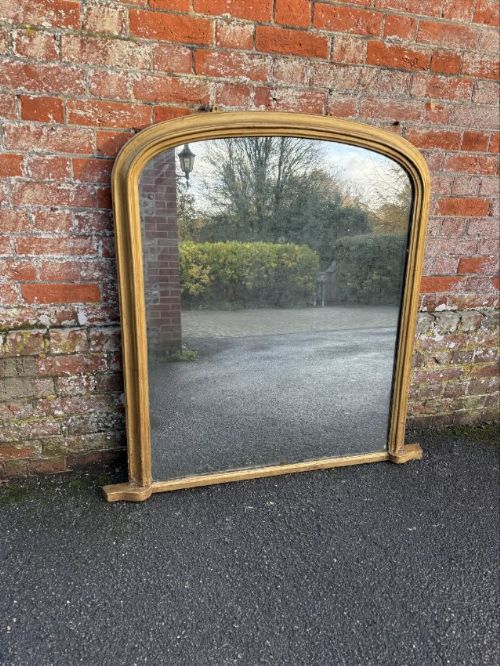
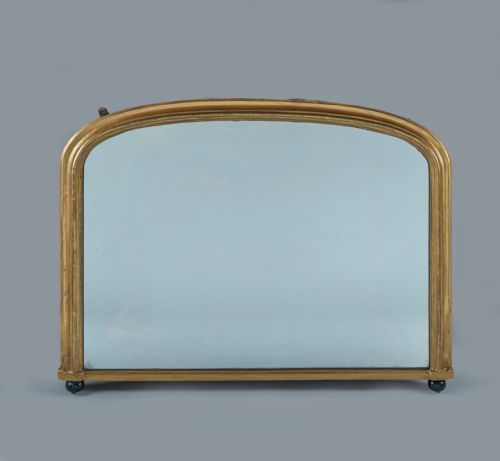
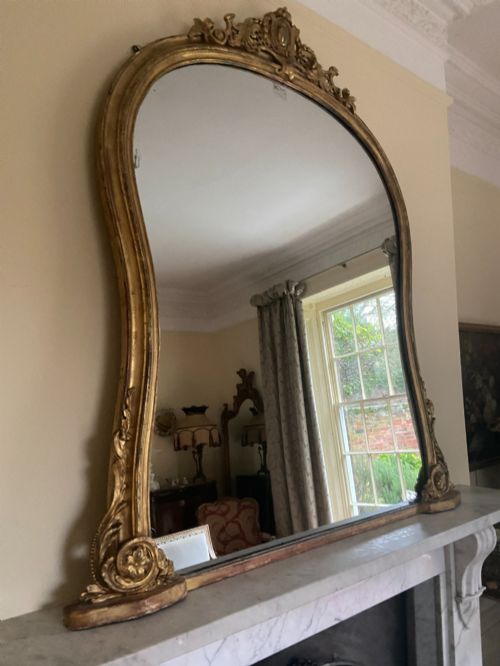
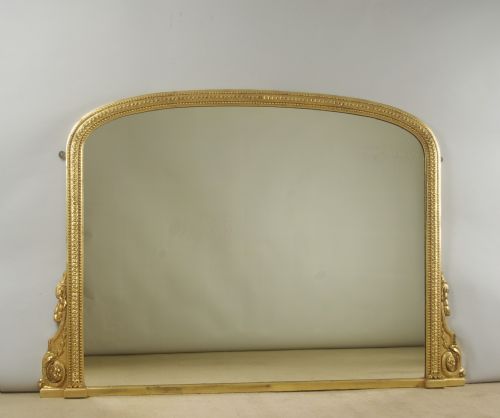
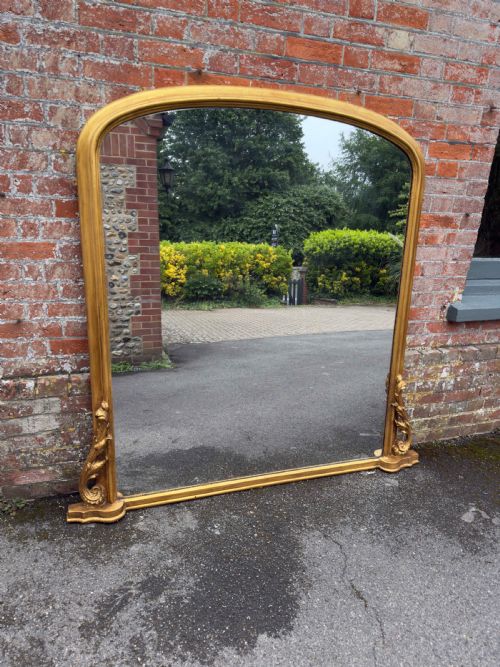
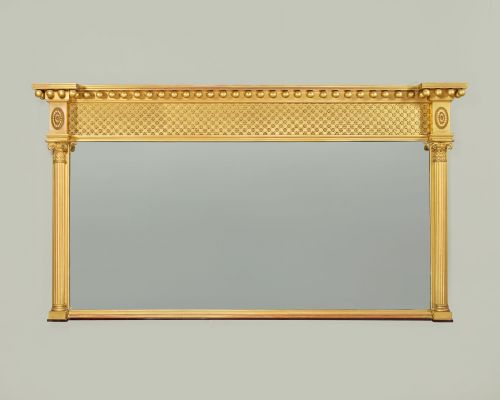
An edwardian overmantle is a large mirror designed to sit directly above a fireplace, forming a substantial architectural focal point in a room. The selections here include pieces originating from the Victorian period, the Edwardian era, and the wider nineteenth century.
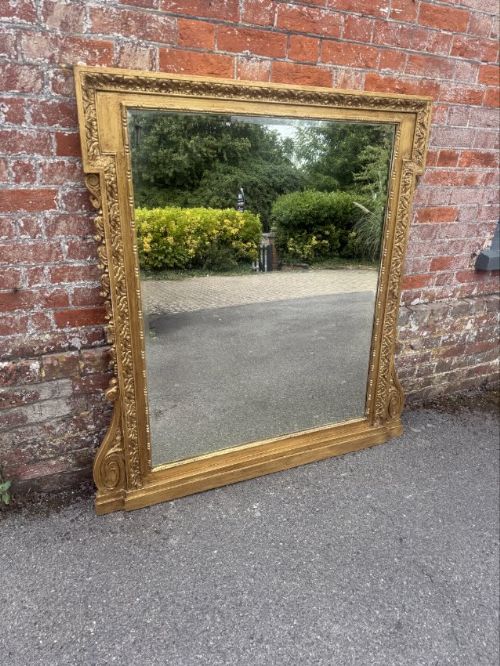
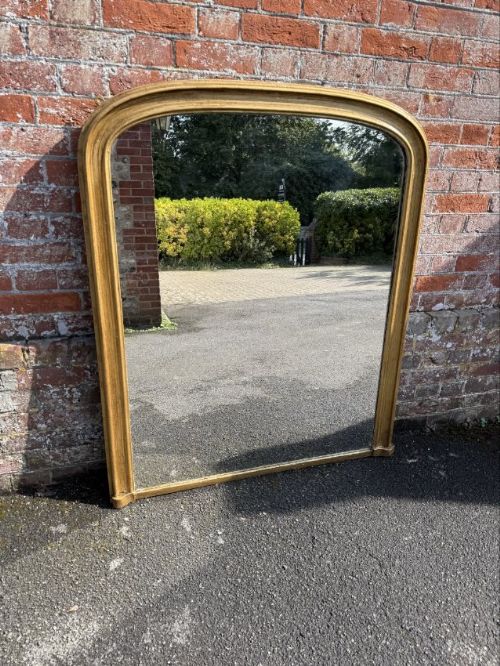
Most examples take the form of overmantel mirrors or wall mirrors with generous proportions, often featuring arched tops, shaped crests, or rectangular frames. Walnut, oak, and carved wood provide the structural foundation for these heavy wall-hanging furnishings.
How they were made
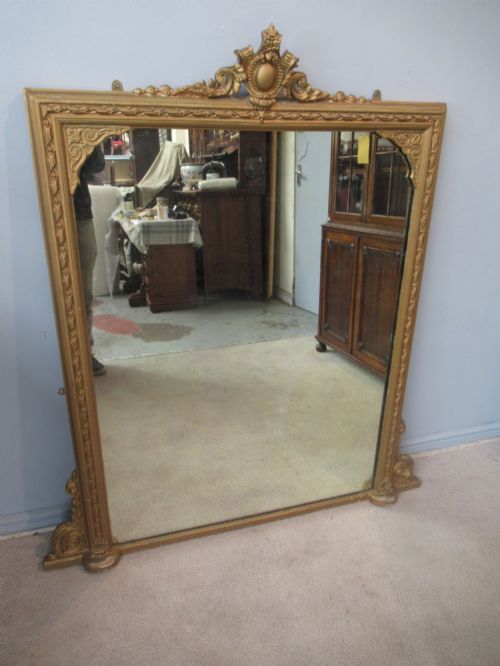
Carved wood and gesso provide the intricate relief work on ornate frames, often finished with gold leaf, parcel gilt, or paint. Artisans built up surface decoration using composition material moulded over wooden carcases to achieve elaborate scrollwork and leaf motifs.
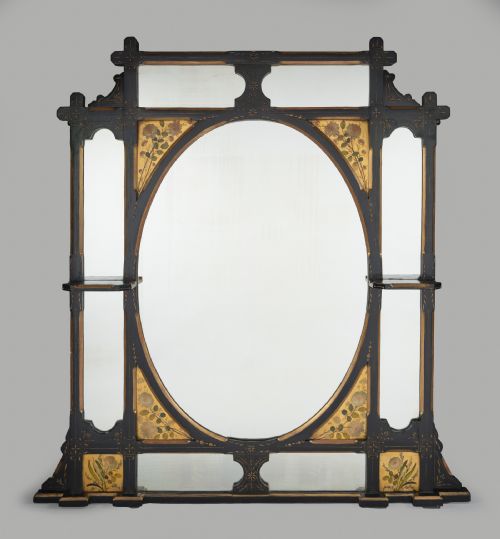
Mirror glass is set within heavy timber frames, sometimes accompanied by walnut inlay or painted details. The combination of traditional joinery and plaster-work gives these substantial wall pieces their characteristic weight and presence.
Edwardian Overmantle Retail Price Guide 2026
Typical asking prices for edwardian overmantle among the pieces listed under this phrase on Sellingantiques today, from the lower quarter to the upper quarter. They describe what is for sale here now, not the wider market.
Some frames sport carved tulip and laurel leaves, letting innocent foliage quietly judge every piece of coal burned beneath them.
What varies in quality
The crispness of the carved wood and gesso ornament separates standard production from finer work, as sharp detailing indicates skilled hand-finishing. Frames that retain their original gilding and intact composition moulding demonstrate superior preservation.
Subtlety in proportion and the integration of architectural elements such as arched tops or tulip and laurel leaf framing define the more ambitious examples. Timber selection also varies, with walnut and oak structures offering different visual weights compared to painted or heavily gilded surfaces.
The Edwardian Overmantle Glossary
- Overmantel mirror
- A large mirror specifically proportioned to hang on the wall directly above a fireplace mantelpiece. These pieces often incorporate architectural framing to anchor them visually to the hearth below.
- Gesso
- A plaster-like mixture applied to wooden frames as a smooth base for gilding and intricate moulded decoration. It allows craftsmen to create sharp relief ornaments.
- Gold leaf
- Extremely thin sheets of beaten gold applied to surfaces over a prepared ground such as gesso. It provides a luminous and durable metallic finish.
- Composition
- A mouldable mixture of whiting, resin, glue, and linseed oil pressed into decorative reliefs while hot. It was widely used on nineteenth-century frames as a faster alternative to hand-carving.
- Parcel gilt
- A decorative treatment where only specific portions of a painted or wood surface are highlighted with gold leaf. This technique emphasises particular carved details on the frame.
Edwardian Overmantle: Frequently Asked Questions
What is an overmantle mirror?
An overmantle mirror is a large wall mirror designed specifically to be hung above a fireplace opening. They draw the eye upward and reflect light back into the room.
Historically, they served to balance the heavy masonry of the chimney breast and brighten darker Victorian and Edwardian interiors.
How do I hang an overmantle?
Because these mirrors are exceptionally heavy, they require secure fixings anchored directly into solid wall studs or masonry. Professional installation is strongly recommended for large gesso and wood frames.
The weight must be distributed evenly across sturdy brackets rather than relying on standard picture wire.
Are these pieces Victorian or Edwardian?
The listings encompass both Victorian and Edwardian eras, alongside pieces from the broader nineteenth century. Stylistic markers like heavy gilding or walnut inlay often point to the earlier Victorian decades.
Later Edwardian versions frequently display cleaner lines or lighter painted finishes while maintaining the traditional scale.
How do I clean the mirror frame?
Gilded and gesso frames require gentle dusting with a soft, dry brush to avoid damaging the delicate raised ornament. Moisture can soften composition material and ruin old gold leaf.
Glass cleaner should be applied sparingly to the mirror plate itself, taking care not to let liquid seep behind the frame edges.