






Edwardian Oval Tray
An edwardian oval tray brings refined proportion to tea service and display, combining practical service with crisp period detail.
Edwardian Oval Tray
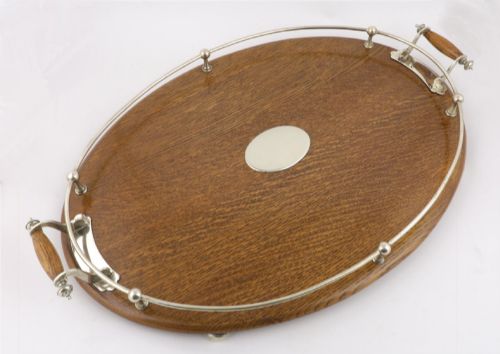
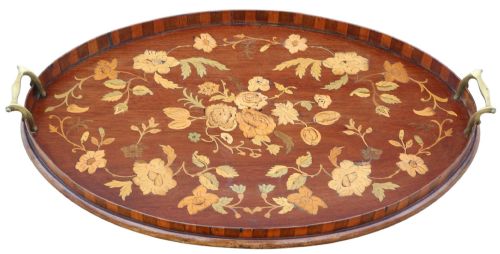
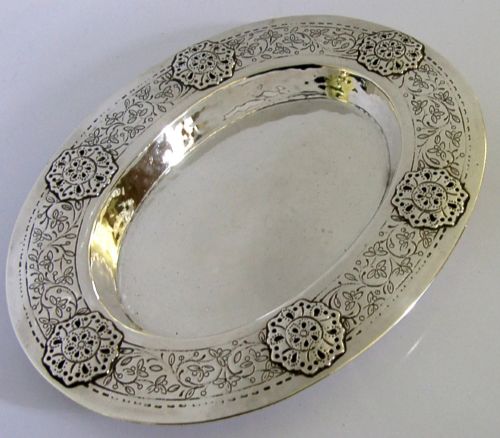
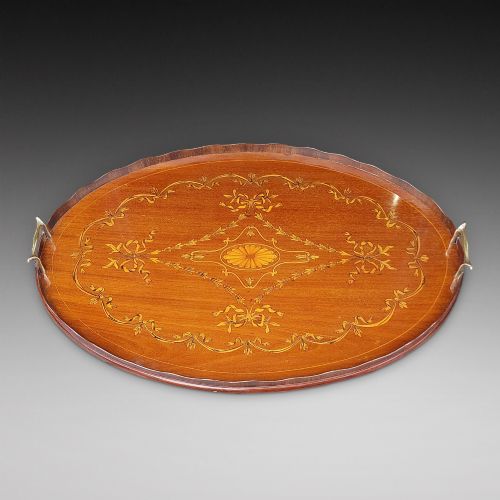
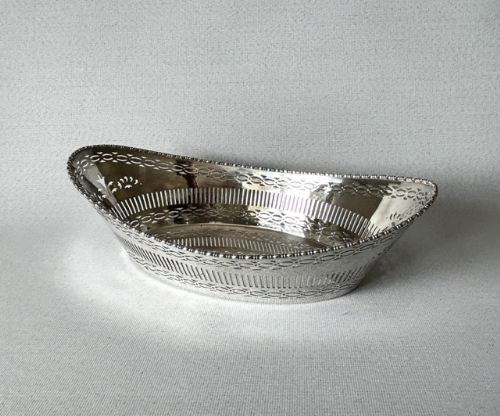
The edwardian oval tray appears most frequently in silver plate, mahogany, and inlaid satinwood, reflecting the domestic formality of the early twentieth century. Pieces from this era often echo earlier Georgian or Sheraton Revival design through symmetrical handles, raised galleries, and balanced wood veneers.
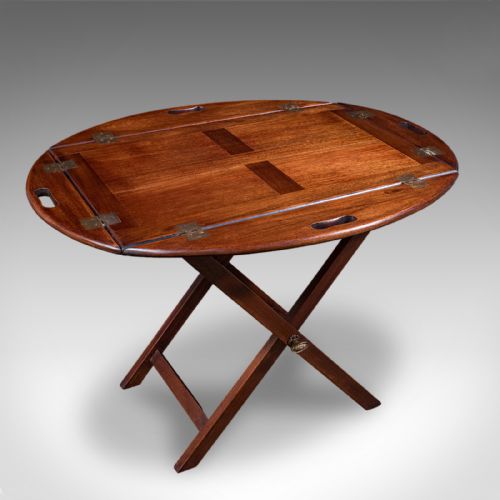
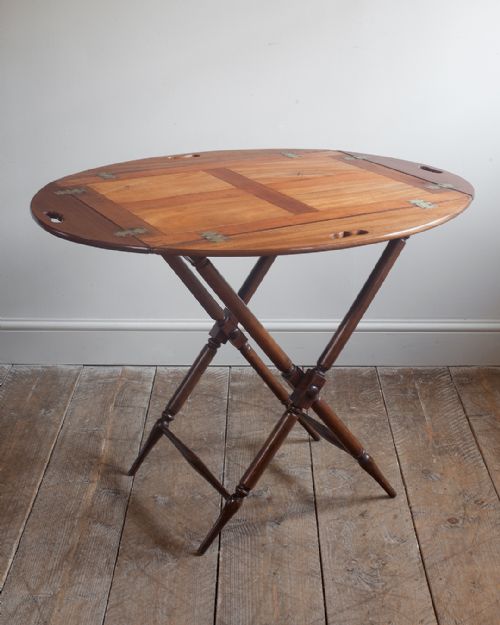
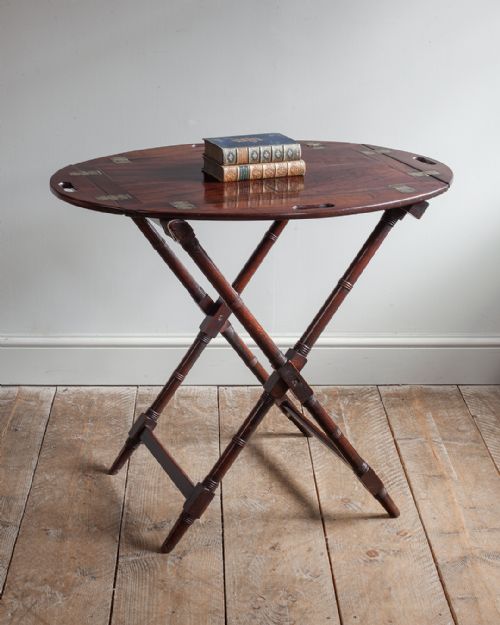
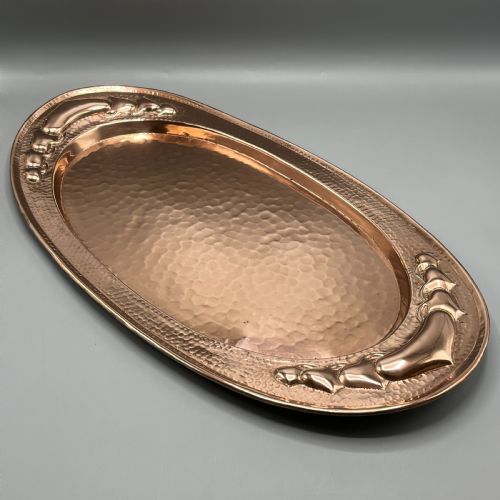
Alongside dedicated tea and cocktail servers, the form extends to butler's trays mounted on folding stands and smaller brass or copper pieces influenced by the Arts and Crafts movement. These variations show how a utilitarian object adapted to drawing rooms, side tables, and formal dining spaces.
While the material palette ranges from sterling silver to oak and pewter, the core shape remains a defined oval designed for carrying decanters, glassware, or porcelain tea sets. Each piece bears the structural hallmarks of British workshops active around nineteen hundred.
Materials and Construction
Mahogany and satinwood trays rely on precise cabinetry, incorporating contrasting stringing, marquetry, and oyster veneers to create surface pattern. Timber bases are fitted with raised wooden rims or shaped gallery rails secured by dovetail or dowel joints.
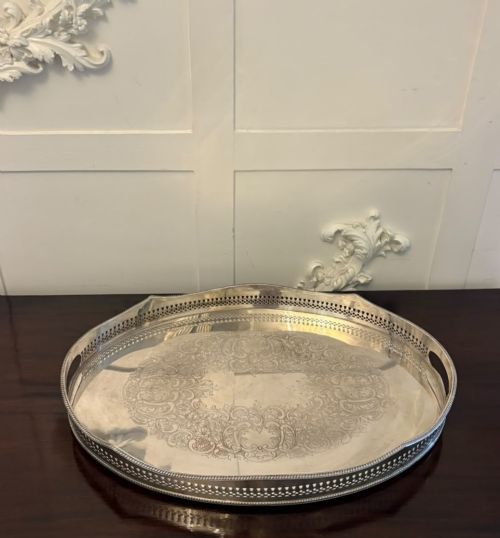
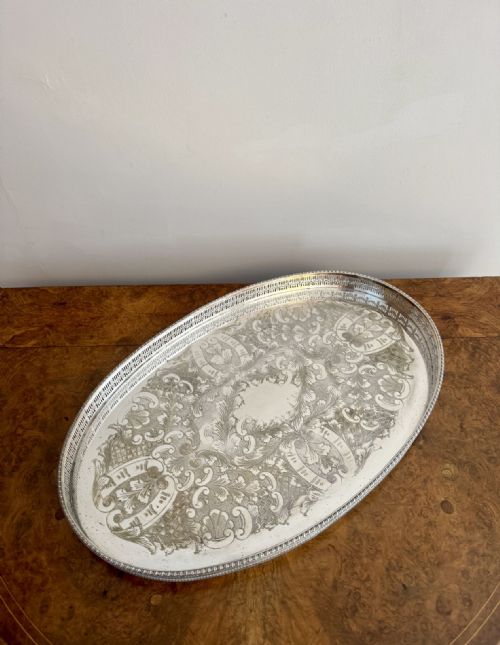
Metal examples employ silver plating over copper or base metals, alongside solid brass, pewter, and hand-hammered copper. Silver-plated surfaces often feature detailed flatware engraving, pierced gallery work, and cast handles riveted securely to the tray body.
Edwardian Oval Tray Retail Price Guide 2026
Typical asking prices for edwardian oval tray among the pieces listed under this phrase on Sellingantiques today, from the lower quarter to the upper quarter. They describe what is for sale here now, not the wider market.
Listings feature periods spanning from the eighteenth century through the Edwardian era, with mahogany, silver plate, and copper as dominant materials.
Assessing Quality and Execution
Quality rests in the crispness of the inlay work and the structural integrity of the gallery rails and handles. Superior wooden trays display tight veneer matching and fine marquetry without timber shrinkage or lifting along the borders.
In silver-plated and metal pieces, the standard depends on the preservation of the plating layer, the depth of the repoussé or chased engraving, and the weight of the metal. Heavier gauge brass, copper, and silver plate resist warping and provide a more balanced feel in the hand.
Mappin And Webb·Liberty And Co·Hugh Wallis·Harrison Bros
The Edwardian Oval Tray Glossary
- Gallery tray
- A serving tray fitted with a raised pierced or solid metal railing around the perimeter to secure glassware and decanters. This rim prevents items from sliding off during transit.
- Butler's tray
- A removable rectangular or oval tray top designed to sit upon a folding wooden X-frame stand. It functions as a portable side table for serving drinks.
- Marquetry
- The art of forming decorative patterns on a wooden surface by fitting together small pieces of coloured veneer. It frequently utilises satinwood and mahogany.
- Repoussé
- A metalworking technique where the metal is hammered from the reverse side to form a raised design in relief. It appears often on copper and silver-plated examples.
- Stringing
- A narrow strip of contrasting wood inlaid into the surface of a furniture piece to create a fine border line. This technique characterises Sheraton Revival design.
Edwardian Oval Tray: Frequently Asked Questions
Can I use an edwardian oval tray for serving food?
Most silver-plated and wooden trays function well for serving dry items, bottled beverages, and teaware during gatherings. Silver-plated surfaces require gentle washing rather than abrasive scrubbing.
For wooden trays with delicate veneer or inlay, place a linen doily or cloth on the surface to protect the timber from moisture and heat rings.
How do I tell an Edwardian tray from a Georgian original?
Edwardian pieces from the early twentieth century often display machine-assisted precision in their veneer cutting and standardised silver plating marks. Georgian items from the eighteenth and early nineteenth centuries rely entirely on hand-cut joinery and thicker timber construction.
Examining the underside and the nature of the screws, pins, or plating will usually reveal the manufacturing period.
What is the best way to display a tray at home?
An oval tray rests comfortably on a low coffee table, sideboard, or supported on a folding stand as a dedicated butler's table. It provides a stable surface for grouping decanters, glassware, or decorative ceramics.
Ensure the tray sits on a level surface away from direct sunlight to protect wooden finishes and marquetry details from fading.