




Edwardian Oval Tea Tray
An edwardian oval tea tray brings formal hospitality into daily use with shaped timber, brass handles and engraved metal surfaces.
Edwardian Oval Tea Tray
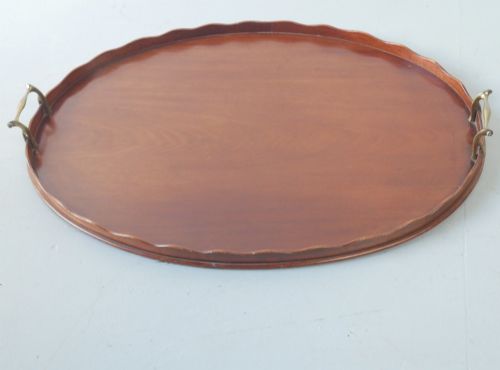
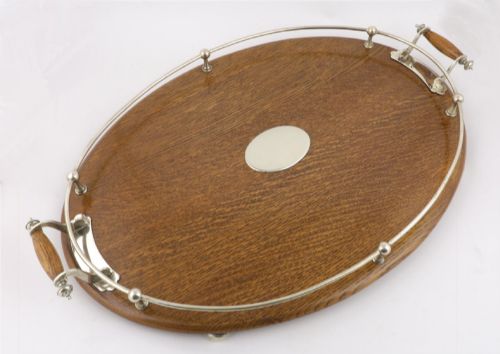
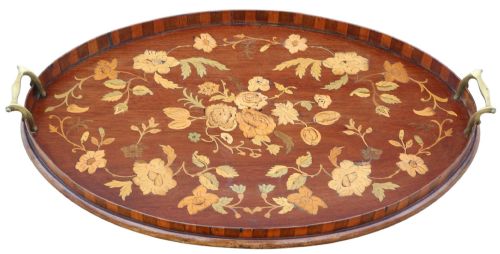
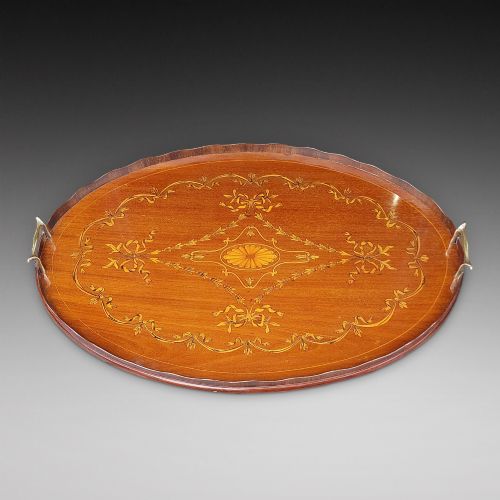
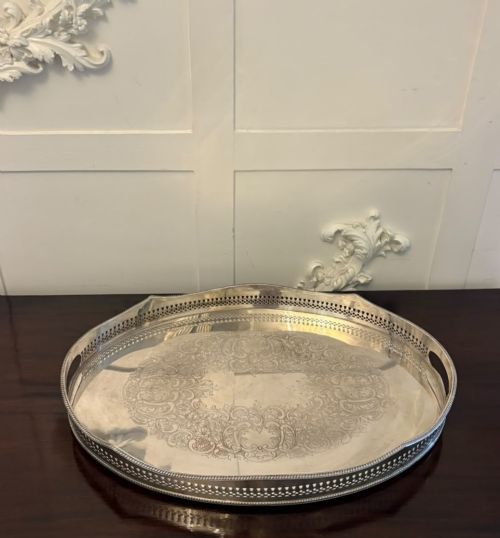
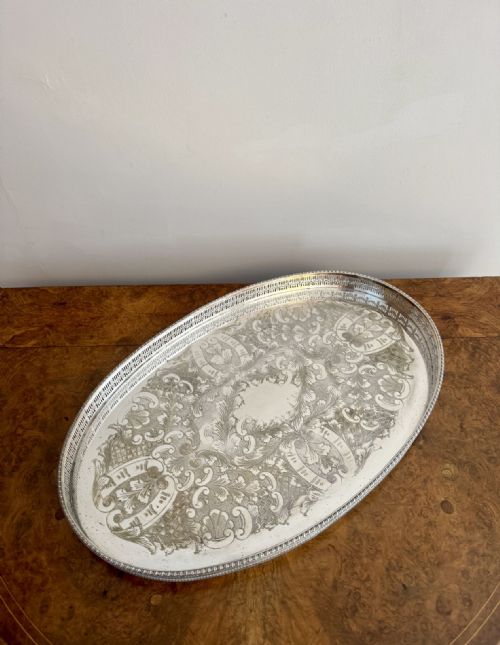
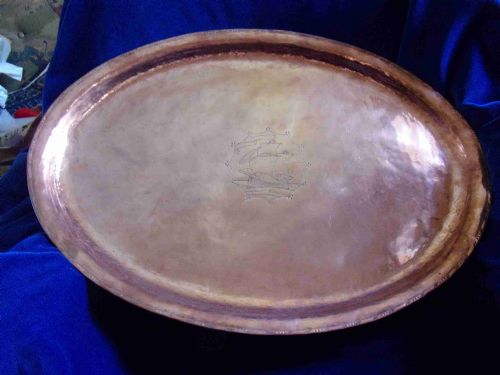
The edwardian oval tea tray brings together the refined joinery of the early twentieth century and the practical demands of domestic service. Examples span classic mahogany framing with inlaid satinwood, silver plated surfaces with pierced galleries, and hammered copper interpretations.
Most pieces seen here date from the Edwardian period itself or the surrounding decades of 1900 and 1910, though nineteenth-century precursors also appear. They range from small tabletop servers to large platters fitted with brass handles intended for cocktails and decanters.
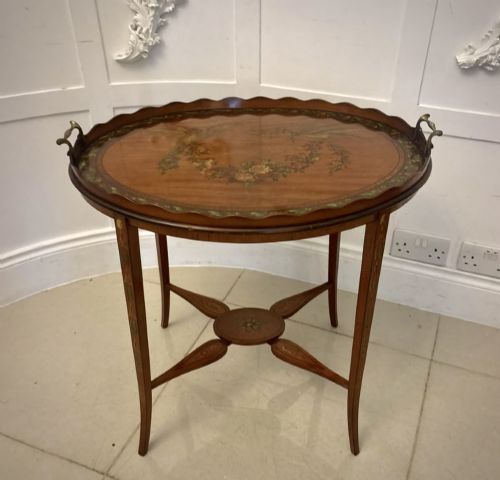
Beyond standard serving pieces, the form extends into occasional tables, etageres and tray-top stands where the removable tray integrates directly into a piece of furniture. These variations reflect how domestic spaces adapted for entertaining during the era.
Materials and Construction Techniques
Makers built these pieces using dense hardwoods like mahogany and oak, frequently embellishing the timber with contrasting satinwood inlay, marquetry, or oyster veneering. Edges often received sturdy galleries cast in brass or pierced silver plate to secure glassware during transit.
Metal versions rely on silver plating over base metals, electroplated nickel silver, or hammered copper shaped by hand. Engraved foliate scrolls and heraldic motifs decorate the floor of metal trays, contrasting with the smooth polished grain of the wooden examples.
Edwardian Oval Tea Tray Retail Price Guide 2026
Typical asking prices for edwardian oval tea tray among the pieces listed under this phrase on Sellingantiques today, from the lower quarter to the upper quarter. They describe what is for sale here now, not the wider market.
Several trays double as occasional tables, proving that Victorians and Edwardians hated an idle piece of furniture.
Distinctions in Quality and Craftsmanship
Quality rests in the precision of the marquetry and the crispness of the metal engraving rather than mere ornamentation. Superior wooden examples display tightly fitted inlay and well-figured mahogany, while lesser pieces rely on printed or shallow surface decoration.
The structural integrity of the gallery and handles separates standard utility pieces from exceptional items. Solid brass mountings firmly screwed into thick timber indicate better workshop standards than thin plated edges secured with visible pins.
Mappin & Webb·Hugh Wallis·Liberty & Co·Harrison Bros Sheffield
The Edwardian Oval Tea Tray Glossary
- Gallery
- A raised rim, often pierced or pierced and cast, surrounding the edge of a tray to prevent items from sliding off. These rims appear in both brass and silver plate.
- Inlay
- A technique where contrasting pieces of wood or shell are inserted into a recessed surface to form decorative patterns. Satinwood is frequently used within mahogany fields.
- Marquetry
- Elaborate veneer work arranged in pictorial or geometric patterns across a flat wooden surface. It differs from simple inlay by covering the primary board entirely.
- Electroplated Nickel Silver
- A base metal alloy coated with a thin layer of silver through an electrical process. This method provided the look of solid silver at a lower manufacturing cost.
- Etagere
- A piece of furniture consisting of a set of open shelves or tiers for displaying small objects. Several listed examples incorporate removable trays into these tiered stands.
Edwardian Oval Tea Tray: Frequently Asked Questions
How were these trays used originally?
Servants used them in large households to transport tea services, decanters, and glassware from the kitchens to the drawing room. Later, homeowners used them directly on tables to organise drinks or display decorative items.
Over time, the function shifted from active domestic service toward decorative placement on side tables, etageres, and stands.
How do I care for a wooden tray?
Keep wooden and inlaid trays away from direct sunlight and excessive moisture to prevent the veneer from lifting. Clean the surface with a soft, dry cloth and avoid harsh chemical polishes.
Apply a light application of appropriate furniture wax occasionally to protect the timber grain and maintain the satinwood contrast.
How should I clean a silver plated tray?
Use a gentle, non-abrasive silver cleaner specifically formulated for plated items to remove tarnish without wearing away the coating. Apply the cream sparingly with a soft cloth and rinse lightly if recommended by the product instructions.
Avoid aggressive scrubbing, particularly around engraved lines and soldered gallery joints, where the underlying metal might become exposed.
Can I use an antique tray for serving drinks?
Metal trays handle glasses and bottles well provided you dry any condensation promptly to prevent spotting on the silver plate or copper. Wooden trays require caution with wet glassware to avoid water rings on the polished finish.
Many collectors prefer to line older trays with a decorative cloth if placing sweating carafes or damp stemware directly onto the historic surface.