

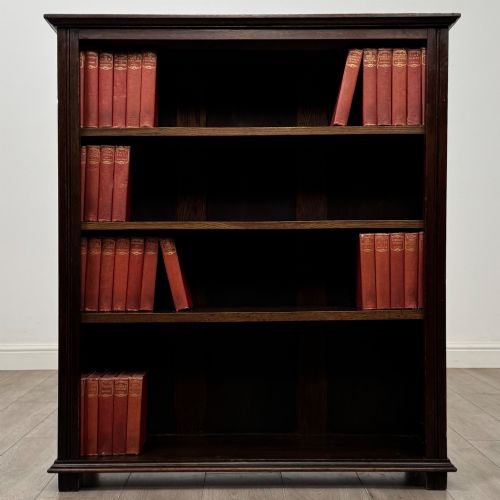
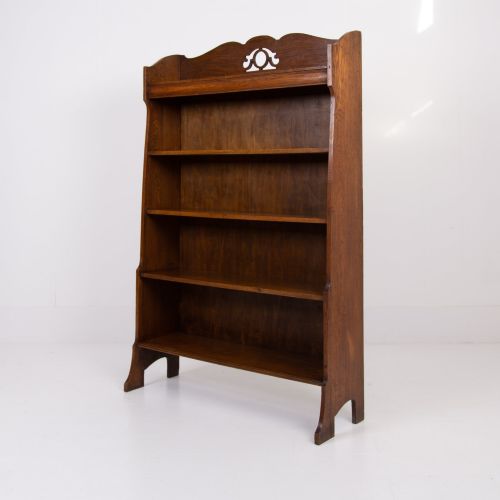
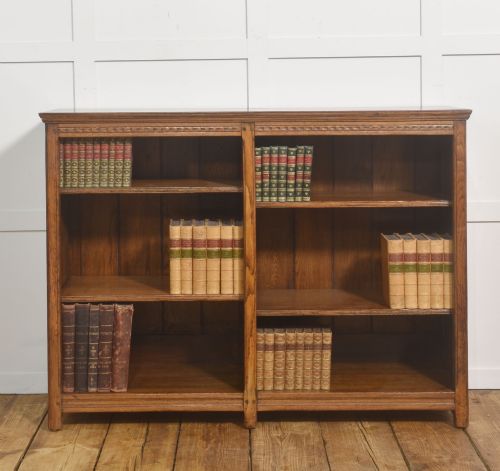
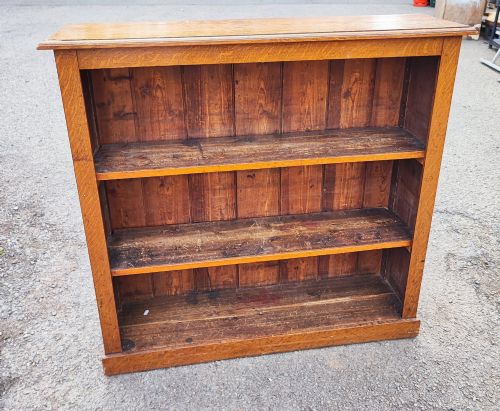
Edwardian Oak Open Bookcase
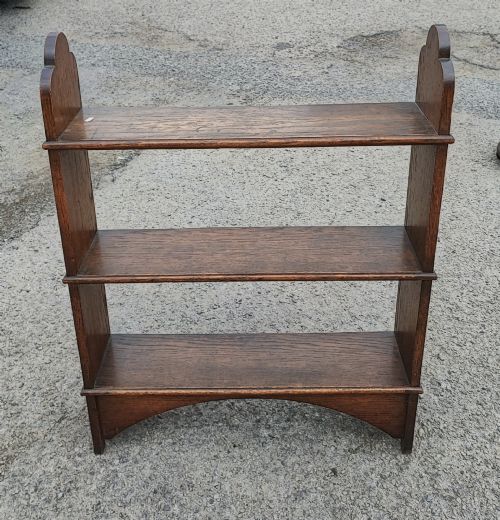
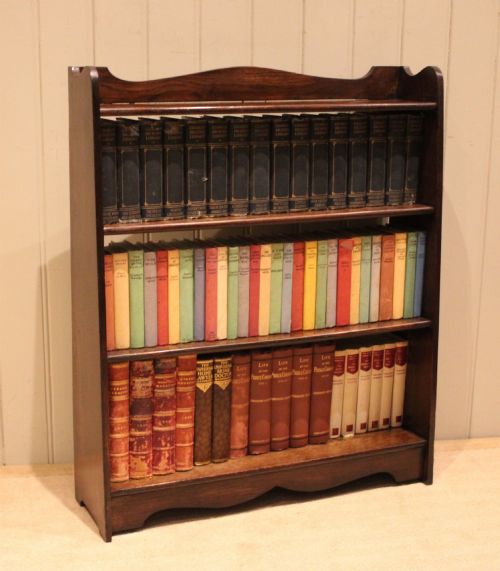
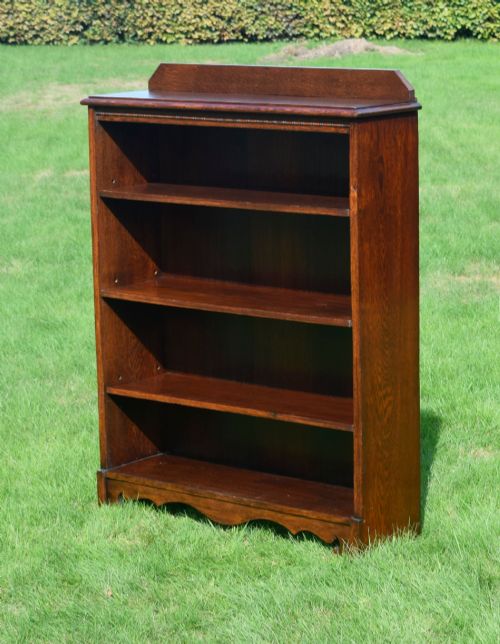
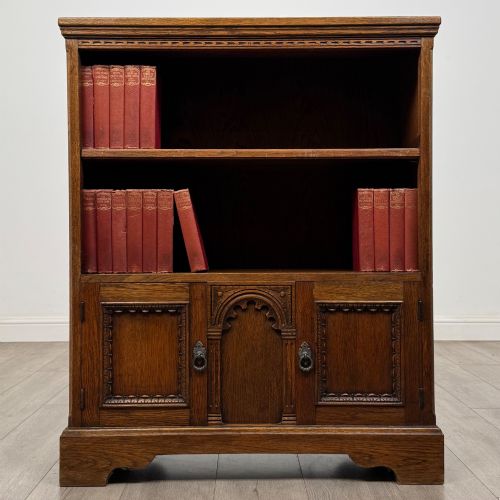
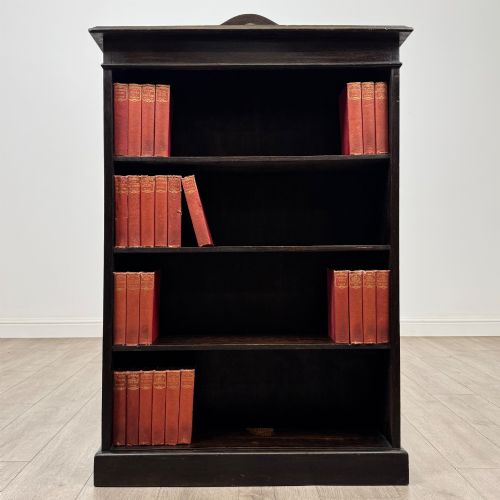
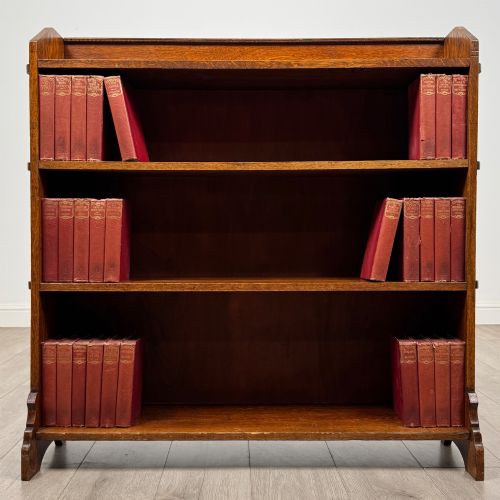
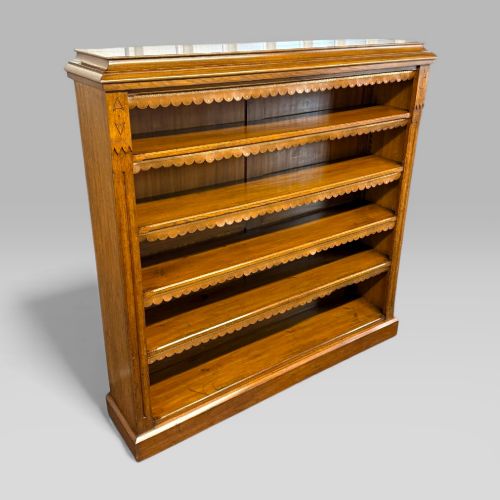
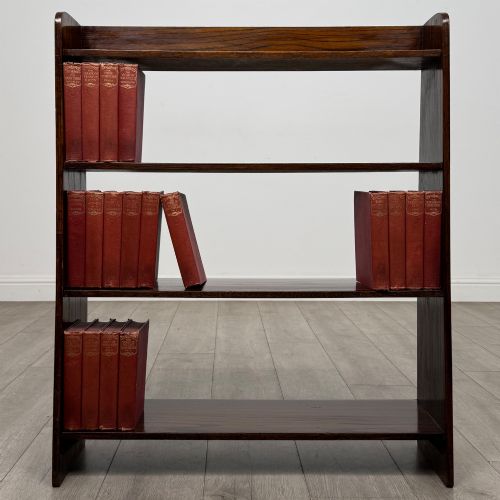
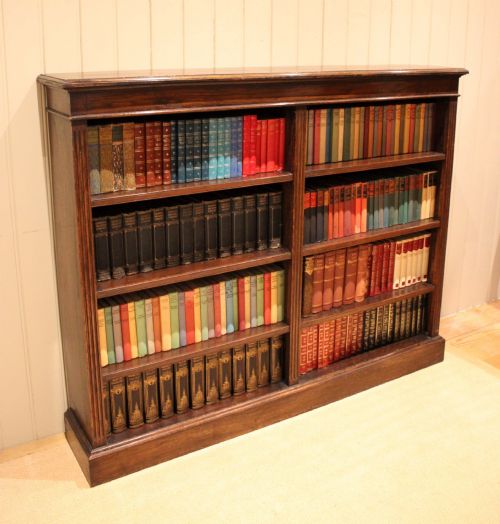
An edwardian oak open bookcase brings utility and honest grain to a room, offering immediate access to volumes without doors in the way.
Edwardian Oak Open Bookcase
The edwardian oak open bookcase is a functional piece designed for accessible shelving, frequently found in smaller dimensions or taller library formats. These items span periods from the late nineteenth century into the 1930s, reflecting simple domestic needs and scholarly habits of the time.
Most examples encountered here belong to the Edwardian era proper or lean into Arts and Crafts simplicity, often constructed with straightforward uprights and adjustable shelves. Variations include narrow formats, open back designs, and pieces with lower cupboards for mixed storage.
Materials and construction methods
Makers utilised solid oak and golden oak, sometimes enhanced by dark oak finishes, marquetry, or subtle inlay work. Brass hardware appears on adjustable shelf mechanisms and associated cabinet fittings.
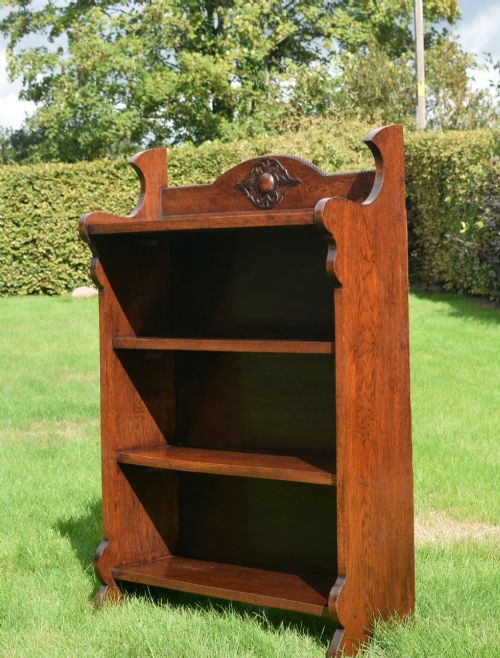
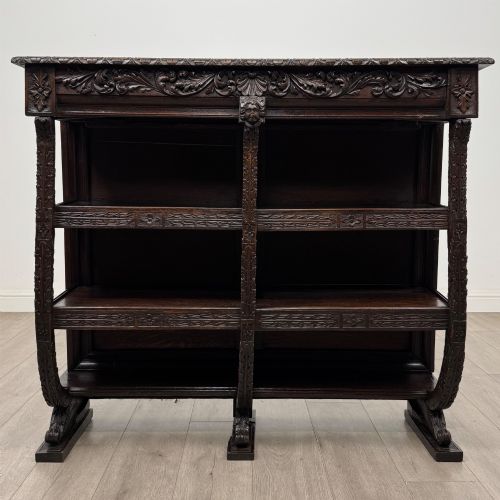
Carpenters joined panels using traditional framing methods, incorporating beaded edges, carved details, and open-front shelves that prioritize structural honesty over heavy ornamentation.
Some library editions preserve ancient ink spots on the lowest shelf where a studious reader spilled tea.
Distinguishing quality in the range
Quality rests in the selection of timber grain, the weight of the solid oak, and the refinement of edge mouldings or carved motifs. Pieces tied to known workshops exhibit tighter joinery and more considered proportions.
The sophistication of internal shelf adjustment systems and the inclusion of well-fitted lower cupboards separate standard domestic utility items from finer library pieces.
Heals·Liberty and Co
The Edwardian Oak Open Bookcase Glossary
- Open bookcase
- A shelving unit without doors, designed for direct access to books. These pieces focus on vertical timber uprights and horizontal shelves.
- Arts and Crafts
- A design style emphasising handcraftsmanship, simple forms, and natural materials. It rejects mass production in favour of visible construction methods.
- Adjustable shelves
- Shelves that can be moved to different heights using pegs, ratchets, or metal tracks. This allows the interior to accommodate volumes of varying sizes.
- Golden oak
- A bright, warm timber finish popular around the turn of the twentieth century. It highlights the natural medullary rays in quarter-sawn oak boards.
- Marquetry
- Decorative patterns formed by small pieces of veneer fitted into wood panels. It adds subtle pictorial or geometric detail to surfaces.
Edwardian Oak Open Bookcase: Frequently Asked Questions
How do I clean an edwardian oak open bookcase?
Dust the surfaces regularly with a dry, soft cloth to prevent particulate buildup in the grain. Avoid modern silicone sprays, choosing instead a traditional beeswax applied sparingly to nourish the timber.
Keep the piece away from direct heat sources and strong sunlight to prevent the oak from drying out or splitting over time. Gentle care preserves the original finish and honest patina of the wood.
Are the shelves usually adjustable?
Many examples feature adjustable shelves supported by wooden ratchets, brass pins, or metal tracks. This flexibility allowed owners to rearrange the interior layout for different sizes of books.
Simpler utilitarian versions often have fixed shelves secured permanently into the frame. Checking the shelf support method helps identify the intended function of the piece.
How do I tell an Arts and Crafts piece apart?
Arts and Crafts examples display plainer lines, exposed joinery, and occasionally hand-carved motifs or subtle chamfered edges. They minimise applied ornamentation to let the quality of the solid timber speak directly.
Standard Edwardian variants might incorporate factory mouldings, brass fittings, or golden oak finishes typical of commercial production during the period.
Will these bookcases hold heavy modern books?
Solid oak construction provides robust weight-bearing capacity for standard volumes and heavy reference books alike. The thickness of the shelves and the condition of the vertical uprights determine total load strength.
Distributed weight prevents sagging on wider shelves, particularly on antique timber that has stabilized over a century. Adjustable shelf supports should be inspected to ensure they sit securely in their slots.