



Edwardian Oak Low Seat
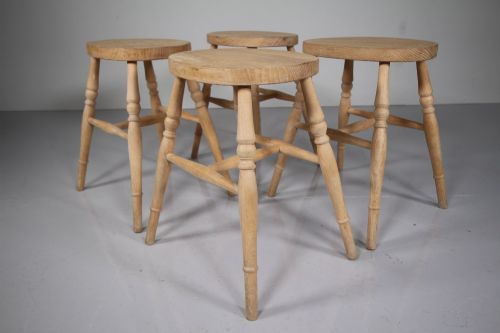
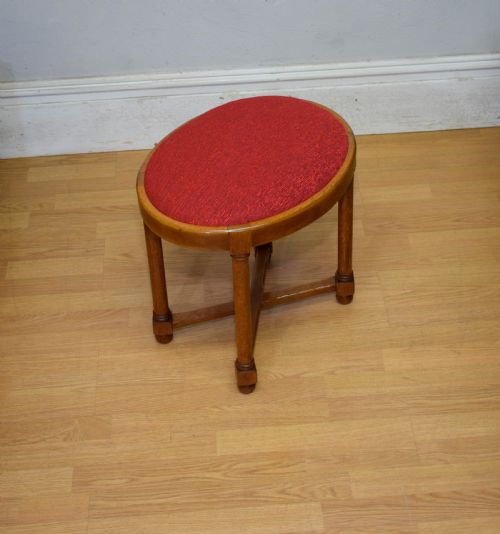
An edwardian oak low seat brings solid timber and compact proportion into a room, offering low-slung seating rooted in utility.
Edwardian Oak Low Seat
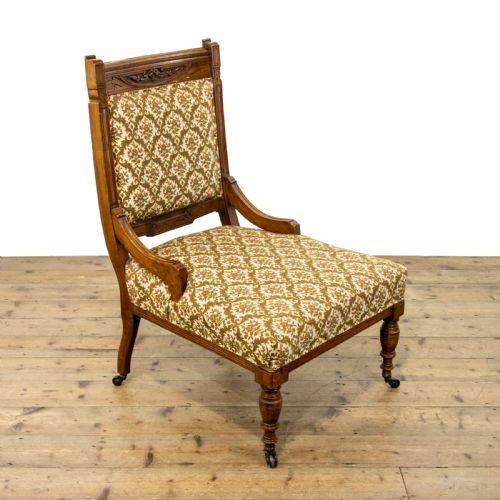
When searching for an edwardian oak low seat, buyers encounter a selection of low-profile chairs, stools, and gossip chairs originating predominantly from the Edwardian era and surrounding decades. These pieces serve domestic spaces where compact height and sturdy timber construction matter most.
The variations on this page include stools, armchairs, desk chairs, and slipper chairs built primarily from oak frames. Makers of the period paired this durable hardwood with rush, fabric, leather, or cane to create functional seating for firesides, bedrooms, and studies.
While Edwardian examples dominate, the selection extends to related nineteenth-century and early twentieth-century designs influenced by Arts and Crafts ideals and revival styles. Buyers find both simple rustic forms and carved statement pieces within this category.
How they were made
Construction relies heavily on solid oak frames, sometimes paired with beech or elm for secondary framing or turned components. Workshops utilised traditional joinery and sturdy wooden framing to ensure daily durability.
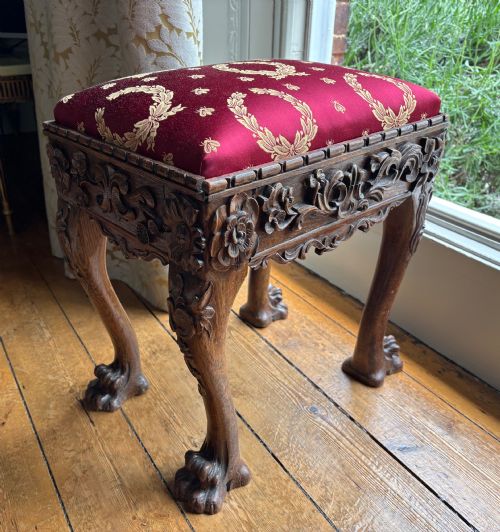
Seating areas incorporate woven rush, cane work, or upholstered pads finished in leather, fabric, or tan hide. Brass fittings and carved details such as lion heads occasionally complete the decorative scheme of the frame.
Listings feature oak combined with rush, cane, leather, fabric, and brass across various Edwardian and nineteenth-century forms.
What varies in quality
Quality reveals itself in the integrity of the timber framing and the precision of any carved ornamentation. Heavier lion head carvings and refined Chippendale influences elevate the decorative ambition of a piece above standard utility.
The execution of the seating surface, whether hand-woven rush, tightly fitted cane work, or durable leather hide, dictates the overall standard of manufacture. Original materials and documented workshop origins distinguish exceptional pieces from simpler vernacular items.
Liberty Morris And Co·Liberty And Co·Wheelers Of Arncroach
The Edwardian Oak Low Seat Glossary
- Edwardian
- Relating to the reign of King Edward VII, spanning from 1901 to 1910, though the aesthetic label often stretches to cover the broader early twentieth-century period. Furniture from this era frequently lightens heavier Victorian proportions.
- Rush seat
- A traditional seating surface woven from dried marsh rushes around a wooden frame. This technique creates a textured, supportive platform commonly found on Arts and Crafts chairs.
- Slipper chair
- A low-seated upholstered chair originally designed for bedrooms to assist with putting on shoes and slippers. Its shortened legs place the sitter closer to the floor.
- Gossip chair
- A specialised low seat featuring an attached writing tablet or curved backrest designed for telephone conversations or casual seated chats. These compact forms suit small hallways and corners.
- Arts and Crafts
- A design movement promoting handcraftsmanship, simple forms, and natural materials in reaction to industrial mass production. Oak and exposed joinery are hallmarks of this style.
Edwardian Oak Low Seat: Frequently Asked Questions
What rooms suit an edwardian oak low seat?
These compact seats fit easily into bedrooms, beside firesides, or within smaller studies where standard furniture feels too bulky.
Their low profile allows them to tuck beneath windows or sit comfortably in corners without blocking light or obstructing walkways.
How do I care for rush and cane seats?
Rush and cane require gentle treatment and benefit from occasional light dusting with a soft brush. Keeping them away from excessive moisture prevents the natural fibres from becoming brittle.
Applying a damp cloth very sparingly helps maintain flexibility in drier indoor environments.
Are these seats comfortable for daily use?
Low seats are designed for short periods of relaxation, dressing, or casual conversation rather than long hours of desk work.
Upholstered versions with leather or fabric offer a softer sit, while rush and cane versions provide a firm, supportive surface.
How do I distinguish Edwardian oak from Victorian oak?
Edwardian oak furniture generally exhibits lighter tones and more restrained decoration compared to the heavier, darker, and more heavily carved styles of the Victorian era.
Design influences from the Arts and Crafts movement also helped streamline forms during the Edwardian period.