
Edwardian Oak Desk Armchair
Solid timber, supportive curved backs, and swivel mechanisms define the edwardian oak desk armchair, built for long hours at the ledger.
Edwardian Oak Desk Armchair
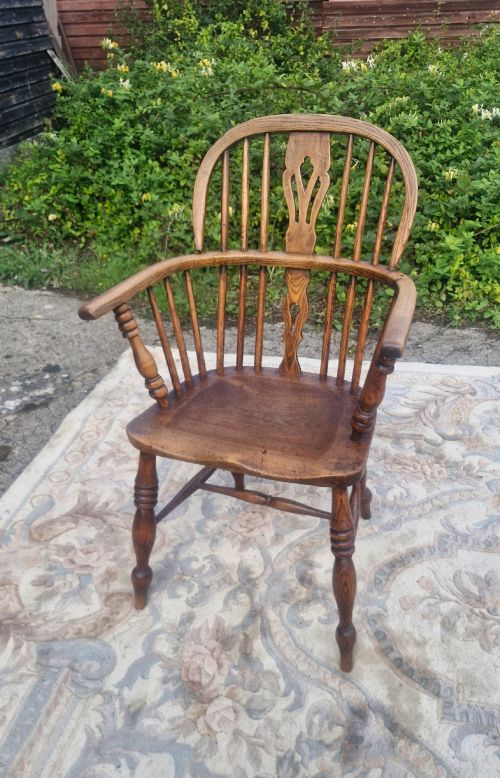
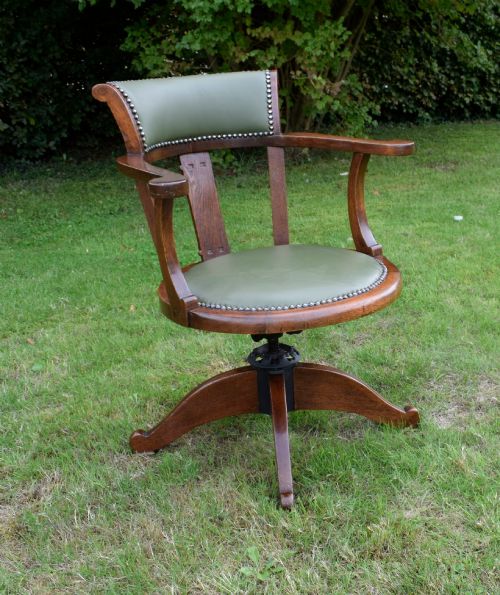
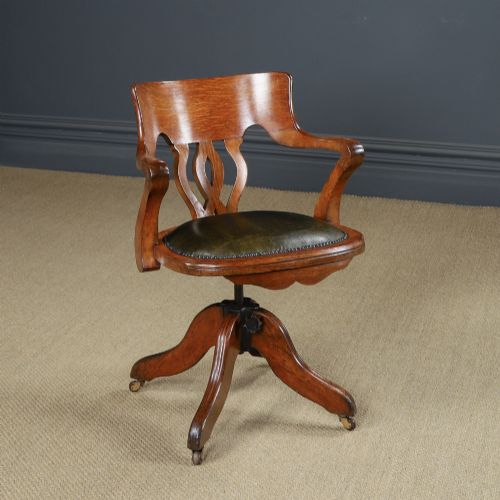
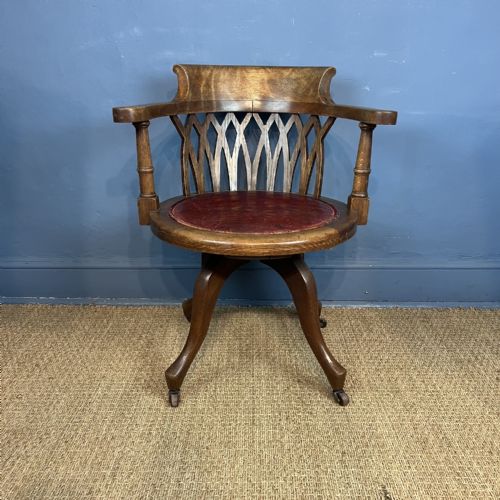
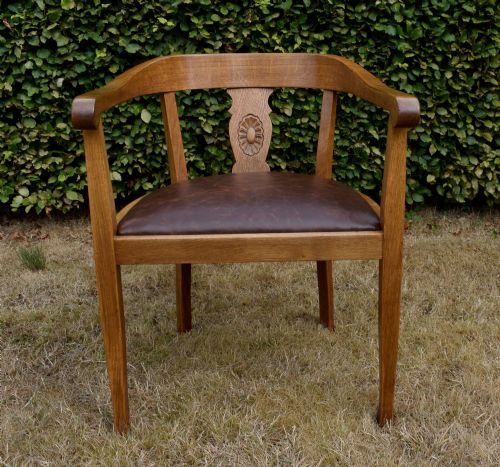
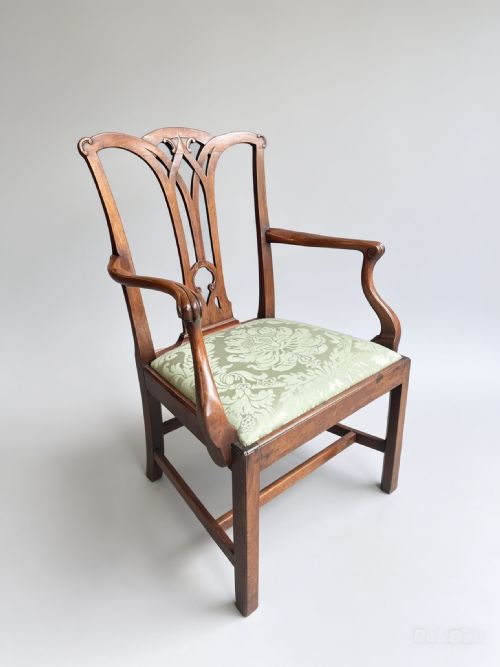
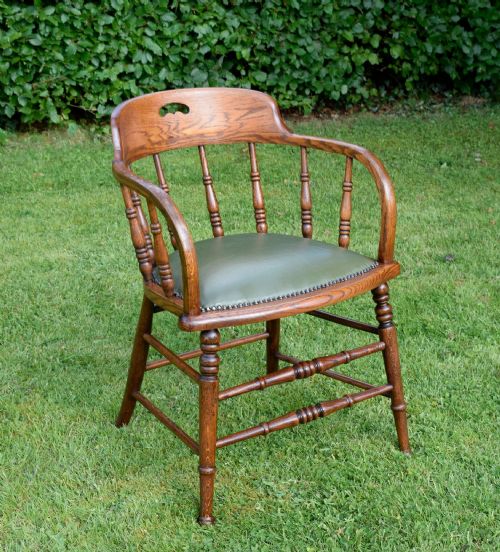
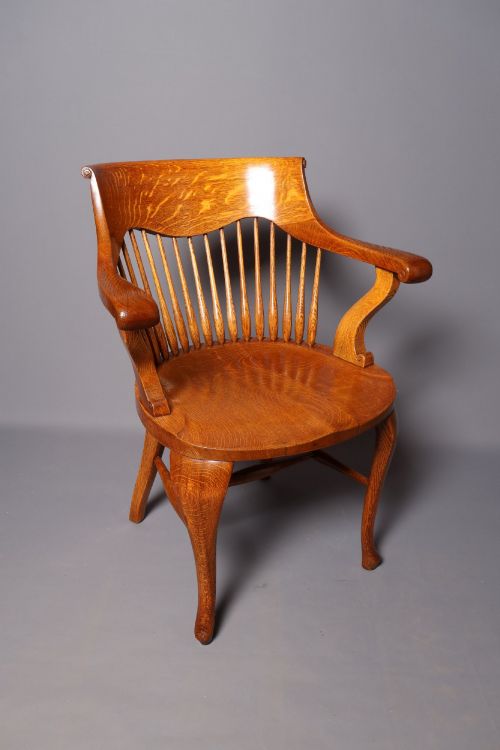
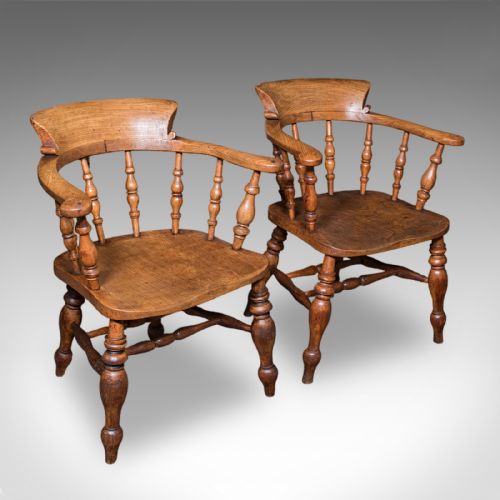
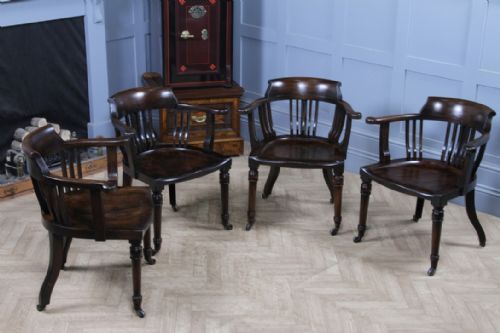
An edwardian oak desk armchair provides sturdy workspace seating, typically combining a robust wooden frame with an upholstered leather seat or pad. These practical chairs appear in various forms, from revolving office versions with swivel and tilt actions to low-backed captain's chairs and smoker's bows.
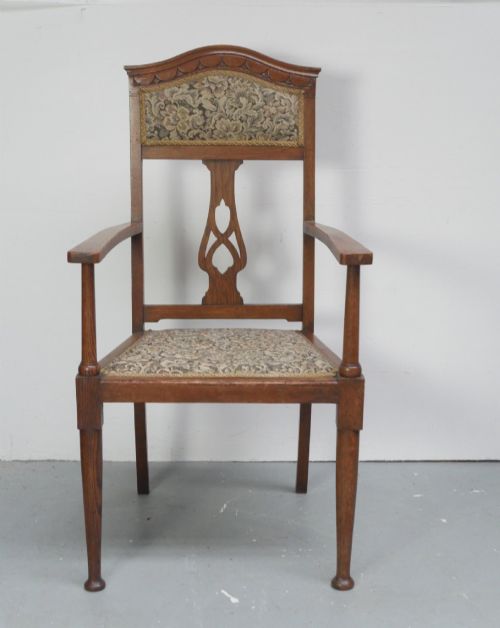
The pieces on this page span the late nineteenth century through the early twentieth century, showing strong influences from both Victorian utility and the Arts and Crafts movement. Simple open-arm designs and solid timber construction predominate, reflecting the functional demands of period studies and offices.
How They Were Made
Makers constructed these chairs primarily using solid oak, frequently paired with secondary timbers like beech, elm, or birch for internal framing and spindles. Leather upholstered the seats, secured with brass studs, while iron and cast iron components formed the mechanical swivel and adjustable height bases.
Joinery techniques relied on traditional methods such as steam-bending for the continuous arm and back rails found on captain's chairs and smoker's bows. Metal mechanisms were integrated into revolving office models, allowing for smooth pivoting and tilting movement.
Listings feature solid oak alongside elm and beech, with revolving mechanisms appearing frequently in early twentieth-century designs.
What Varies in Quality
The distinction between standard utility seating and finer examples lies in the weight of the timber and the sophistication of the underframe. Heavier, deeply figured oak and robustly engineered swivel mechanisms indicate higher workshop standards.
Refinement in the carving of the arm terminals and the shaping of the spindle backs also separates workshop output. Original leather upholstery retaining its colour and texture commands greater regard than later replacements.
W.Williamson & Sons·Kendrick & Jefferson
The Edwardian Oak Desk Armchair Glossary
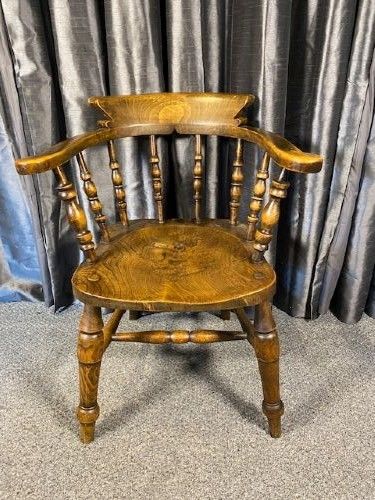
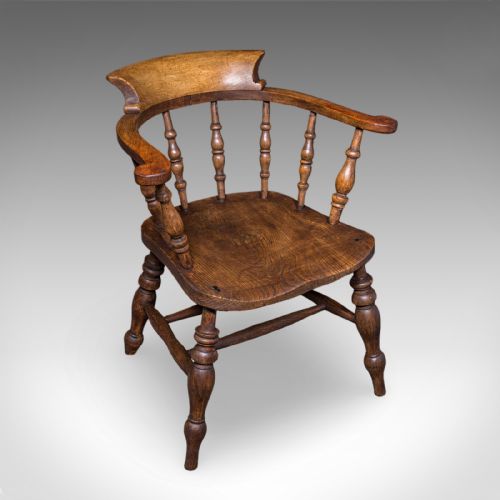
- Smoker's Bow
- A sturdy wooden armchair with a low, rounded back rail supported by turned spindles, often used in offices and smoking rooms.
- Swivel mechanism
- The iron and steel apparatus beneath the seat allowing the chair to rotate fully and tilt backward during use.
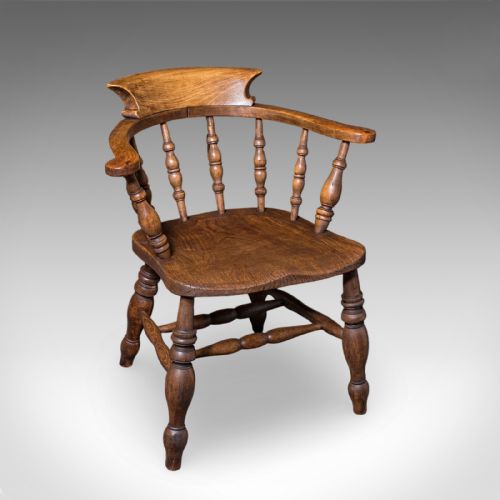
- Captain's chair
- A low-backed wooden armchair featuring a continuous curved armrest rail, traditionally favored for desk work.
- Arts and Crafts
- A design style emphasising honest construction, visible joinery, and the natural grain of materials over applied ornamentation.
- Bergere
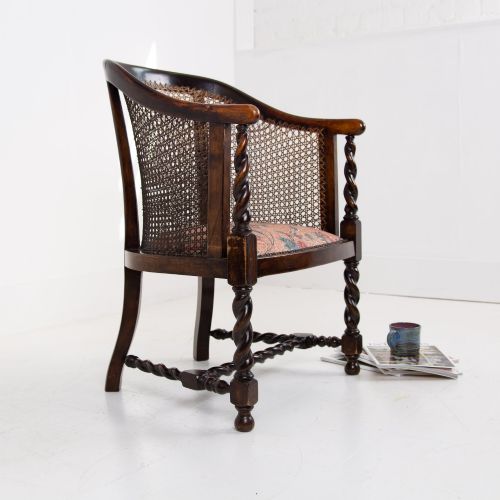
- An upholstered armchair with a wooden frame, where the back and sometimes the sides incorporate woven cane panels.
Edwardian Oak Desk Armchair: Frequently Asked Questions
What is a smoker's bow chair?
A smoker's bow is a sturdy wooden armchair featuring a low, curved back rail supported by turned spindles above the seat. These chairs gained popularity in offices and studies for their durable construction and comfortable elbow support.
They share similarities with captain's chairs but typically exhibit a slightly higher spindle arrangement. Many examples from the period serve well as functional desk seating today.
How do swivel mechanisms work on these chairs?
Period swivel mechanisms utilise a central iron spindle fixed to a four- or five-legged wooden base. This allows the upper seat portion to rotate fully and often incorporates a spring tilt function.
Adjustable height variants use a threaded screw column that raises or lowers the seat when turned. These metal assemblies require occasional lubrication to maintain smooth operation.
Are these chairs suitable for modern desks?
Most edwardian oak desk armchairs fit standard desk heights comfortably, though fixed-height models cannot be adjusted. Checking the clearance beneath the desk drawer is essential before purchase.
Revolving office versions offer greater flexibility for movement and positioning in contemporary workspaces. Their ergonomic curves provide substantial support for daily administrative tasks.
How do I distinguish Edwardian from Victorian oak chairs?
Edwardian oak chairs generally display a lighter golden tone and cleaner, less cluttered lines than their Victorian predecessors. Victorian examples frequently utilise heavier, darker finishes and more ornate carved details.
Arts and Crafts influences also become more pronounced in the Edwardian era, prioritizing visible construction over decorative veneer. Examining the underlying hardware and timber colour helps clarify the period of manufacture.