




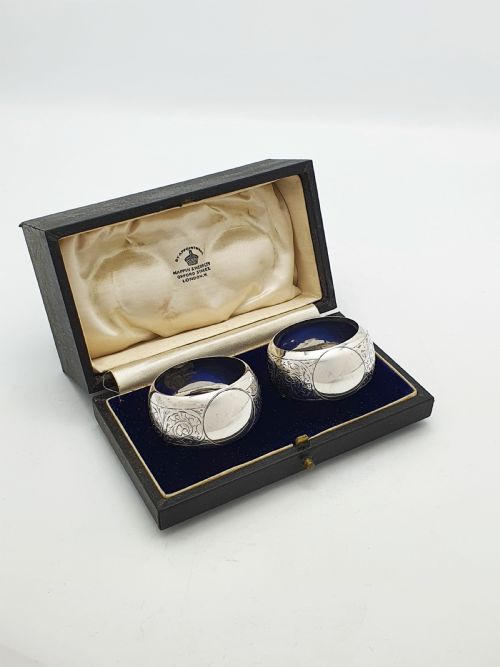
Edwardian Napkin Rings
Edwardian napkin rings are small silver table pieces designed for formal dining, offering a touch of early twentieth-century elegance to the table.
Edwardian Napkin Rings
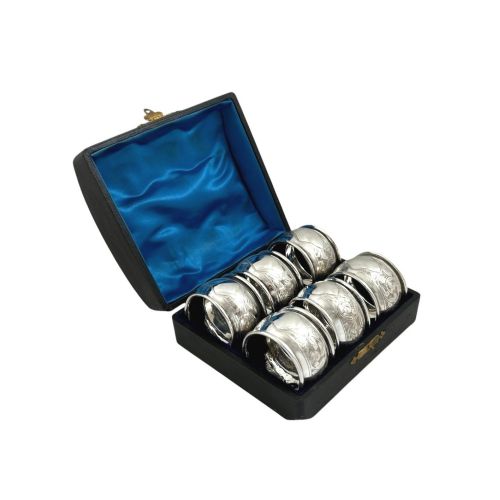
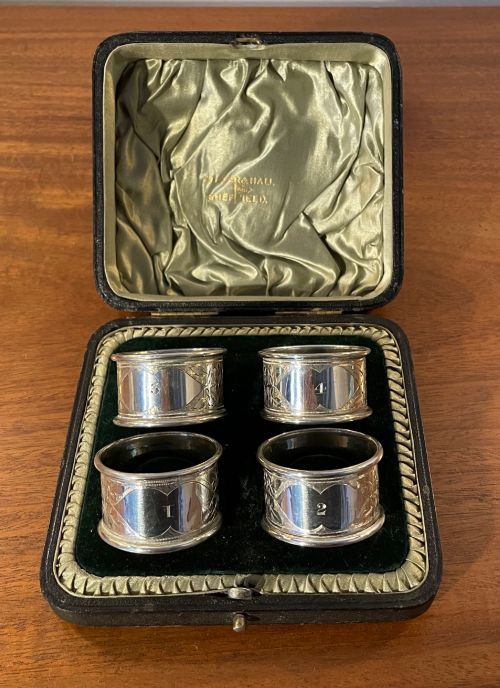
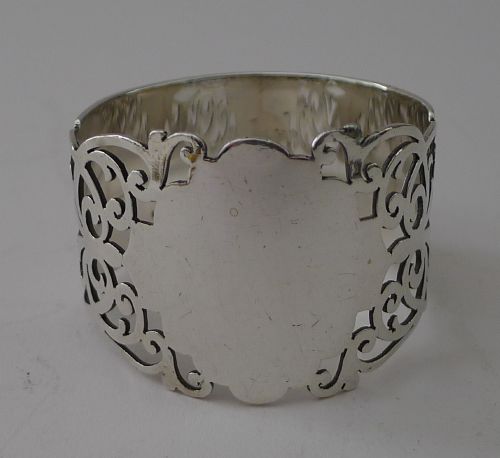
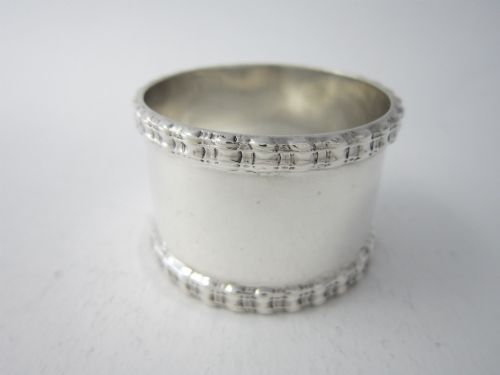
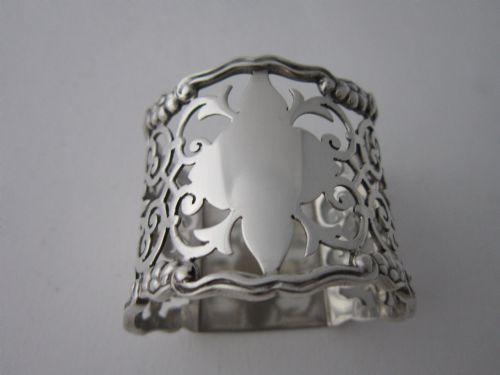
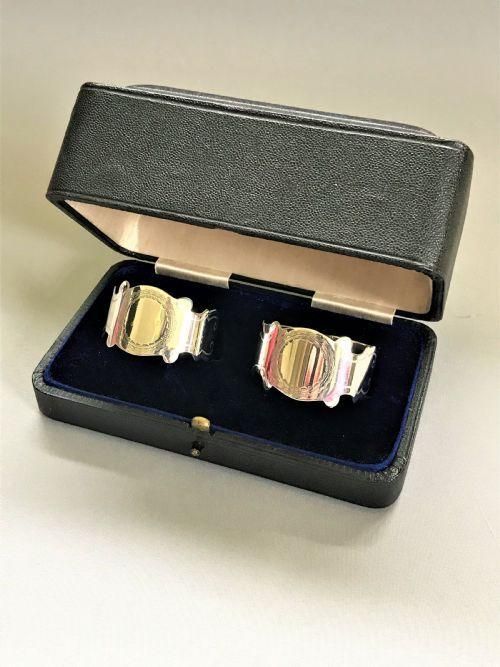
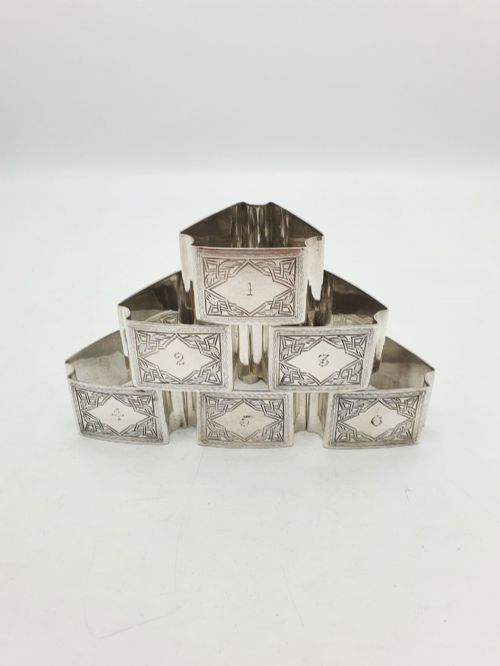
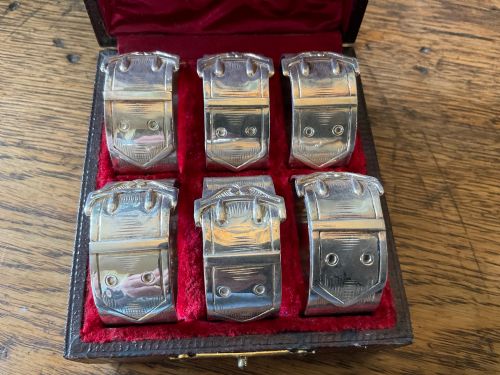
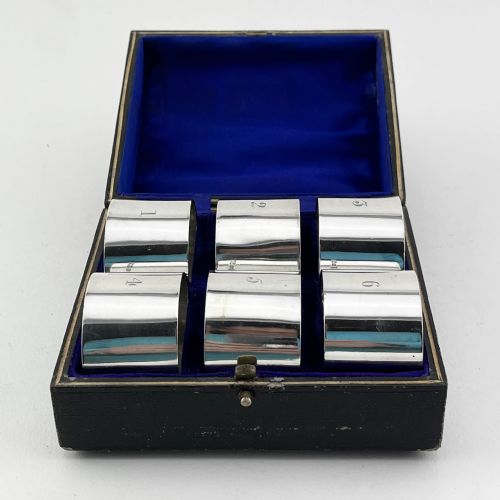
The objects stem primarily from the Edwardian period and the subsequent George V years, with occasional examples from the Victorian era or mid-century. Forms include plain circular bands, heavy cast designs, numbered rings, and unusual variants modelled as belt buckles.
Alongside standard rings, related dining items such as christening sets occasionally join the selection. Most listings originate from the early decades of the twentieth century, reflecting the domestic habits of the period.
Materials and construction
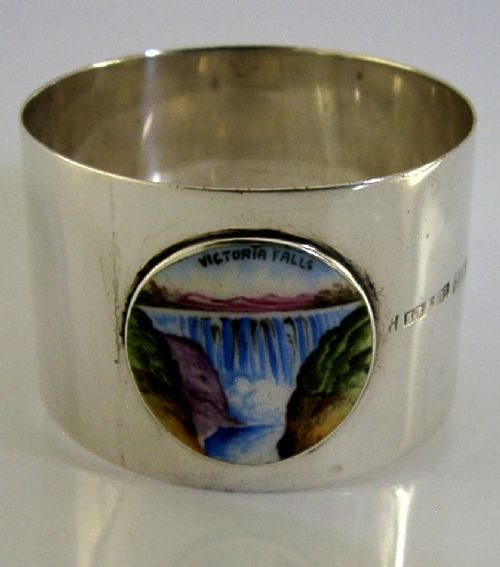
Silversmiths utilised sterling silver and silver plate to shape these small tubular forms, sometimes applying vibrant enamel details for added decoration. Manufacturing techniques involved rolling sheet metal, soldering seams, and striking designs through early twentieth-century workshop methods.
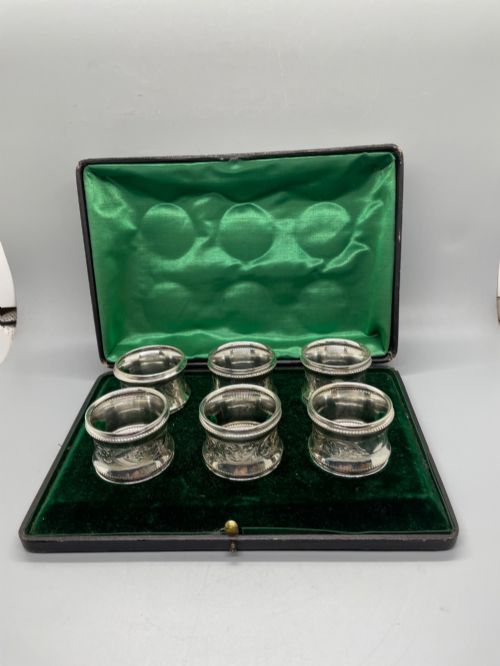
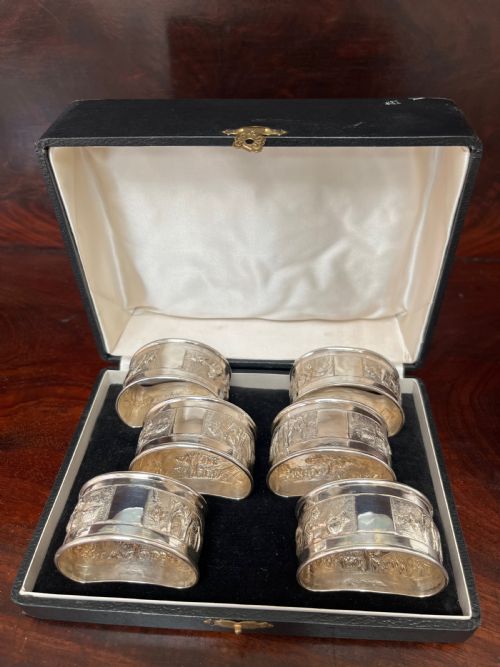
Presentation packaging played a significant role in production, with makers housing the silver in bespoke boxes lined with silk or velvet and covered in leatherette. Numbered sets required precise stamping or engraving so diners could identify their individual places at the table.
Edwardian Napkin Rings Retail Price Guide 2026
Typical asking prices for edwardian napkin rings among the pieces listed under this phrase on Sellingantiques today, from the lower quarter to the upper quarter. They describe what is for sale here now, not the wider market.
Several sets feature clever metalwork modelled precisely to resemble buckled leather belts, fooling the eye before the napkin is ever drawn.
Factors that distinguish the range
The presence of original fitted presentation cases significantly influences the appeal of these items, particularly when the silk and velvet linings remain intact. Complete sets of six matched or numbered rings demand higher regard among collectors than isolated single pieces.
The inclusion of specialist ornamentation, such as coloured enamel work or complex modelling like belt buckle shapes, separates standard utilitarian rings from more decorative workshop examples. Maker attribution to notable firms also defines the upper tiers of the selection.
Martin Hall & Co·C.T. Burrows & Sons·Tiffany & Co·Liberty & Co·Mappin & Webb
The Edwardian Napkin Rings Glossary
- Sterling silver
- A metal alloy consisting of silver and other metals to ensure durability for everyday objects. It is the primary material found across these dining pieces.
- Silver plate
- A base metal coated with a thin layer of silver through electroplating or older techniques. This provided an accessible alternative to solid silver for larger sets.
- Enamel
- A glassy substance fused to the surface of metal through firing for decorative colour. It appears on specific artistic rings from the period.
- Leatherette
- An imitation leather material utilised to cover storage and presentation cases. It protected the silk and velvet interiors holding the silver.
- Christening set
- A matched collection of infant dining silver presented as a traditional gift. These boxes occasionally accompany standard tableware.
Edwardian Napkin Rings: Frequently Asked Questions
How were napkin rings used?
Diners utilised individual napkin rings at formal meals to store cloth napkins between uses over several days. Each family member possessed a distinct ring or numbered piece to maintain personal separation at the table.
This domestic practice kept household laundry manageable in large Edwardian households. The fitted cases ensured the silver remained protected when stored in sideboards.
Are these pieces made of solid silver?
The selection includes both solid sterling silver and silver plate alternatives. Hallmarks stamped into the metal usually indicate the silver standard and assay office.
Plated versions offer the same decorative utility without the solid precious metal content. Descriptions on individual listings clarify the exact material composition.
Why do some come in boxes?
Presentation boxes were standard for matched sets intended as gifts for weddings or special occasions. The fitted interiors lined in silk or velvet prevented the rings from scratching during storage.
Original boxes complete with working clasps remain desirable for collectors. They preserve the item in the exact manner retailers sold it a century ago.
How do I identify Edwardian styles?
Edwardian silver often displays restrained classical motifs or simple polished surfaces rather than heavy Victorian ornamentation. Hallmarks containing specific date letters confirm the exact year of manufacture.
Stylistic influences occasionally overlap into the subsequent George V era. Comparing the decorative borders helps distinguish the manufacturing decade.