


Edwardian Music Chair
An Edwardian music chair is a seating form designed for musicians, combining period woods and adjustable mechanisms for practical home performance.
Edwardian Music Chair
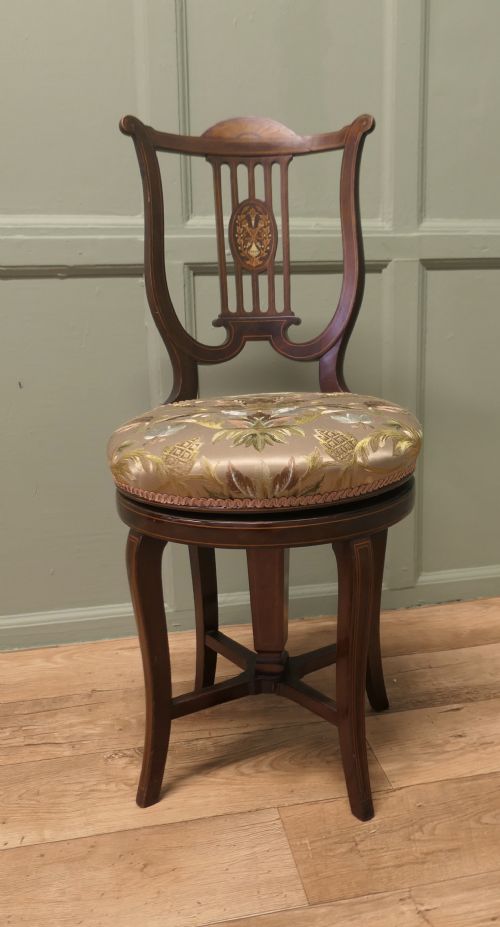
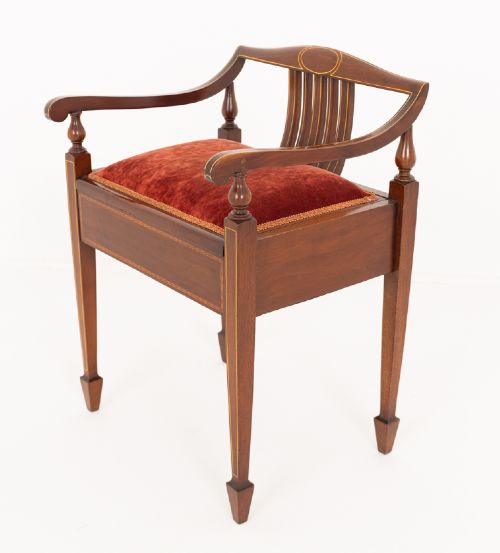
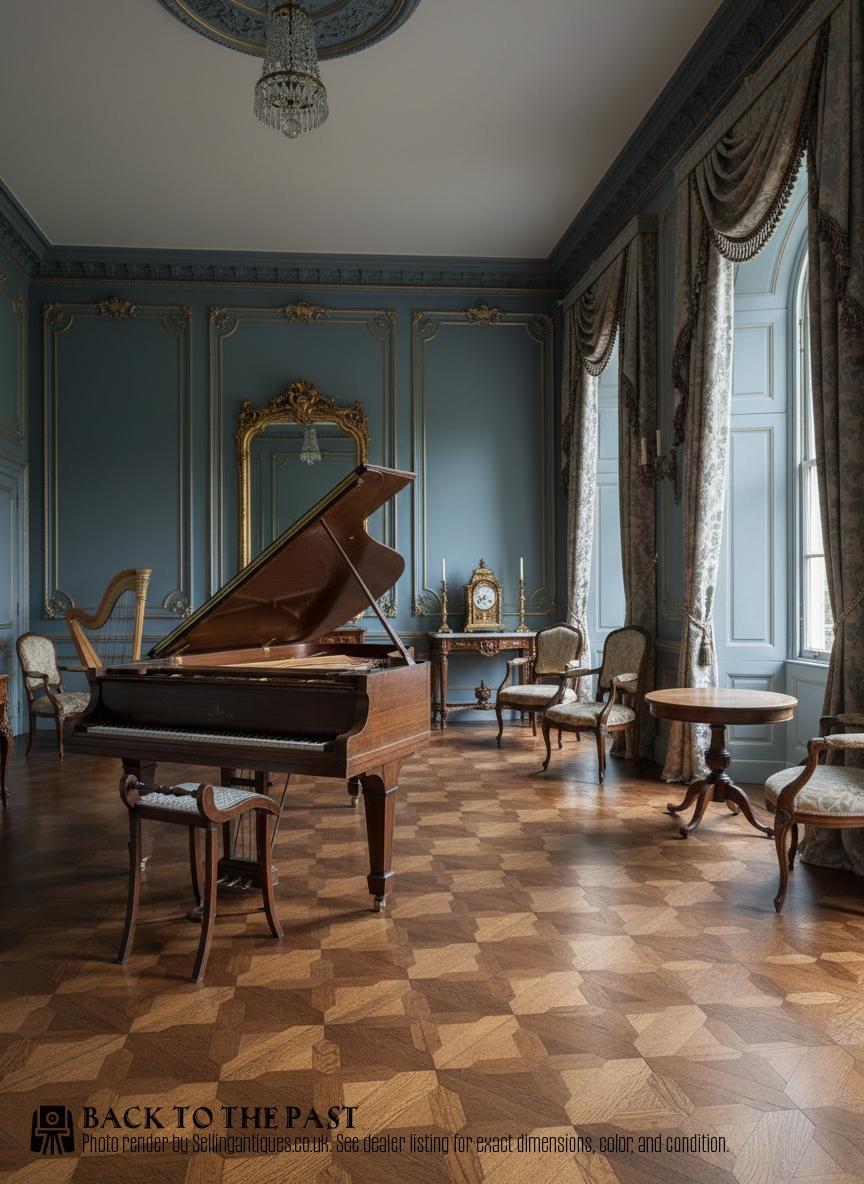
An edwardian music chair is a specialised seat designed to assist pianists, cellists, and harpists during performance. These pieces appear in forms such as swivel stools, revolving piano stools, rise and fall mechanisms, and lyre back harpist chairs.
Most examples found on this page date from the late nineteenth century into the early twentieth century, spanning Victorian, Edwardian, and Sheraton Revival styles. Makers such as James Shoolbred and Gane of Cardiff produced variants in mahogany, rosewood, walnut, and satinwood, often featuring inlaid motifs or ebonised finishes.
The buyer encounters varied seating configurations, from tripod bases and circular piano stools to corner chairs with musical instrument motifs. These objects reflect the domestic musical pursuits of their original period.
How they were made
Makers utilised dense timbers including mahogany, rosewood, walnut, and satinwood to construct the frames and legs. These woods were frequently enhanced with inlaid decorative details and polished finishes.
Revolving and adjustable functions relied on brass internal mechanisms that allowed the seat height or position to change for the player. Upholstery, velvet, and various textiles provided the padded surface required for extended periods of sitting.
Listings incorporate woods such as mahogany, rosewood, walnut, and satinwood alongside brass adjustment mechanisms.
What varies in quality
The sophistication of the revolving or rise and fall mechanism dictates the mechanical standard of each piece. Smooth adjustment and robust brass components separate straightforward fixed stools from complex rotating designs.
The choice of cabinet timber and the precision of inlaid woodwork influence the visual merit of the piece. Selected grain figures in mahogany or rosewood and crisp carving on tripod legs elevate individual examples.
James Shoolbred·Gane of Cardiff
The Edwardian Music Chair Glossary
- Revolving piano stool
- A seat featuring a central screw mechanism that permits the top to turn and alter in height. This allowed keyboard players to find a comfortable playing position.
- Lyre back
- A chair back designed in the shape of an ancient stringed musical instrument. This motif frequently appears on pieces intended for musicians.
- Rise and fall
- A mechanical system operated by a screw or ratchet that raises or lowers the seat surface. Such devices were essential for adjusting to different instruments and players.
- Sheraton Revival
- A late nineteenth and early twentieth century design movement that reinterpreted eighteenth century neoclassical furniture forms. These pieces often incorporate light wood inlay on mahogany.
Edwardian Music Chair: Frequently Asked Questions
What is an edwardian music chair used for?
These seats were made to support musicians at the piano, harp, or cello during practice and performance. Their adjustable mechanisms allowed players to alter their height and seating angle.
They served primarily in domestic drawing rooms and music rooms where home entertainment centered on the piano.
How do I adjust a revolving piano stool?
The seat top rotates on a central wooden or metal screw thread housed within the pedestal base. Turning the seat clockwise or anti-clockwise raises or lowers the sitting surface.
Older mechanisms require careful handling to avoid straining the internal thread or the supporting tripod legs.
How do I identify a Sheraton Revival piece?
Sheraton Revival furniture displays lighter proportions, mahogany frames, and decorative satinwood inlay work. These pieces emulate the neoclassical style popular during the late eighteenth century.
They frequently incorporate tapered legs and geometric stringing rather than heavy Victorian carving.