




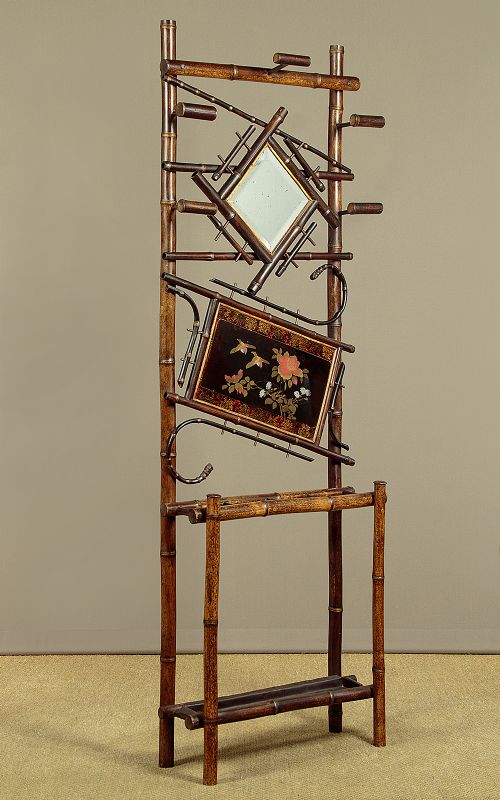


Edwardian Mirrored Hat Stand
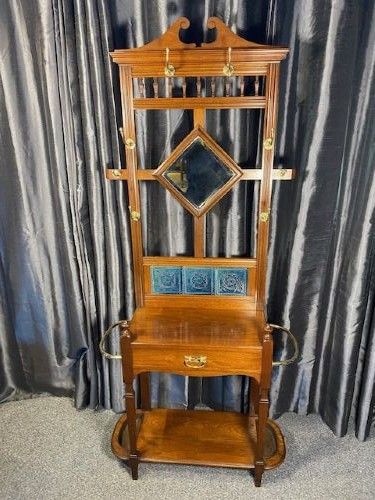
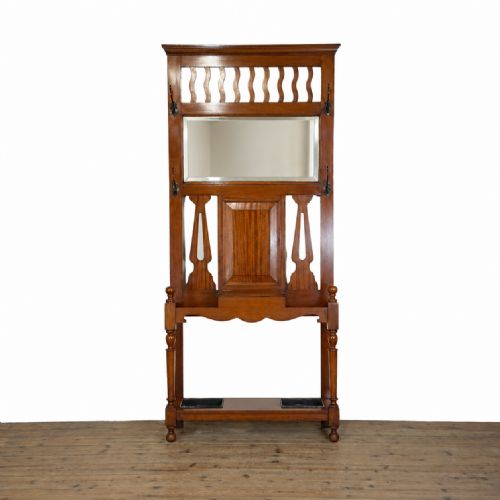
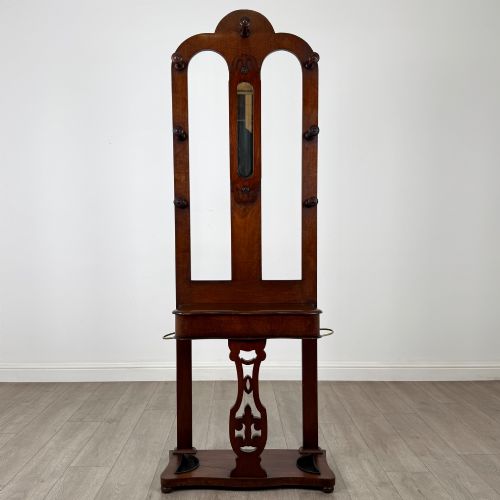
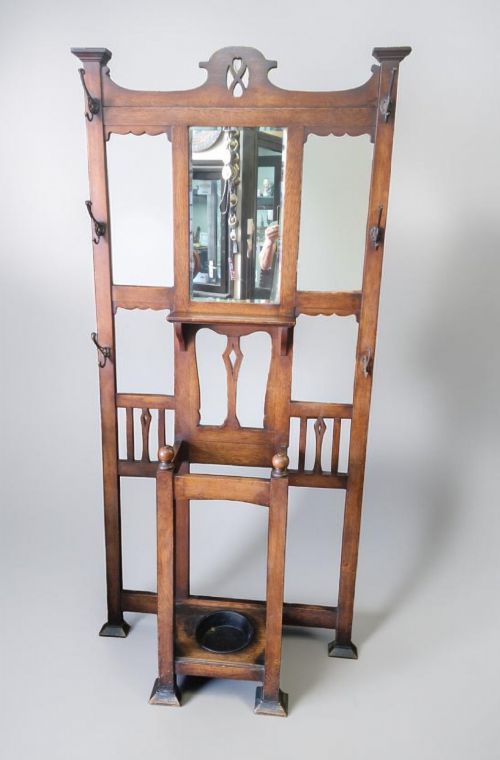
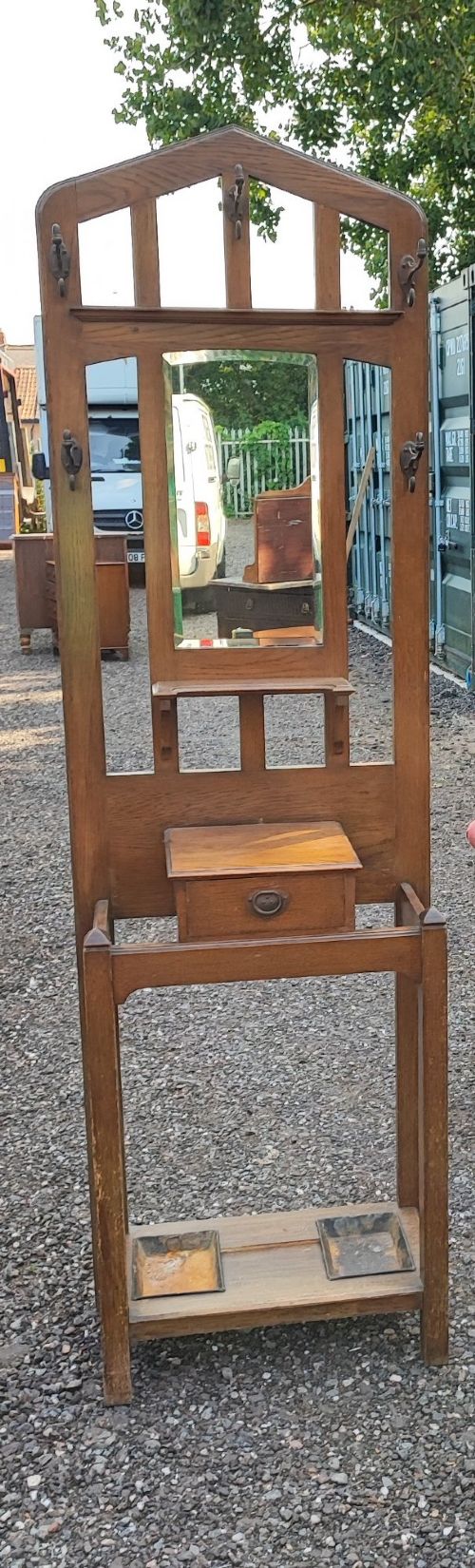
An Edwardian mirrored hat stand brings practical elegance to a hallway, combining a central looking glass with sturdy timber and brass hooks for daily use.
Edwardian Mirrored Hat Stand
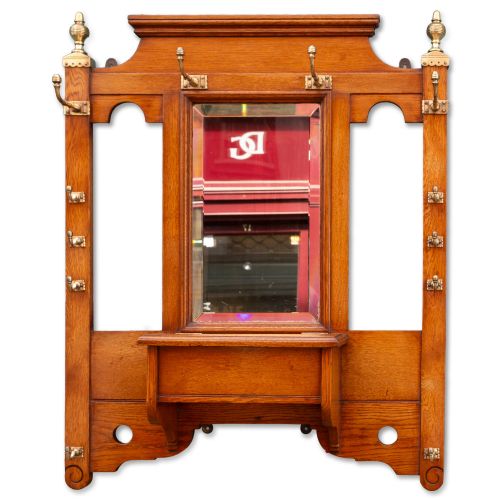
An edwardian mirrored hat stand combines a functional entranceway organizer with decorative form, predominantly appearing in oak and mahogany across this selection. These hall stands and wall racks serve to tidy garments and hats while reflecting light into narrow spaces.
Most examples originate from the Victorian, Edwardian, and early twentieth-century periods, showcasing styles from Arts and Crafts to Art Nouveau. Buyers encounter floor-standing furniture alongside wall-mounted variations featuring bevelled glass plates.
The objects integrate umbrella wells, marble inserts, and cast iron elements alongside timber frames. Such versatility makes them a practical focal point for period hallways.
Materials and Construction Techniques
Cabinetmakers utilised solid oak, mahogany, and walnut as structural timbers, often framing bevelled mirror glass and brass or cast iron hooks. Bamboo also appears in specific aesthetic movement pieces, joined with specialist bindings.
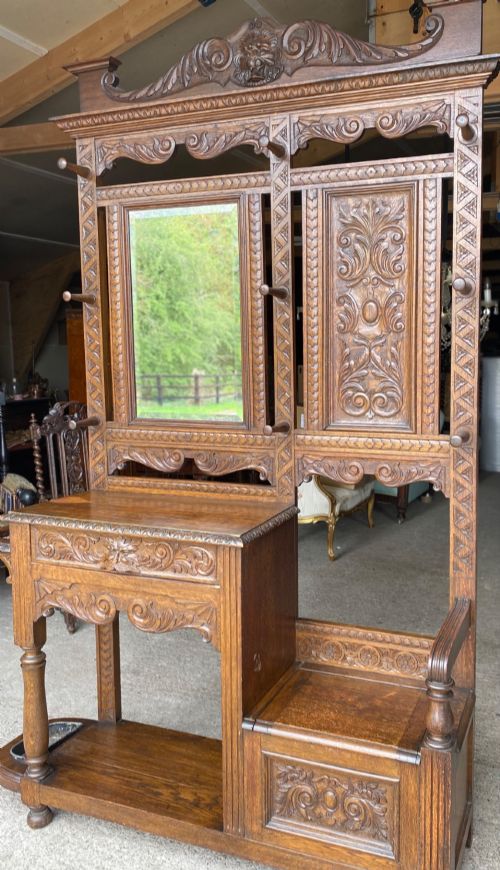
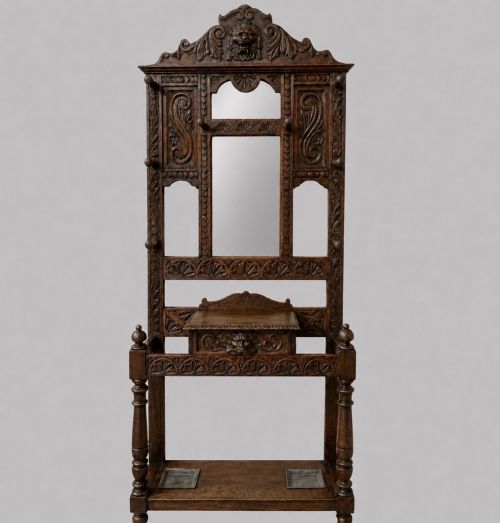
Carving and inlay work decorate the timber surfaces, featuring motifs such as Green Man faces or inlaid panels. Ceramic tiles, including Minton examples, provide durable splashbacks within the umbrella sections.
Edwardian Mirrored Hat Stand Retail Price Guide 2026
Typical asking prices for edwardian mirrored hat stand among the pieces listed under this phrase on Sellingantiques today, from the lower quarter to the upper quarter. They describe what is for sale here now, not the wider market.
A Green Man carved into the oak crown watches silently over your guest's damp umbrella.
Factors Defining Quality and Character
The grade of timber and depth of carving distinguish standard production pieces from finer examples. Richly figured golden oak or dense mahogany alongside substantial brass hardware indicate superior craftsmanship.
Integration of secondary materials like marble inserts, deep bevelled mirror plates, and signed ceramic tiles elevates a piece. Original hooks and intact drip pans retain the historical integrity of the stand.
Fischel·Coalbrookdale·Ellen E. Houghton of Minton
The Edwardian Mirrored Hat Stand Glossary
- Bevelled plate
- A mirror glass with angled edges that catch the light. This technique adds depth and refinement to the looking glass.
- Hallstand
- A piece of hallway furniture incorporating coat hooks, a mirror, and often an umbrella stand. These items organise entranceway essentials.
- Arts and Crafts
- A design movement prioritising traditional craftsmanship and simple forms. Pieces often display honest construction and natural materials.
- Art Nouveau
- A decorative style characterised by flowing, organic lines and plant motifs. This aesthetic influences the curves of metalwork and woodwork.
- Aesthetic Movement
- A late nineteenth-century design focus on beauty over utility. Pieces frequently incorporate bamboo or Japanese-inspired details.
Edwardian Mirrored Hat Stand: Frequently Asked Questions
How do I maintain the mirror plate?
Clean the glass gently using a soft cloth and simple glass cleaner, taking care to avoid spraying liquid directly onto the wooden frame or silvered backing.
Regular dusting of the timber and brass hooks with a dry cloth helps preserve the surface finish over time.
Can these stands support heavy winter coats?
Floor-standing models distribute weight through their solid timber bases and upright frames, making them suitable for everyday garments and hats.
Wall-mounted versions require secure fixing to wall studs to ensure they bear the weight of heavy coats safely.
Where were these pieces traditionally placed?
They stood in the entrance halls and vestibules of houses to receive visitors and hold outdoor wear.
Families used the mirror for a final check before leaving the house.
How do I distinguish Victorian from Edwardian styles?
Victorian pieces often feature heavier dark timbers, elaborate carved details, and dense ornamentation.
Edwardian and later examples tend toward lighter oak tones, simpler lines, and influences from the Arts and Crafts movement.