



Edwardian Milk Glass
Edwardian milk glass items bring soft light and solid period charm into a room, making them sought-after pieces for traditional and industrial interiors alike.
Edwardian Milk Glass
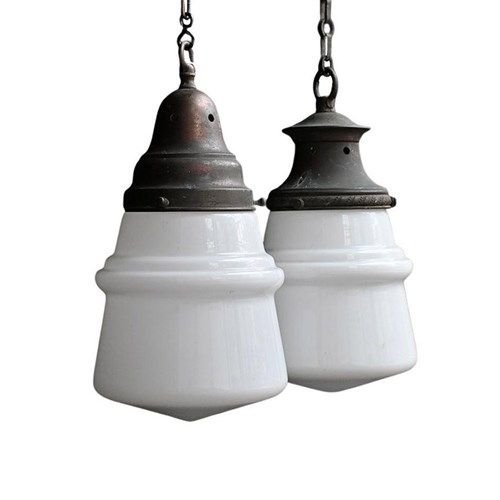
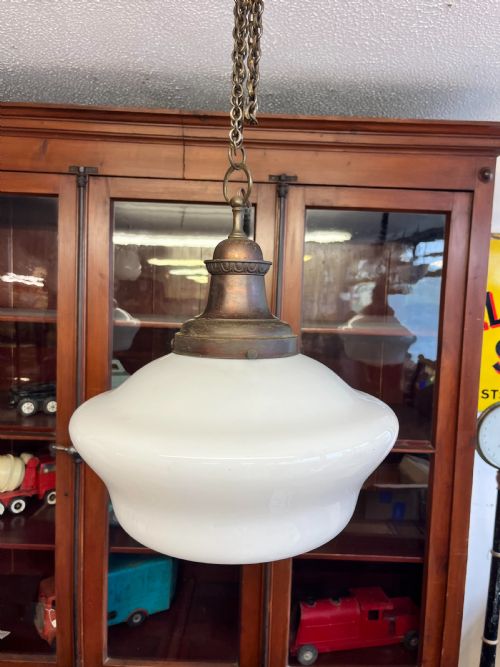
When buyers search for Edwardian milk glass, they find domestic and commercial lighting fixtures that use opaque white or opaline glass materials. These pieces include lamp shades, pendant lights, ceiling lights, and oil lamps dating from the late nineteenth century through the early twentieth century.
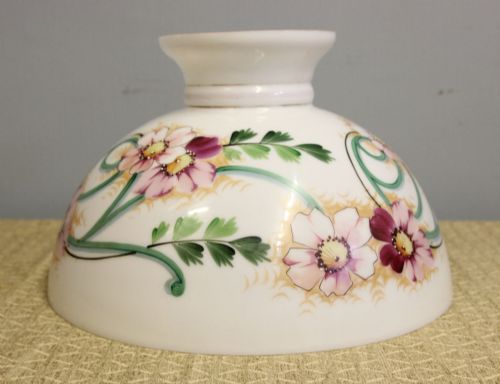
The versions most commonly met on this page are oil lamps and pendant lights, often paired with brass fittings and decorated with enamel painting. Styles range from simple industrial ceiling lights to ornate Victorian and Gothic Revival chandeliers.
Makers produced these items to diffuse harsh gas or electric light while adding decorative character to domestic and institutional spaces. Surviving examples reflect the shifting lighting technology of the era, moving from oil combustion to early electric illumination.
Materials and construction
Makers formed these items using opaque glass, opaline glass, and enamel, which create a milky white appearance that diffuses light evenly. Glass components are frequently mounted in brass collars, rings, and frames.
Techniques combined glassblowing or mould pressing with hand-painted enamel decoration for specific shades and globes. Metal components such as brass oil lamp bases and ceiling fittings provided the structural support for the glass elements.
Edwardian Milk Glass Retail Price Guide 2026
Typical asking prices for edwardian milk glass among the pieces listed under this phrase on Sellingantiques today, from the lower quarter to the upper quarter. They describe what is for sale here now, not the wider market.
Early twentieth-century kitchens used milky glass shades simply because they were easy to wipe clean after a smoky evening of coal gas lighting.
Judgements of quality
Quality in these lighting pieces rests on the weight and purity of the glass, alongside the crispness of any enamel painted surface. Thicker opaline glass and finely cast brass mounts distinguish superior examples from standard utilitarian wares.
Proportion and form also determine distinction, with larger or more unusual chapel lights and matching sets commanding greater interest than standard domestic lamp shades. The integration of original brass rings and fittings preserves the integrity of the piece.
The Edwardian Milk Glass Glossary
- Opaline Glass
- A translucent white glass that diffuses light softly while retaining a milky appearance. It was widely utilised for Victorian and Edwardian lighting shades.
- Opaque Glass
- A non-transparent glass variety used to conceal internal burners and bulbs. This material blocks direct glare while transmitting a warm glow.
- Gothic Revival
- An architectural and decorative style drawing on medieval forms. Pieces in this style often incorporate pointed arches and heavy brass framing.
- Enamel
- A fused glassy substance applied to the surface of glass or metal for decoration. Enamelled highlights add colour and pattern to plain white shades.
Edwardian Milk Glass: Frequently Asked Questions
What is Edwardian milk glass?
Edwardian milk glass refers to opaque white glass lighting components made around the early twentieth century. These include lamp shades, globes, and oil lamp reservoirs.
The material was chosen for its ability to soften bright light while providing a clean, bright appearance in home interiors.
How do I hang a milk glass pendant light?
Pendant lights and ceiling shades require secure mounting to ceiling joists using appropriate brass or metal fixings. Many vintage shades use a brass collar or ring to attach safely to standard suspension wiring.
Consult a qualified electrician to ensure historic fixtures comply with modern safety standards before installation.
Can I use modern bulbs in antique oil lamps?
Many antique oil lamps and shade holders are adapted for modern electric bulbs by specialist lighting technicians. This conversion preserves the historic glass shade while making the lamp practical for daily use.
Original oil lamp burners can sometimes be retained if conversion is not desired, though they serve a purely decorative function.
How do I clean antique opaline glass?
Wash opaline glass gently in warm water using a mild soap and a soft cloth. Avoid harsh chemical cleaners or abrasive scouring pads that might damage painted enamel details.
Take care with brass mounts, keeping moisture away from metal parts to prevent tarnishing and corrosion.