
Edwardian Marquetry Vitrine
An edwardian marquetry vitrine brings glass, polished mahogany and intricate floral inlay together to display prized porcelain and curios.
Edwardian Marquetry Vitrine
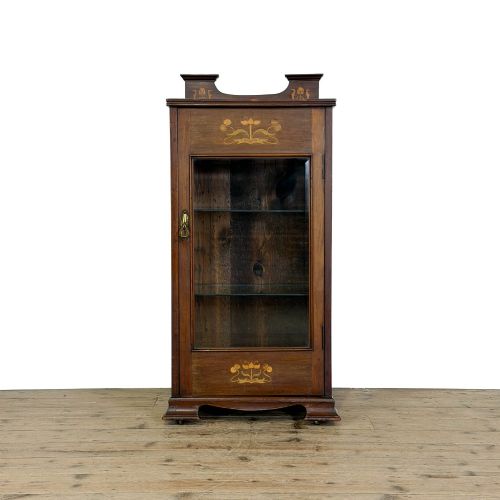
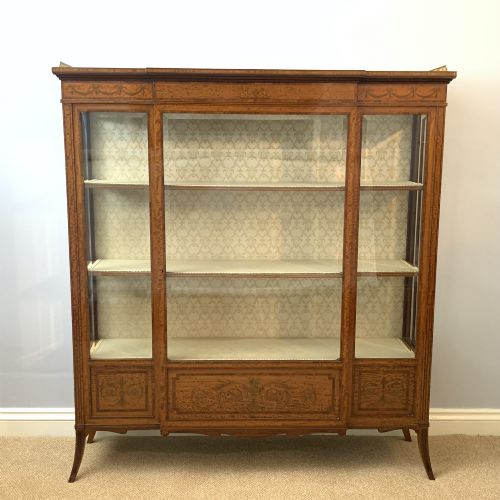
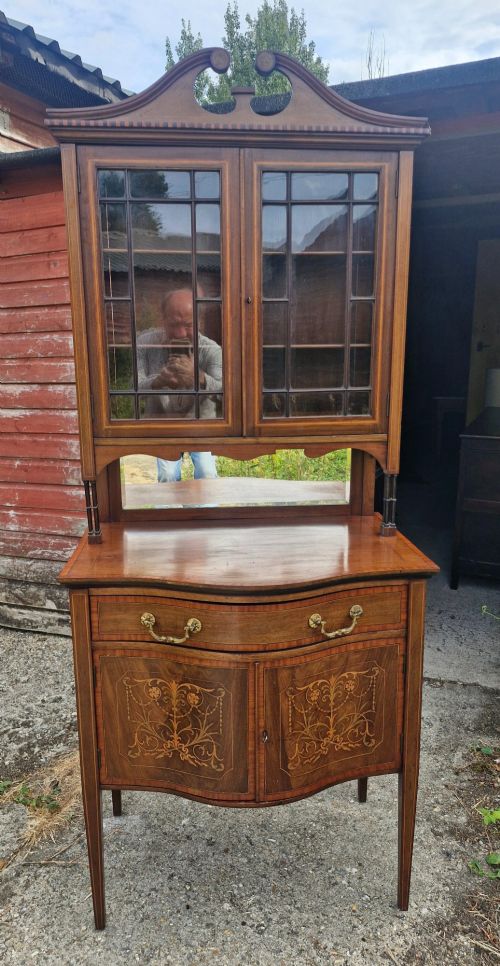
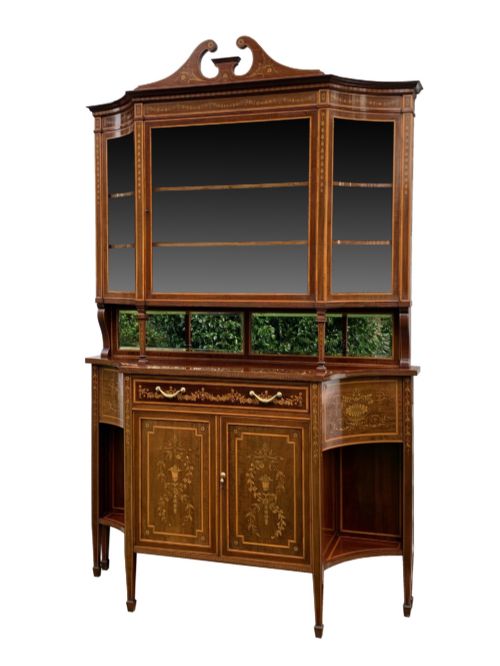
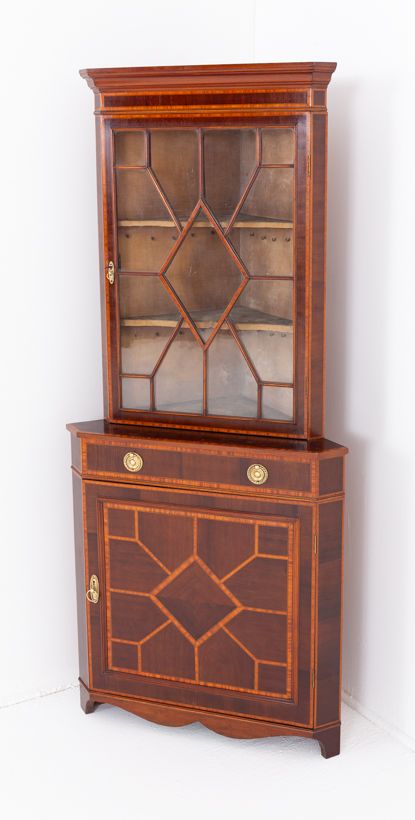
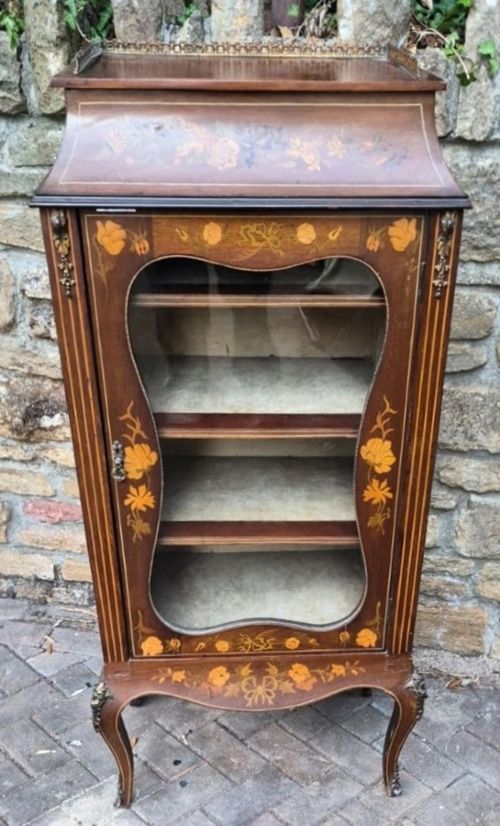
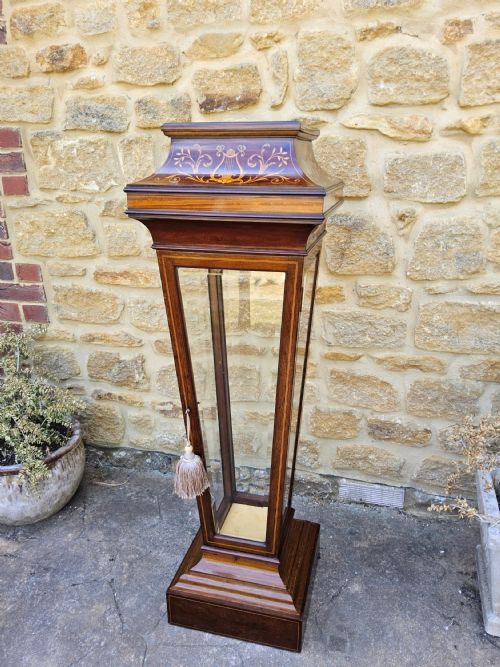
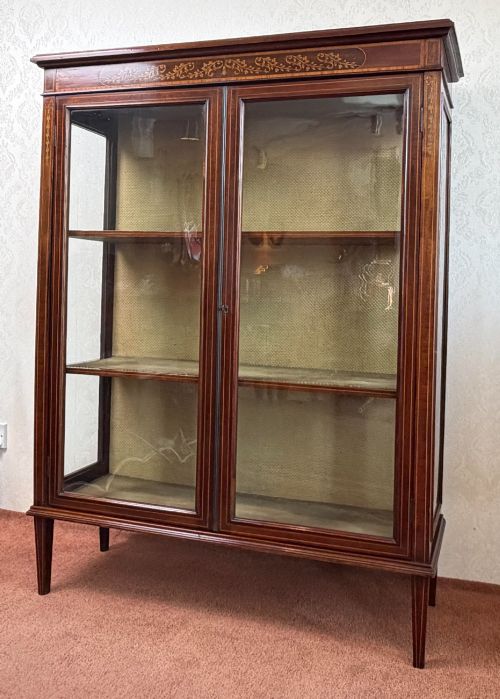
An edwardian marquetry vitrine is a glazed display cabinet designed to showcase fine ceramics, glass and curiosities while protecting them from dust. These pieces range from freestanding corner units and two-part cabinets to wall-mounted designs and low display tables.
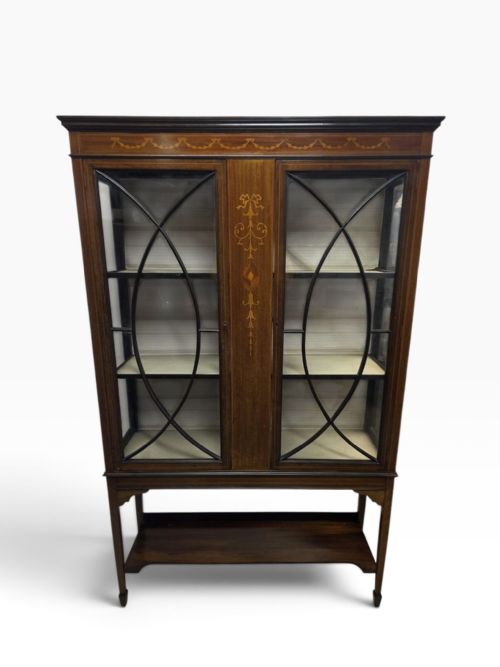
The version most commonly met on this page is the freestanding mahogany cabinet bearing delicate wood inlay, often associated with the Sheraton Revival style popular around the turn of the twentieth century.
Materials and Technique
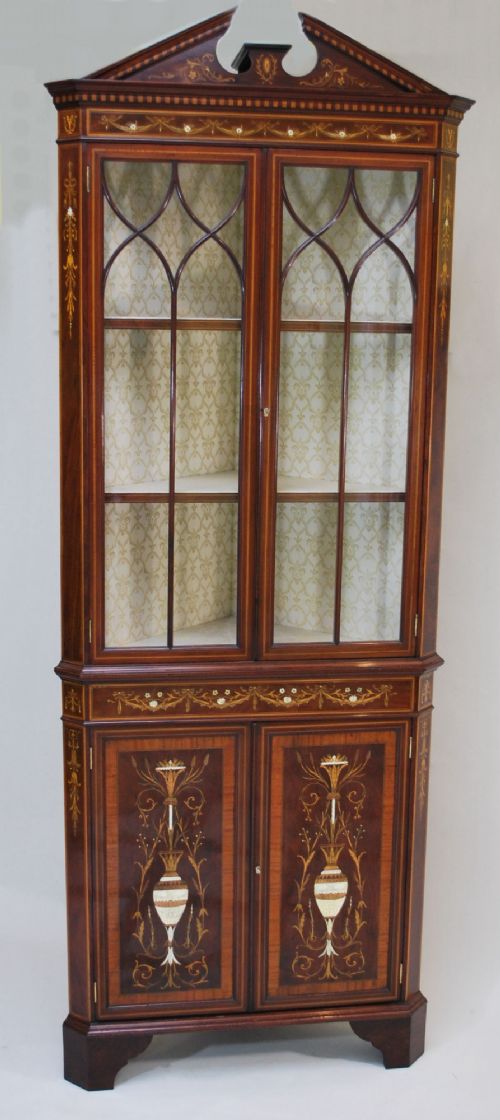
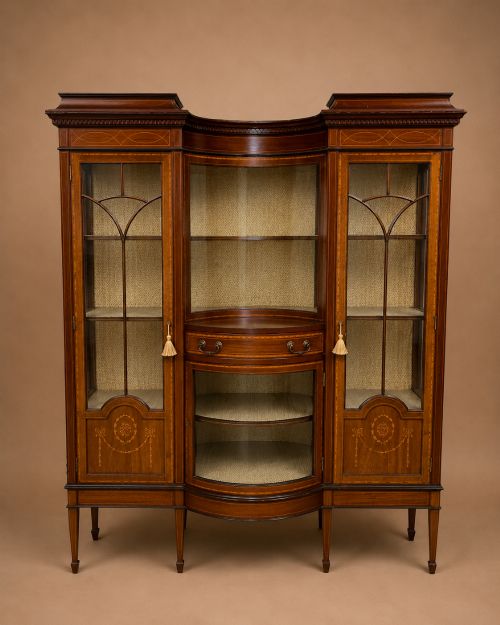
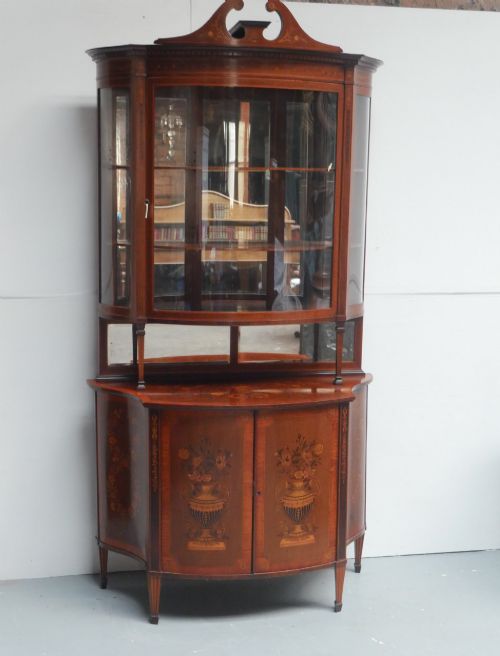
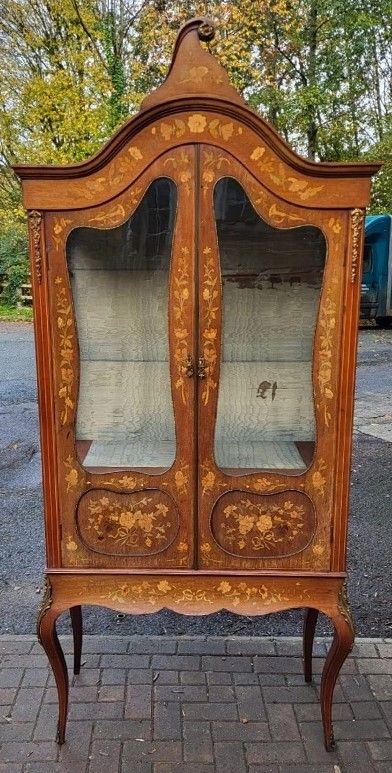
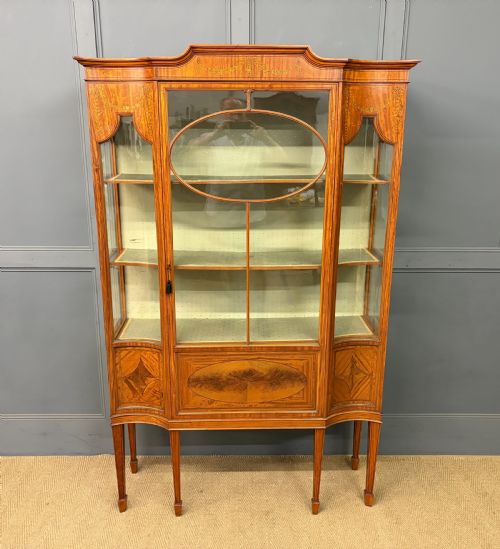
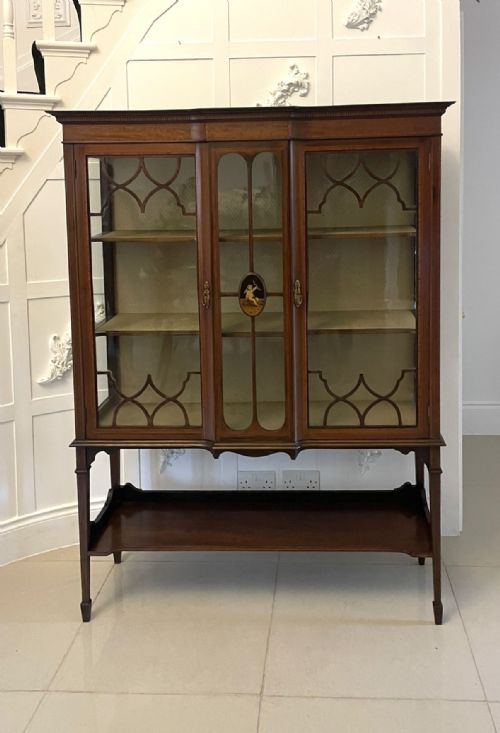
Cabinetmakers utilised solid mahogany and satinwood as the primary structural timbers, frequently applying contrasting wood inlay and floral marquetry across the doors and cornices. Glass panels, sometimes held within astragal glazing bars, provide transparency on multiple sides.
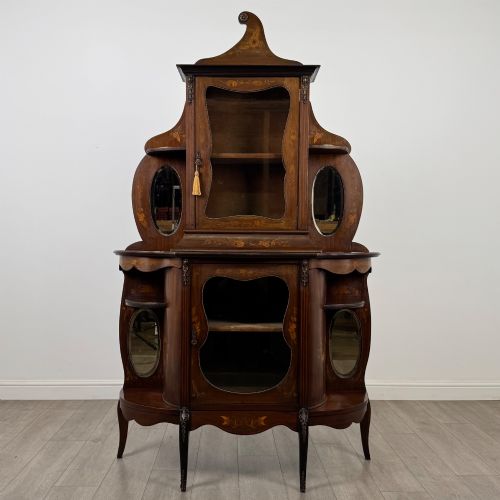
Brass mounts, mirrored backs and fabric linings appear internally to enhance the reflection of light through the displayed contents. Turn-of-the-century workshops relied on hand-cut veneers and precise joinery to achieve curved bow fronts and serpentine shapes.
Listings feature pieces spanning the late nineteenth century through to the Edwardian period, primarily constructed in mahogany and satinwood.
Judging Quality
The distinction between standard cabinet work and exceptional craftsmanship lies in the precision and depth of the marquetry and the choice of timber figurations. Finely rendered floral motifs using varied fruitwoods demonstrate superior artisan skill compared to simple linear banding.
Structural refinement such as serpentine shaping, original astragal glazing and robust brass hardware separate master-workshop output from mass-produced commercial pieces of the period.
Edwards and Roberts·Maple and Co·James Hicks
The Edwardian Marquetry Vitrine Glossary
- Marquetry
- Decorative patterns formed by the insertion of small pieces of coloured wood, shell or ivory into a veneered surface. This technique allows for complex floral and pictorial designs across cabinet doors.
- Vitrine
- A glass-fronted cabinet or display case used for exhibiting fine objects or curiosities. The term derives from the French word for glass.
- Astragal Glazing
- Wooden bars that divide a large glass window into smaller panes within a cabinet door. These slender mouldings define the distinct geometric or curved patterns seen on display cases.
- Sheraton Revival
- A late nineteenth and early twentieth century design movement that reinterpreted the light, classical furniture forms of eighteenth-century designer Thomas Sheraton. Cabinets in this style utilise satinwood inlay and tapered legs.
- Bijouterie
- A low glass-topped display table or cabinet designed specifically for holding small jewellery, medals and delicate collectables. These pieces often feature hinged lids for easy access.
Edwardian Marquetry Vitrine: Frequently Asked Questions
What is an edwardian marquetry vitrine used for?
These cabinets were built to exhibit porcelain, glassware and small decorative objects in domestic drawing rooms. The glass panels and mirrored interiors allowed light to reflect off the displayed items from multiple angles.
Today, they serve the same purpose for collectors wishing to display ceramics, silver or curios while keeping them protected behind glazed doors.
How do I date an inlaid cabinet?
Dating relies on examining the timber species, style influences and construction methods. Pieces from the Edwardian era often combine mahogany with satinwood inlay and draw upon Sheraton Revival designs.
Later Victorian examples from the eighteen-eighties and nineties tend to feature heavier proportions and distinct fruitwood marquetry alongside curved bow fronts.
Where should I place a vitrine?
A corner cabinet fits neatly into unused angles of a room, whereas freestanding two-part cabinets require a prominent wall space with adequate clearance for opening glazed doors. Placing them away from direct sunlight protects both the timber finish and the displayed contents.
Smaller bijouterie tables work well as centrepieces or beside seating where the glass top permits a downward view of delicate items.
How do I care for mahogany and marquetry?
Maintenance involves dusting with a soft, dry cloth and avoiding modern spray polishes that can build up a cloudy residue over time. Natural beeswax applied sparingly helps preserve the sheen of the timber and protects the delicate inlaid veneers.
Keeping the cabinet away from sudden temperature shifts and radiators prevents the wood and veneer from drying out and cracking.