
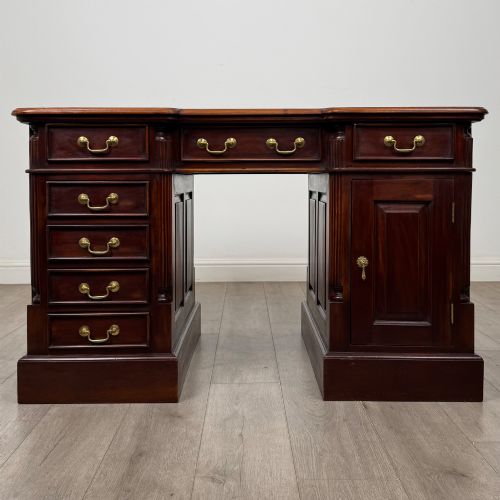
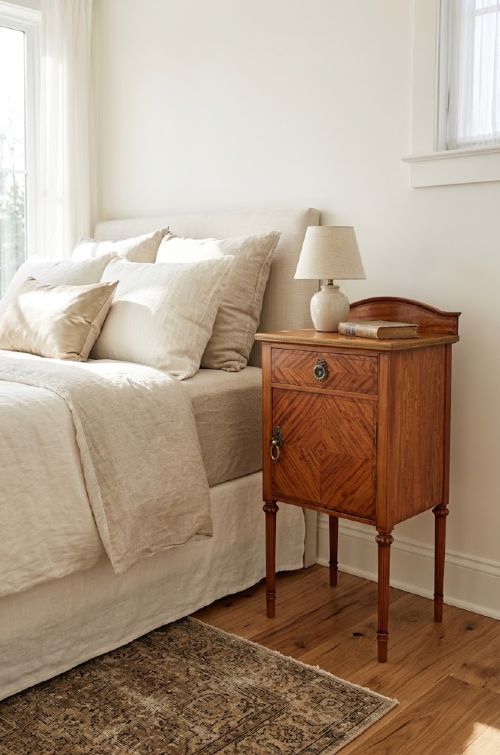
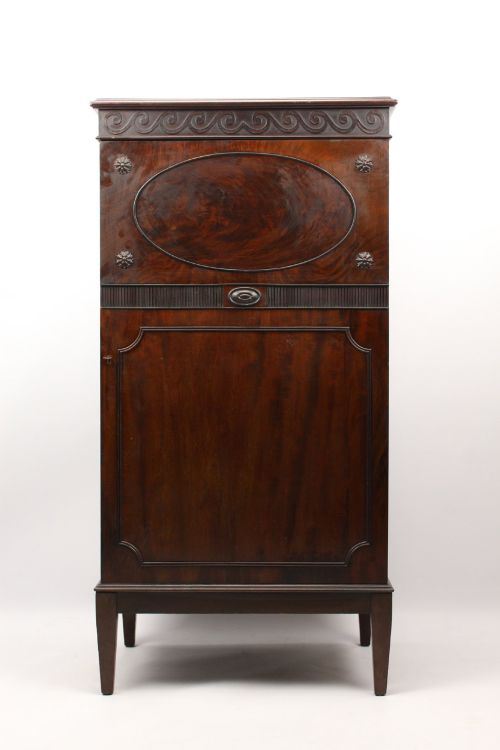
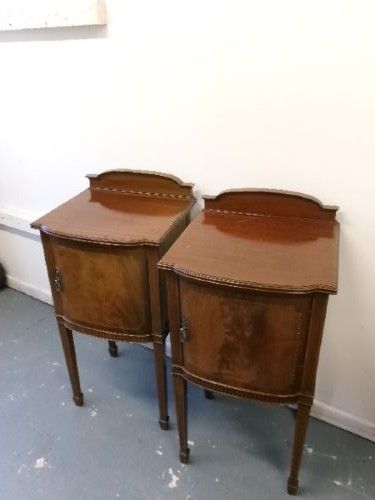
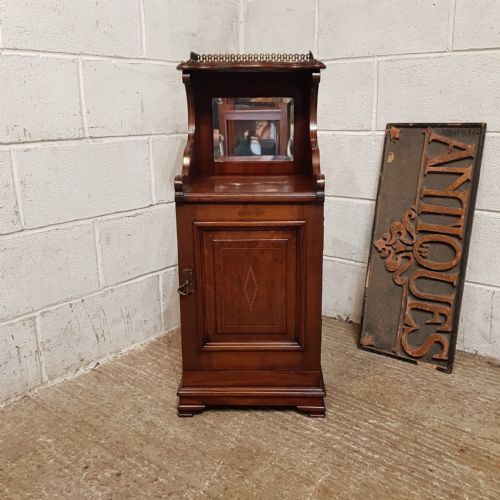

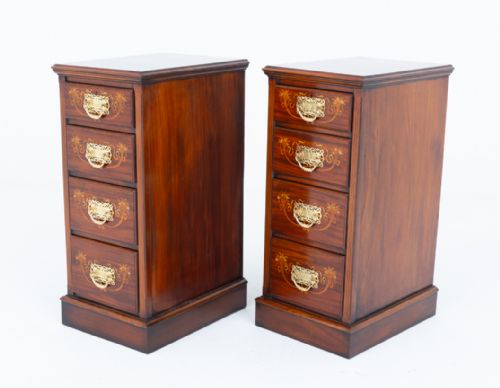

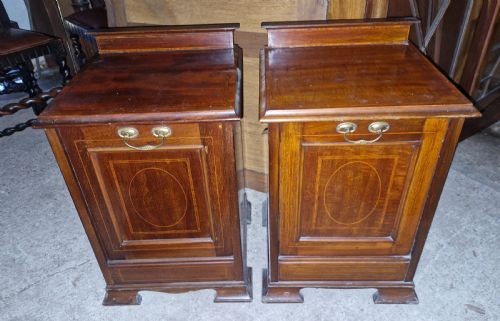


Edwardian Mahogany Pedestal Cupboards
Edwardian mahogany pedestal cupboards bring practical enclosed storage and rich timber grain to the bedside.
Edwardian Mahogany Pedestal Cupboards
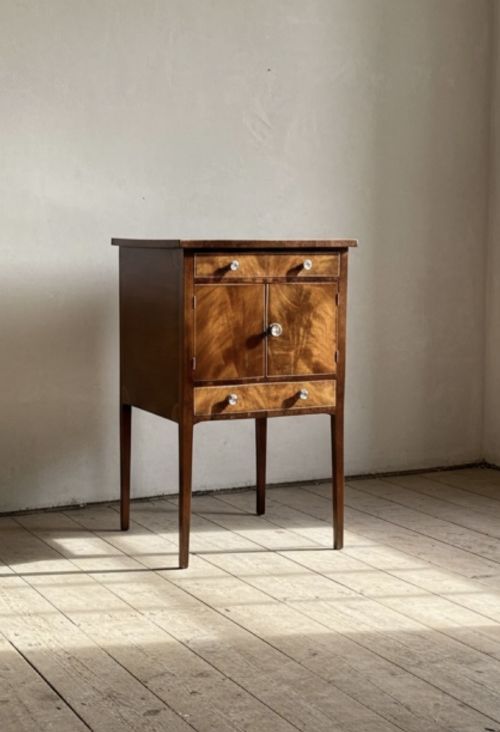
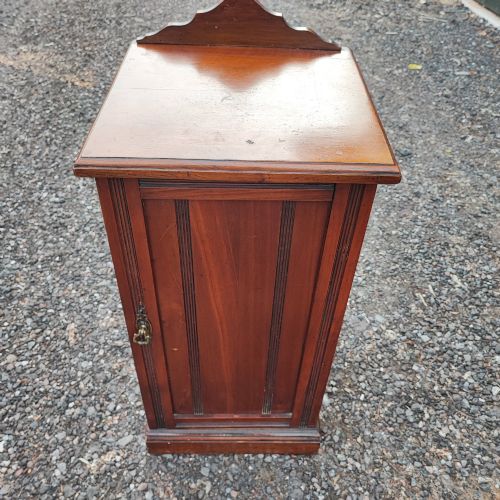
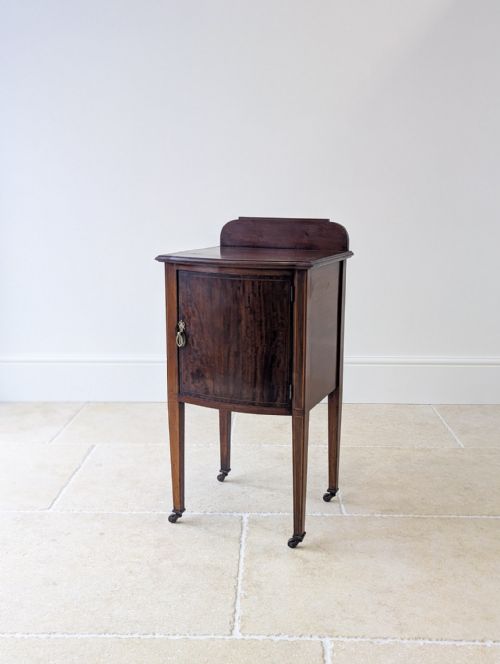
Edwardian mahogany pedestal cupboards provide compact bedside storage through single-door cabinets and drawers. Most examples on this page date from the Edwardian period and the year 1900, alongside related Victorian and 19th-century variants.
The form appears as single cabinets, matched pairs, and occasional drop-flap or bow-front variations. Makers built these pieces using solid mahogany and flame mahogany veneer, often incorporating satinwood and boxwood stringing.
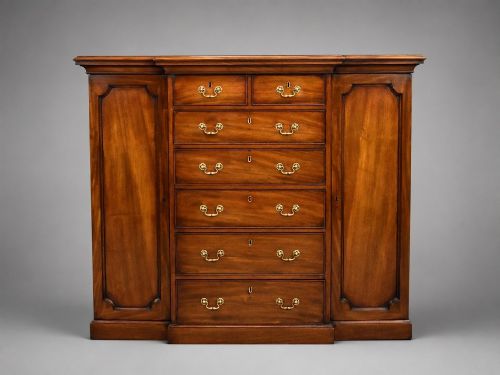
While primarily designed as bedside tables and nightstands, the selection also includes broader side cabinets and narrow cupboards. Buyers encounter various stylistic influences, including Sheraton Revival designs and occasional French Chateau details.
Quality differences
The standard of timber selection sets individual pieces apart, particularly the depth and figuration of flame mahogany veneer. Precision in string inlay and the crispness of marquetry details also indicate higher workshop standards.
Matching across pairs affects the desirability of the pieces, as uniform grain and colour require careful original selection. The integration of functional elements, such as fitted interior shelves or pull-out steps, reflects the original tier of manufacture.
Listings feature Edwardian, Victorian, Georgian, and Regency periods, constructed from mahogany, satinwood, and brass.
Denby & Spinks·Maple & Co·Gillows
The Edwardian Mahogany Pedestal Cupboards Glossary
- Mahogany
- A durable tropical hardwood valued for its reddish-brown colour and stable grain. It serves as the primary structural and surface material across these pieces.
- Satinwood
- A pale, lustrous timber utilised for contrasting stringing and decorative inlay. It provides visual definition against darker mahogany surfaces.
- Sheraton Revival
- A late 19th and early 20th-century design style drawing on 18th-century neoclassical forms. It is characterised by slender proportions and refined inlay.
- Marquetry
- The art of applying pieces of veneer to a structure to form decorative patterns. Craftsmen use various woods to create geometric or floral motifs.
- Bow-front
- A convex curved cabinet front that projects outward. This curved form requires advanced carpentry techniques to shape the timber and veneer accurately.
Edwardian Mahogany Pedestal Cupboards: Frequently Asked Questions
Where were these cupboards placed?
These cabinets stood beside beds to hold chamber pots, night lamps, and personal items. Their enclosed cupboards kept bedroom necessities out of sight.
Today they function primarily as bedside tables or small lamp cabinets in sitting rooms.
How do I spot Sheraton Revival pieces?
Sheraton Revival pieces display neoclassical motifs inspired by 18th-century designs. Look for delicate boxwood stringing, satinwood banding, and tapered legs.
These Edwardian interpretations focus on lighter proportions than their heavy Victorian predecessors.
Are pairs genuinely matched?
Pairs often started together in Edwardian bedrooms, sharing dimensions, timber selection, and inlay patterns. Slight variations can occur due to hand-finishing by period craftsmen.
Matched pairs command particular interest for symmetrical bedroom layouts.