






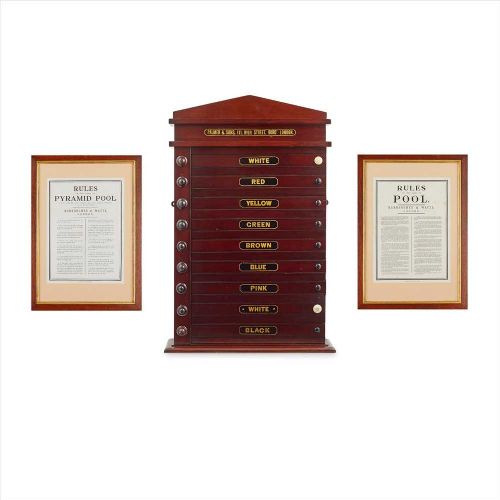
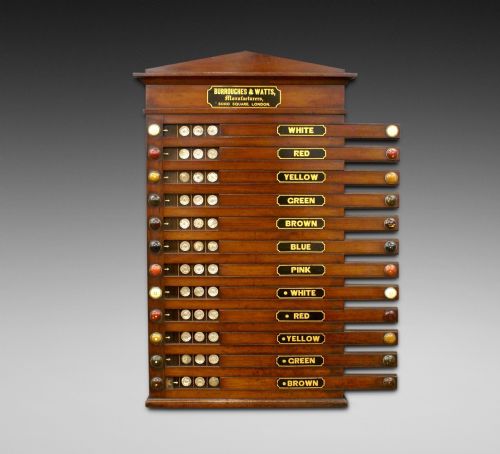
Edwardian Mahogany Games Board
These edwardian mahogany games board pieces bring tactile parlour craft into modern rooms, offering genuine nineteenth-century entertainment history for daily use.
Edwardian Mahogany Games Board
When you search for edwardian mahogany games board items, you enter a sphere of Victorian and nineteenth-century parlour pastimes dominated by scoreboards, tables, and boxes. These objects reflect the formal social rituals of billiard rooms and drawing rooms, where craftsmanship matched the seriousness of the play.
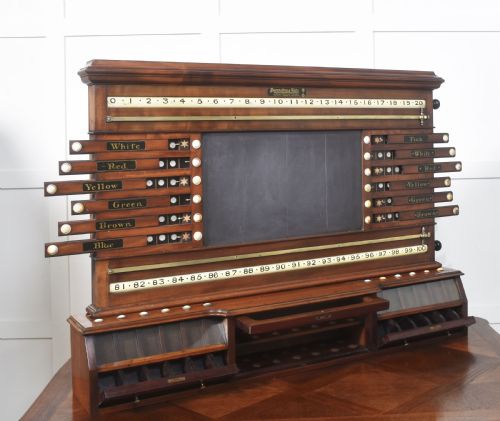
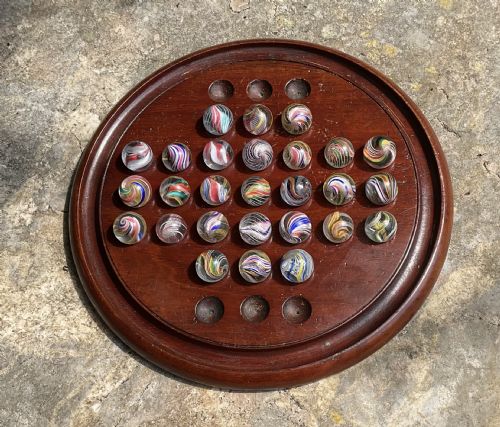
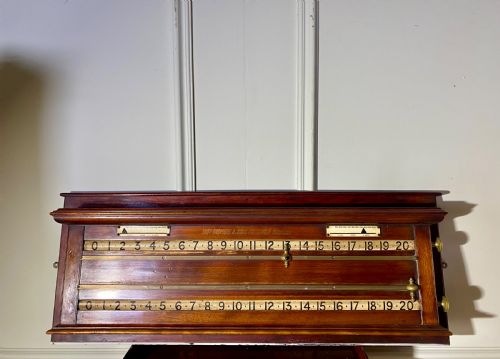
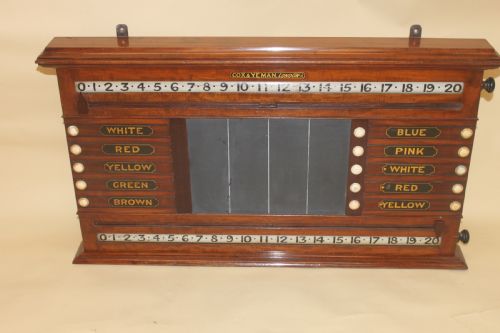
The pieces you meet on this page lean heavily towards mahogany billiard scoreboards, cribbage boxes, solitaire boards with marbles, and folding chess or games tables with reversible tops and baize surfaces. Such items combine domestic utility with solid timber construction, designed to withstand regular handling.
Origins stretch across the later nineteenth century into nineteen hundred, showing the standard materials of period games rooms. Mahoganies predominate, accompanied by boxwood, bone, brass, and slate fittings that mark out genuine period manufacture.
Materials and construction
Makers relied on solid mahogany for structural integrity, utilising its dense grain to support sliding wooden indicators, brass runners, and inset slate panels on scoreboards. Wood inlay and boxwood details provided contrasting decoration on playing surfaces without compromising stability.
Surfaces frequently incorporated baize for card play or quiet movement, while turning and tapering formed the legs of larger games tables. Brass fittings and glass components appear where mechanical scoring or enclosed preservation was required.
Evaluating quality and execution
Quality rests in the precision of the mechanics, from the smooth glide of a billiard scoreboard pointer to the tight joinery of a games box or folding table. Finer examples retain original brass fixings, legible bone or boxwood markers, and intact wooden inlays.
The distinction between standard utility items and superior pieces lies in the crispness of the turning, the depth of the mahogany timber, and the preservation of original baize or glass elements. Secondary woods and simplified construction indicate workshop production aimed at utilitarian longevity.
Orme & Sons Manchester·Thurston & Co Ltd·Burroughes and Watts·British Chess Company
The Edwardian Mahogany Games Board Glossary
- Mahogany
- A durable tropical hardwood prized for its rich reddish-brown colour and stability in furniture and games apparatus.
- Baize
- A coarse woollen material resembling felt, traditionally used to line gaming tables and scoreboards for quiet play.
- Scoreboard
- A mechanical wall-mounted or freestanding wooden board featuring sliding markers for tracking points in cue sports.
- Solitaire board
- A circular wooden board with indentations designed for a single player to jump marbles in pursuit of one remaining piece.
Edwardian Mahogany Games Board: Frequently Asked Questions
How were billiard scoreboards used?
Players used the sliding wooden or brass pointers along numbered tracks to keep score during snooker, billiards, and pool matches in nineteenth-century rooms.
They mounted directly to the wall near the table, keeping the score visible to all participants throughout the game.
What is a cribb box?
A cribb box is a small wooden container made to store the cards and pegs needed for the card game cribbage.
These boxes often feature sliding lids and fitted interior compartments suited to nineteenth-century parlour storage.
How do I care for mahogany games items?
Keep wooden pieces away from direct heat sources and sudden humidity changes to protect the mahogany and prevent warping.
Dust with a soft dry cloth and avoid harsh chemical polishes that might damage original surface finishes or baize.
Are marbles original to solitaire boards?
Solitaire boards often survive with period glass or clay marbles that fit the specific diameter of the board indentations.
Check that the number of marbles matches the layout required for standard solitaire play.