



Edwardian Mahogany Bucket
These edwardian mahogany bucket pieces combine rich timber and traditional metalwork, offering both practical service and period character for a room.
Edwardian Mahogany Bucket
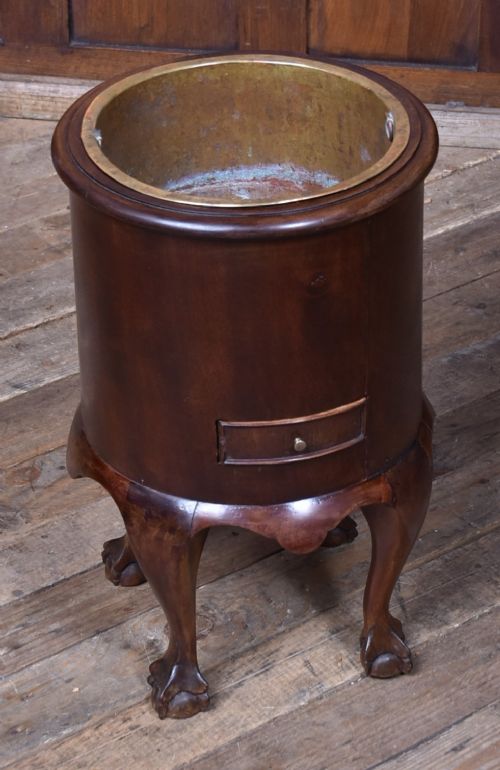
When you search for an edwardian mahogany bucket, you encounter a variety of timber containers spanning wine coolers, plant stands, peat buckets, and coal boxes.
Most examples on this page date from the Edwardian era and the nineteenth century, reflecting both George III revival tastes and practical Victorian domestic utility.
These vessels take multiple forms, including oval wine coolers, brass-bound cellarettes, inlaid jardinieres, and plate buckets, often finished with satinwood or boxwood details.
How they were made
Cabinet makers utilised solid mahogany and flame mahogany veneer, shaping the timber into staved or panelled bodies bound with polished brass hoops.
Many items incorporate decorative stringing and marquetry, featuring boxwood and satinwood inlay to accent the rich grain of the primary wood.
Edwardian Mahogany Bucket Retail Price Guide 2026
Typical asking prices for edwardian mahogany bucket among the pieces listed under this phrase on Sellingantiques today, from the lower quarter to the upper quarter. They describe what is for sale here now, not the wider market.
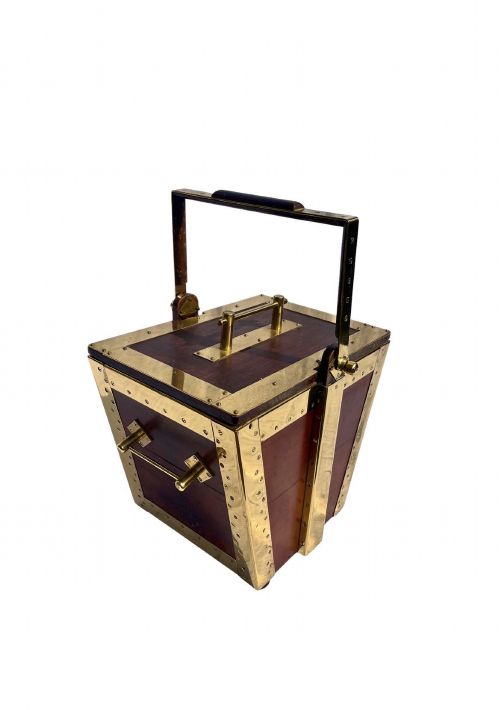
One exceptional Edwardian listing manages to serve as a tea stove, peat bucket, knitting basket, and jardiniere all at once.
What varies in quality
Quality rests upon the selection of timber figures, where richly flamed mahogany veneers and precise boxwood or satinwood inlay set finer pieces apart from plain constructions.
The standard of metalwork creates another distinction, seen in heavy cast brass bands, original handles, and secure joinery that mark out superior workshops.
The Edwardian Mahogany Bucket Glossary
- Cellarette
- A lockable container used for storing bottles of wine or spirits in the dining room. These timber vessels often feature fitted interiors and brass binding.
- Jardiniere
- An ornamental stand or container designed to hold potted plants or flowers. They frequently appear in mahogany with inlaid details.
- Flame mahogany veneer
- A decorative wood cut from the fork of the mahogany tree to produce a distinctive, flickering grain pattern. Cabinet makers used this to face prominent surfaces.
- Boxwood inlay
- Light-coloured contrasting wood inserted into the mahogany surface in thin lines or geometric patterns. This technique defines Edwardian and Georgian revival decoration.
Edwardian Mahogany Bucket: Frequently Asked Questions
What is an edwardian mahogany bucket used for?
These vessels served various domestic purposes throughout the nineteenth and early twentieth centuries, functioning as wine coolers, cellarettes, coal boxes, or plant containers.
Today, buyers repurpose them as magazine racks, planters, or decorative storage pieces that add period charm to living spaces.
How do I date a mahogany bucket?
Dating relies on examining the timber species, construction methods, and decorative motifs such as boxwood inlay or brass binding. Edwardian pieces often show revival styles influenced by George III and Victorian designs.
Comparing the joinery and veneer work against known period examples helps clarify whether a piece originates from the eighteenth, nineteenth, or early twentieth century.
Are these buckets lined for water?
Many wine coolers and jardinieres featured internal linings to handle ice, bottles, or damp soil during their original domestic service.
Survival of these linings varies, and contemporary owners often add modern protective inserts if using the containers for fresh plants.
What styles are common in these listings?
The selection includes Georgian revival forms, Edwardian items, and Victorian utility pieces reflecting earlier design traditions.
Stiles range from plain brass-bound wine buckets to highly decorative inlaid peat buckets and coal boxes.