

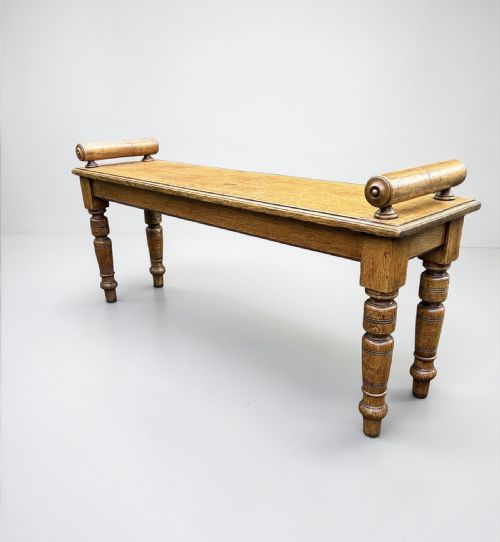
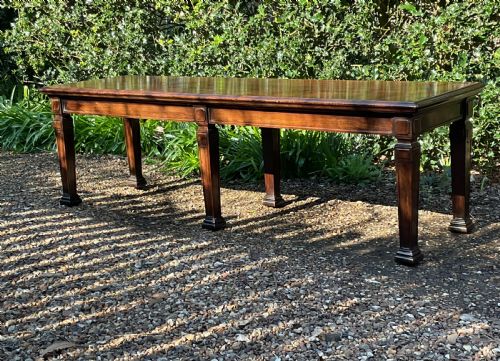


Edwardian Long Bench
These edwardian long bench examples span long seating and footstools from the turn of the twentieth century, offering practical length and period timber for an interior.
Edwardian Long Bench
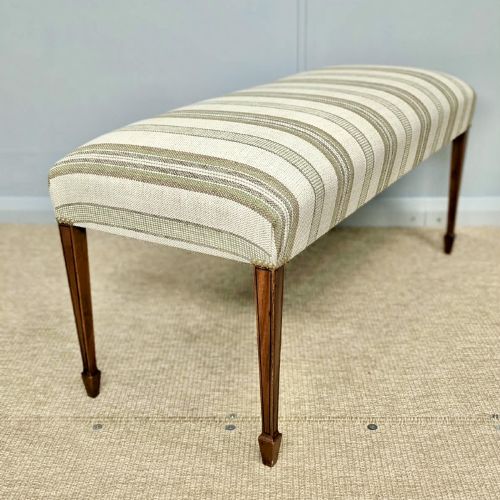
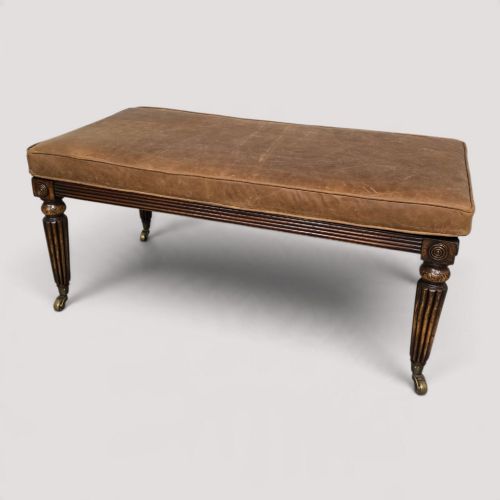
An edwardian long bench covers extended seating forms from window seats and hall benches to long footstools produced around the early decades of the twentieth century. The pieces recorded here include mahogany window seats alongside walnut three-seater stools and pine school benches.
Makers of the period worked within Edwardian design alongside revivals of Regency and Aesthetic styles, occasionally utilising older nineteenth-century origins. Buyers most frequently meet mahogany and walnut frames paired with textile or leather upholstery.
Materials and construction
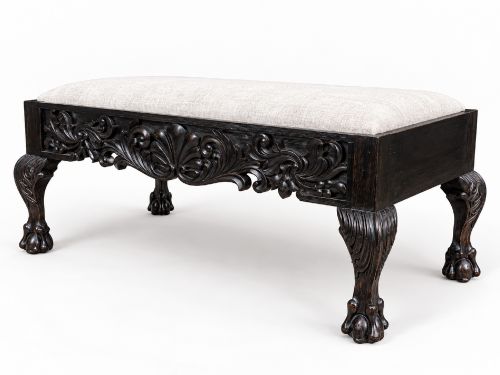
Carpenters utilised dense hardwoods including mahogany, walnut, and calamander alongside pine for utility structures, shaping frames with carved detail or plain turned supports. Brass hardware appears alongside carved timber elements on specific imported or formal variants.
Upholstered forms rely on textile and leather coverings stretched over internal padding, while bench and stool frames demonstrate traditional joinery appropriate to domestic and institutional seating.
Edwardian Long Bench Retail Price Guide 2026
Typical asking prices for edwardian long bench among the pieces listed under this phrase on Sellingantiques today, from the lower quarter to the upper quarter. They describe what is for sale here now, not the wider market.
Listings demonstrate materials ranging from calamander and mahogany to pine and brass, spanning the nineteenth century into the 1920s.
Distinctions in quality
Quality rests upon the choice of timber and the ambition of the carving, moving from simple pine school benches to finely figured mahogany and calamander wood. Finer examples display accomplished decorative carving and substantial timber scantlings rather than plain utility construction.
The sophistication of the upholstery surface and the integrity of the original wood finish determine the standing of each piece, distinguishing utilitarian workshop items from refined drawing-room seating.
The Edwardian Long Bench Glossary
- Window seat
- A long, narrow bench designed specifically to sit within the recess of a bay or window frame. These typically feature low backs or none at all.
- Calamander
- A dense, heavy exotic hardwood derived from Diospyros species, prized for its dark brown colour and contrasting golden grain figures.
- Bergere
- An enclosed armchair or stool style featuring cane or upholstered sides, drawing on eighteenth-century French traditions.
- Hall bench
- A sturdy timber seat placed in an entrance hall, often combining storage or tall back panels with a long bench format.
Edwardian Long Bench: Frequently Asked Questions
Where did these long benches go in a house?
These long benches typically stood beneath bay windows, along wide corridors, or served as end-of-bed seating in larger bedrooms.
Their elongated proportions allowed them to fill empty wall spaces where standard chairs proved insufficient.
How do I care for the timber frame?
Maintain the timber surfaces by applying appropriate beeswax polish sparingly and buffing with a soft cloth. Keep such pieces away from direct heat sources to prevent the wood from splitting.
Protect leather and textile upholstery from prolonged direct sunlight to preserve the original material integrity.
Are these benches comfortable for daily sitting?
Upholstered variants provide softer seating suited for sitting while changing shoes or resting by a window. Firmer wood-topped or school benches offer robust utility rather than cushioned lounging.
Consider whether the height and padding match your intended daily use within the room.
How do I distinguish Edwardian from Victorian pieces?
Edwardian seating generally displays lighter proportions, simpler lines, and less heavy ornamentation than earlier Victorian furniture. The period favoured brighter wood tones and cleaner interpretations of historical styles.
Construction details and recorded dates on similar workshop items help confirm the exact decade of manufacture.