

Edwardian Link Bracelet
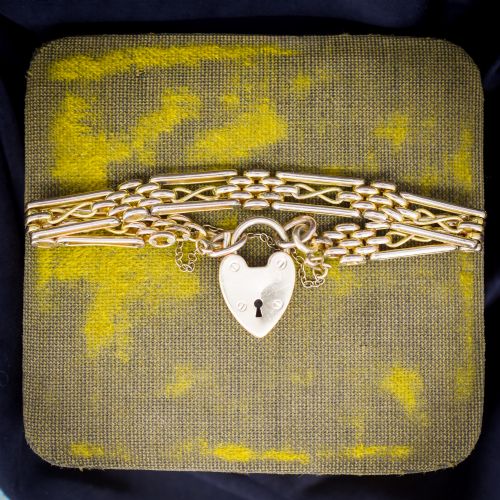
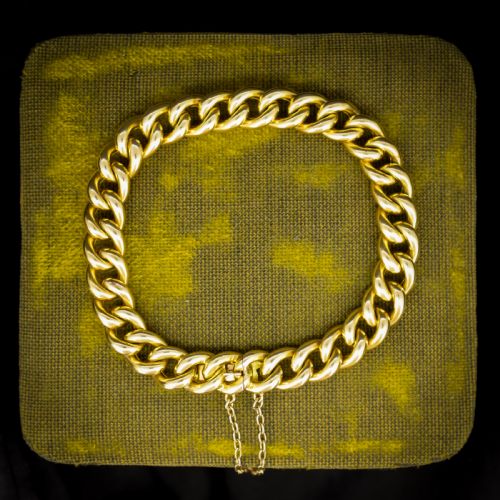
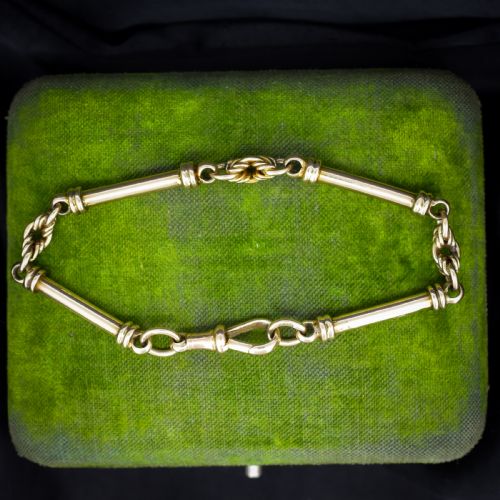
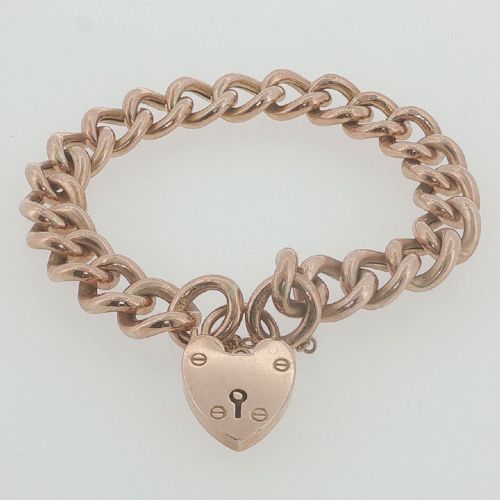
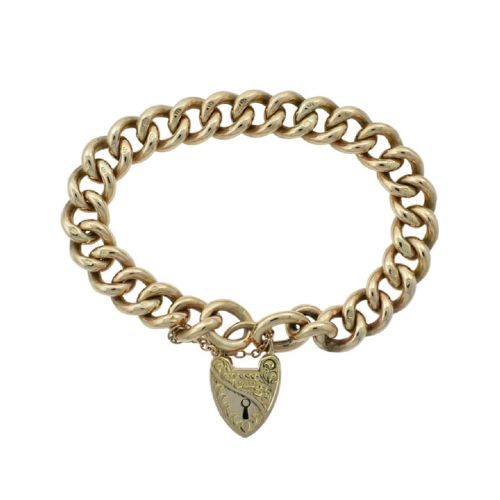
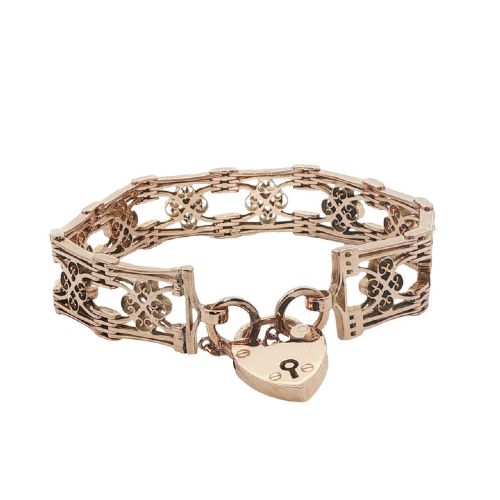
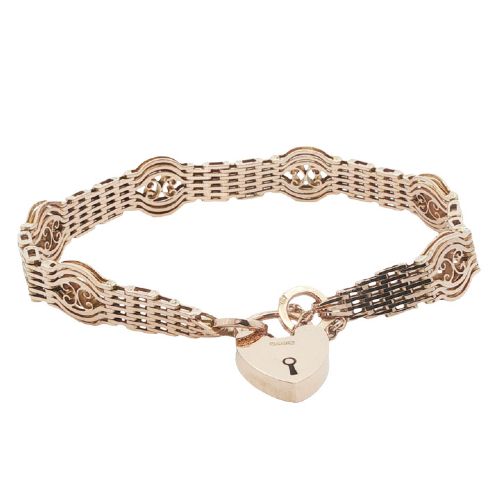
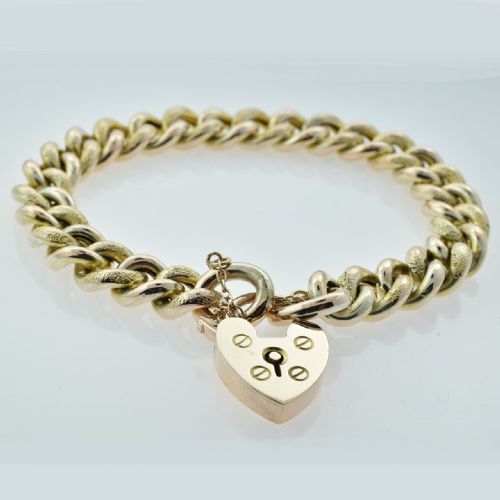
An edwardian link bracelet brings together substantial gold curb links, safety chains and secure padlocks shaped like hearts.
Edwardian Link Bracelet
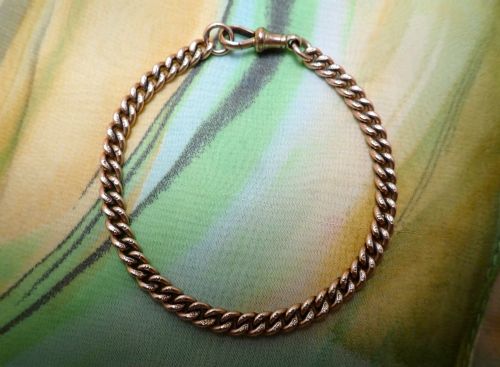
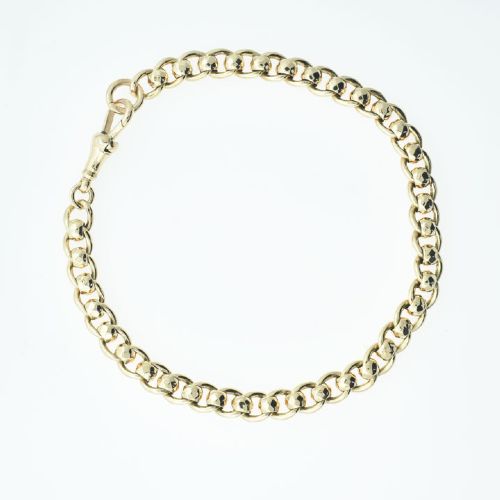
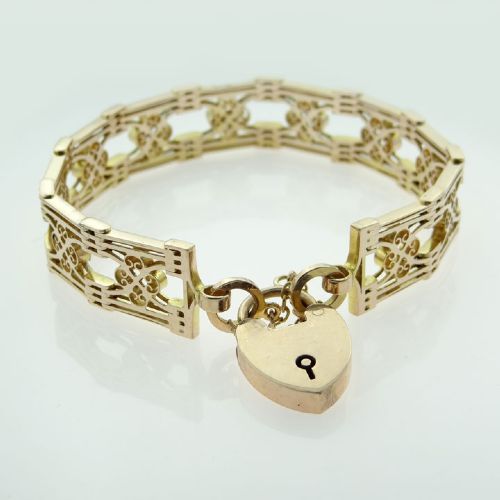
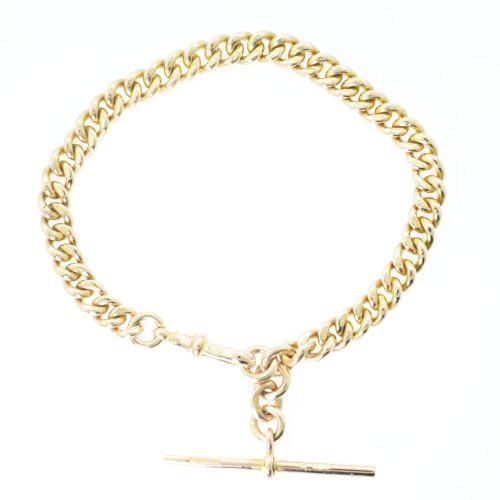
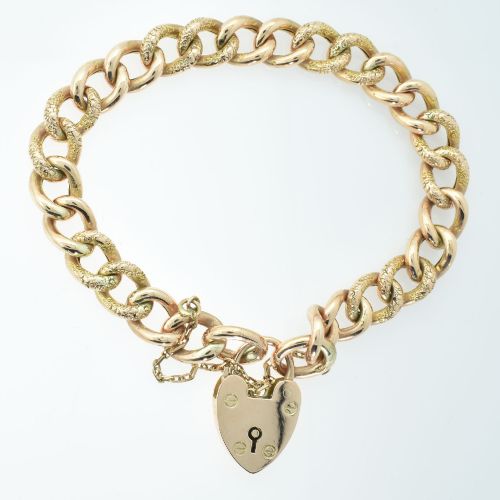
When you examine an edwardian link bracelet, you are looking at substantial jewellery constructed from 9ct rose gold, 15ct gold, and occasionally silver or platinum. The most common version met on this page is the curb link chain or gate link bracelet, frequently secured with a heart padlock or dog clip.
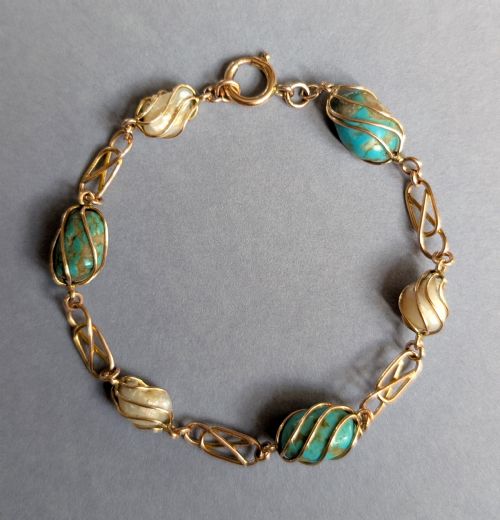
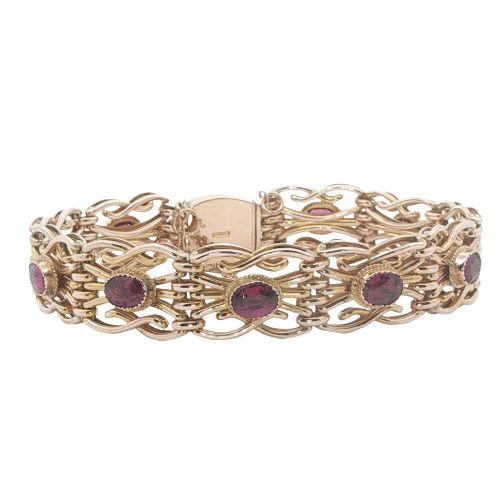
These pieces draw heavily on Victorian utility, evolving from heavy watch chains into standalone wrist ornaments. Alongside plain and half engraved curb links, you encounter gem set examples featuring turquoise, pearls, almandine garnets, and sapphires.
Makers utilised various geometric and fancy link formations, including rollerbars, love knots, and stars and bars patterns. The origin is predominantly British, with occasional continental European pieces appearing in gold and enamel.
How they were made
Goldsmiths constructed these bracelets using hollow or solid links of rose and yellow gold, often joining them by hand. Surface decoration involved half engraving, chasing, and the setting of cabochon turquoise, pearls, and diamonds into bezels or star settings.
Fastenings required mechanical precision, utilising spring loaded dog clips, threaded T bars, and functional heart padlocks fitted with internal leaf springs. Enamelling techniques provided colour contrast on silver and gold surfaces, particularly within Arts and Crafts designs.
Some lock safely with a miniature gold padlock that requires no key at all.
What varies in quality
The distinction between standard production and superior craftsmanship rests in the weight of the metal and the crispness of the link articulation. Heavier pieces display robust gauge gold that resists denting, while finer examples maintain uniform graduation along the entire length of the wrist.
Attention to detail in the clasp mechanism and the precision of the hand engraving determine the overall standard. Original components, including matching safety chains and fully legible hallmarks, elevate the integrity of the piece.
Murrle Bennett
The Edwardian Link Bracelet Glossary
- Padlock
- A heart shaped mechanical clasp that functions as the primary closure on many gate and curb link bracelets. It often bears Chester or Birmingham hallmarks on the reverse.
- Curb link
- A type of chain formed by interlocking flat, slightly twisted links that lie flush against the wrist. It serves as the foundation for the majority of heavy gold bracelets.
- Gate link
- A repeating pattern of parallel bars connected by small vertical links, echoing the appearance of a traditional garden gate. This style originated in the late Victorian era and remained popular throughout the Edwardian period.
- Dog clip
- A spring loaded swivel fastening used to secure watch chains and bracelets to a T bar or jump ring. It allows the attached charm or padlock to move freely.
- T bar
- A short metal bar attached by a small chain perpendicular to the main bracelet, originally designed to slip through a waistcoat buttonhole. It remains decorative on modern wrist wear.
Edwardian Link Bracelet: Frequently Asked Questions
Are these bracelets heavy to wear daily?
These pieces range from lightweight hollow chains to solid gold constructions exceeding twenty grams. The heavier variants provide a substantial feel on the wrist.
Most owners adapt quickly to the weight, treating them as permanent daily wear rather than delicate evening accessories.
How do I open the heart padlock?
The heart padlocks operate via a small sprung lever or a hidden push mechanism on the side of the case. Pulling or depressing this internal spring allows the shackle to release.
Checking that the spring retains its snap ensures the padlock stays securely fastened during movement.
Can I attach charms to these links?
The heavy curb and gate links accommodate jump rings and traditional charms with ease. Many pieces already feature dog clips or loops specifically designed for hanging pendants.
Adding too many heavy charms can alter the drape of the bracelet, so balance the weight evenly across the chain.
How do I identify an Edwardian piece?
Dating relies on a combination of assay office hallmarks, specific clasp types, and prevailing gemstone settings. Rose gold and turquoise combinations point directly to the early twentieth century.
Comparing the link construction against dated watch chains helps confirm the exact manufacturing era.