



Edwardian Letter Opener
An Edwardian letter opener cuts a fine dash on any desk, pairing practical paper-slicing with period craftsmanship.
Edwardian Letter Opener
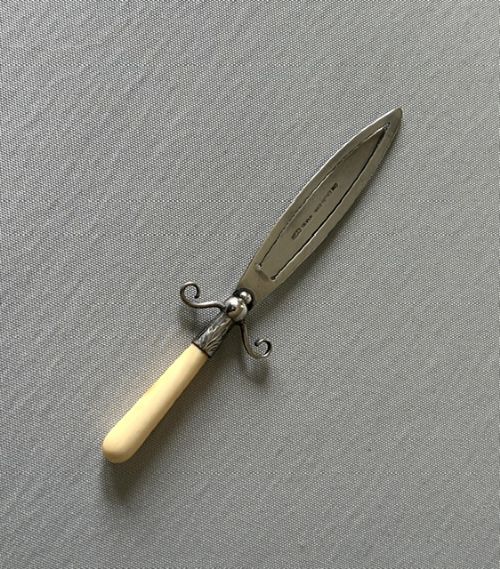
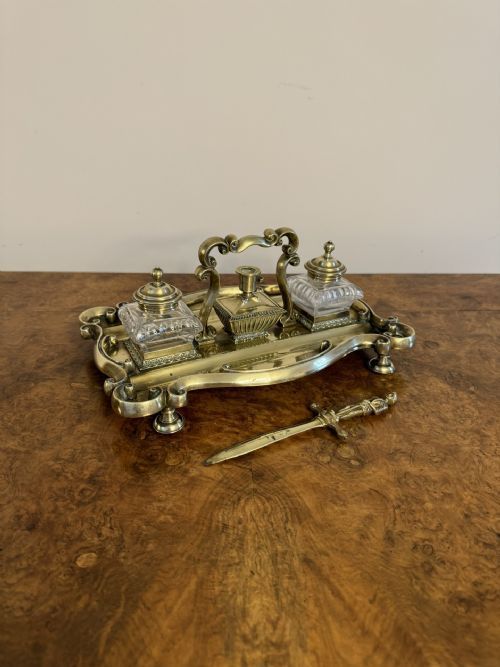
The edwardian letter opener is a desk accessory designed to slice open envelopes and turn pages of bound volumes. Most examples on this page date from the Edwardian period or share its aesthetic, spanning silver, tortoiseshell and mother-of-pearl.
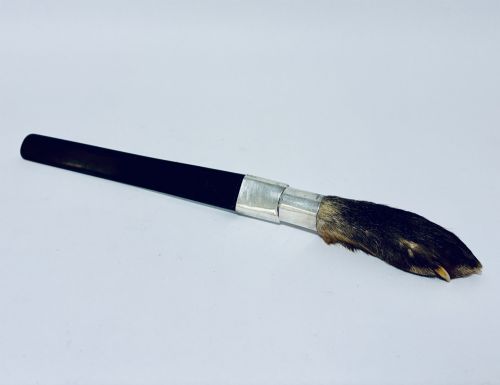
Beyond simple blades, forms include page turners, novelty animals like owls and ducks, and combination pieces featuring magnifying glasses, pencils or rulers. Materials range from traditional sterling silver to ebonised wood and Connemara marble.
How they were made
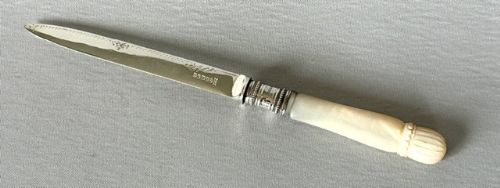
Makers combined precious metals with organic materials, mounting sterling silver blades or collars onto polished mother-of-pearl, tortoiseshell and ivory handles. Metal components often received hallmarks from assay offices in London, Birmingham and Chester.
Specialised techniques brought texture and colour to the desk, utilising guilloche enamel, ebonising, and hand-carved animal motifs. Natural substances like cairngorm, ibex horn and Connemara marble were shaped and polished to form robust desk implements.
Edwardian Letter Opener Retail Price Guide 2026
Typical asking prices for edwardian letter opener among the pieces listed under this phrase on Sellingantiques today, from the lower quarter to the upper quarter. They describe what is for sale here now, not the wider market.
Listings feature sterling silver, tortoiseshell, mother-of-pearl, and Connemara marble across the Edwardian, Victorian and George V periods.
What varies in quality
Quality rests on the integrity of the materials and the ambition of the design, moving from plain steel blades to fully sterling silver or intricately carved shell. Novelty forms and combination pieces demand greater skill from the maker, elevating standard accessories into decorative sculpture.
The presence of crisp hallmarks and named makers shifts an object from a simple utilitarian tool to a collected piece of silverwork. Details like guilloche enamel, intricate silver mounts, and unusual organic mediums separate standard workshop output from exceptional commissions.
William Graeme·Sampson Mordan and Co·Walker and Hall·Levi and Salaman·A Barrett and Sons
The Edwardian Letter Opener Glossary
- Hallmark
- Official stamps struck on precious metals to indicate standard of purity, assay office, and year of manufacture. These small punches provide the definitive date for silver components.
- Guilloche enamel
- Decorative mechanical engraving applied beneath a translucent layer of coloured enamel. This technique creates repeating geometric patterns that catch the light.
- Page turner
- A long, flat implement traditionally made of ivory, tortoiseshell or mother-of-pearl used to slice uncut pages in books. Many examples double as letter openers.
- Cairngorm
- A yellow-brown or smoky variety of quartz crystal mined in Scotland. It frequently appears as a decorative terminal on desk seals and openers.
- Novelty piece
- An object shaped to resemble an animal, figure or familiar item rather than a standard tool. Examples include owls, ducks and pistol-grip handles.
Edwardian Letter Opener: Frequently Asked Questions
What is a page turner?
A page turner is an elongated implement designed to separate folded pages in older books without damaging the paper. They often share handles and materials with letter openers.
Many surviving examples combine both functions in a single desk accessory.
How do I date a silver opener?
Dating relies on the set of stamped hallmarks found on the silver mounts or blades. These marks reveal the assay office and the specific year letter.
Undated wooden or horn pieces require stylistic comparison with marked contemporary examples.
Are these items made of ivory?
Some period page turners utilise genuine elephant ivory alongside bone and mother-of-pearl. These organic materials were prized for their smooth texture and flexibility.
Such pieces reflect the standard manufacturing materials of the early twentieth century.