


Edwardian Landscape Watercolour Artwork
These pieces capture the quiet atmosphere of Edwardian landscape watercolour artwork through delicate washes and careful observation of countryside and coast.
Edwardian Landscape Watercolour Artwork
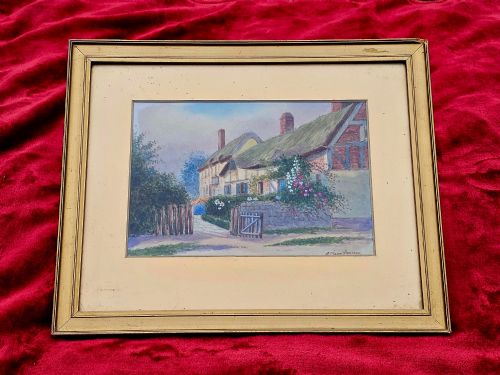
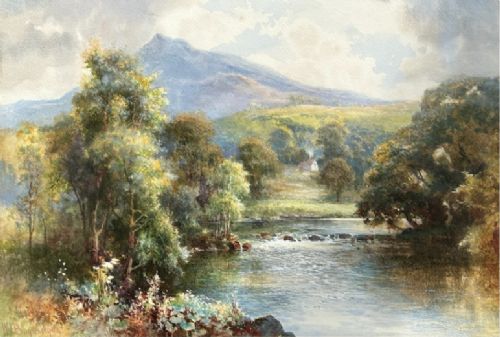
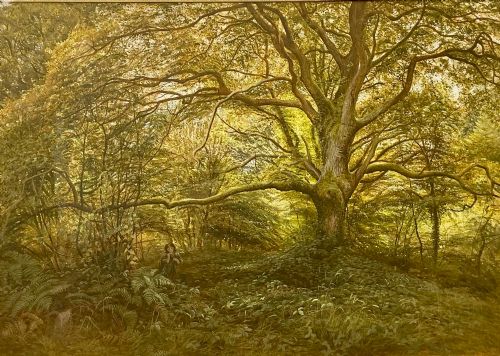
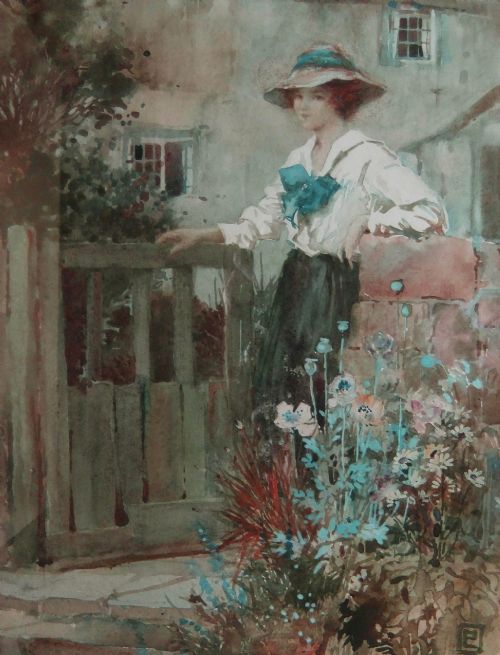
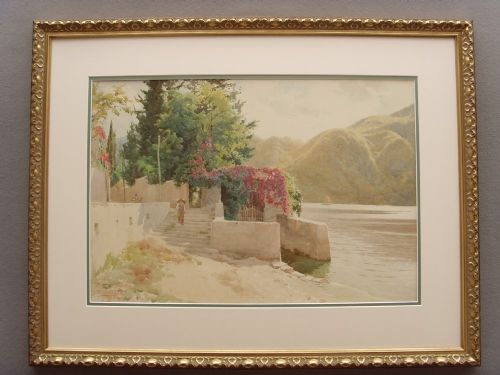
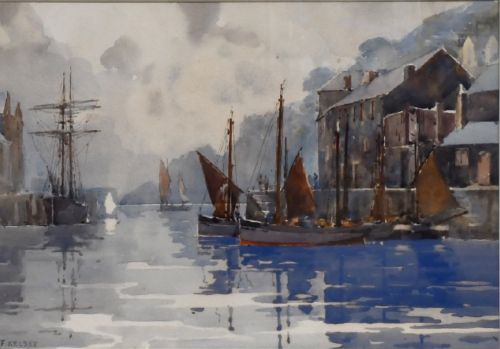
Edwardian landscape watercolour artwork brings together pastoral scenes, coastal harbours and quiet village streets painted around the turn of the twentieth century. These works capture the changing light on British fields, moorlands and rivers through fluid pigment applied directly to paper. Buyers seek them out to bring a sense of historical place and traditional craftsmanship into domestic interiors.
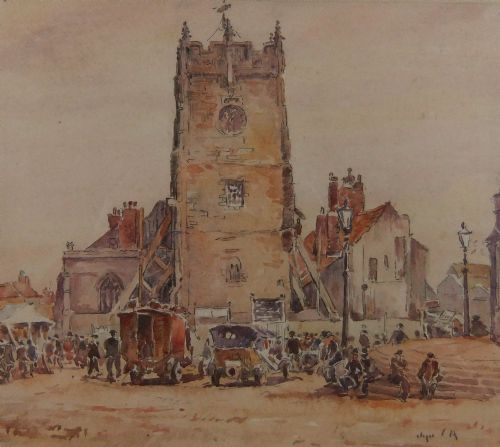
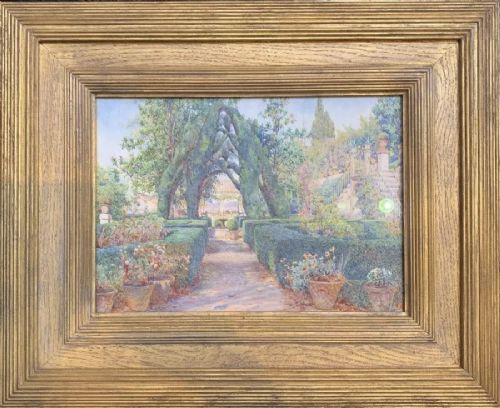
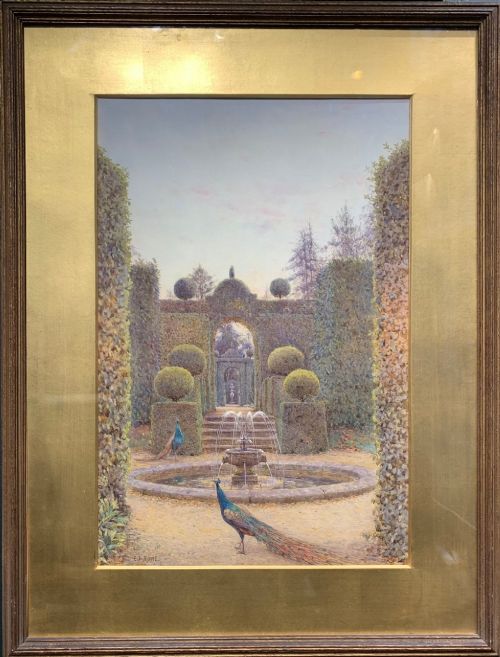
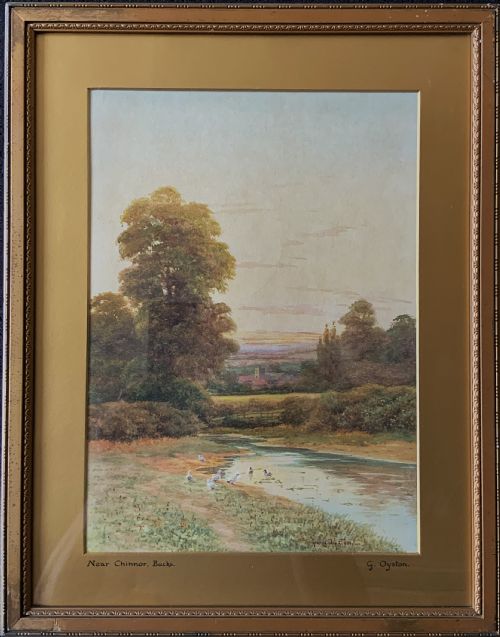
The pieces on this page lean heavily towards British views, recording recognisable locations from Yorkshire to Cornwall alongside continental lake scenes and orientalist subjects. Artists working in this period balanced the realism of earlier Victorian traditions with the looser brushwork of British Impressionism. Most examples are mounted behind glass within timber frames that protect the absorbent paper surfaces from moisture and handling.
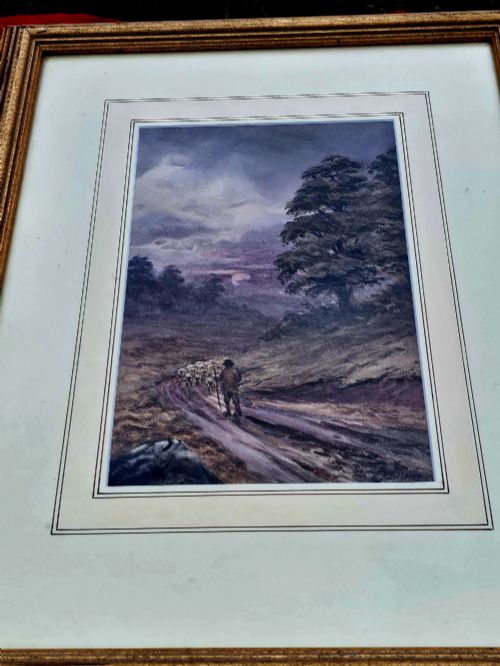
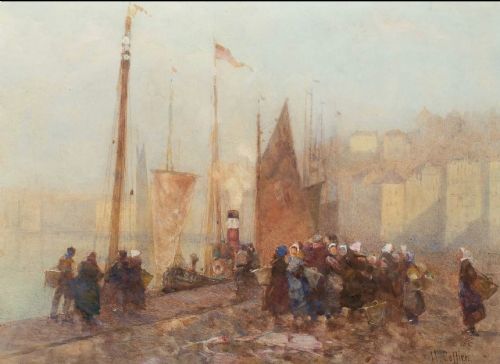
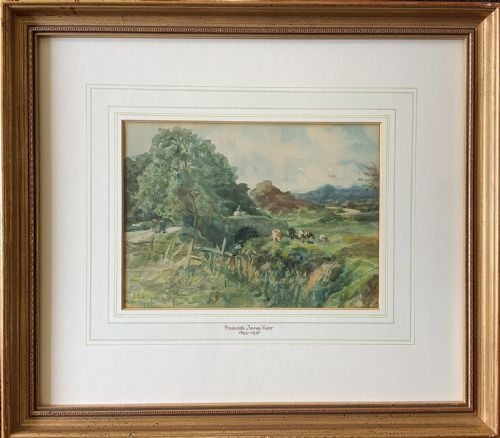
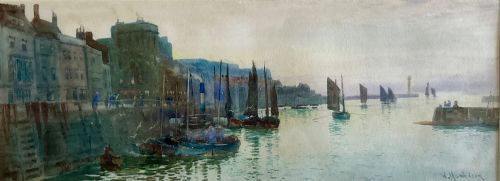
Framed artwork of this type ranges from intimate cabinet watercolours to larger gallery pieces designed to anchor a drawing room wall. The surviving selection includes depictions of everyday rural labour, such as shepherds, hay carts and cattle ploughing, alongside marine views of fishing boats returning to port. These subjects offer a direct window into the visual culture and topography of the early nineteen hundreds.
Materials and Technique
Painters applied watercolour pigment suspended in water onto heavy rag paper, sometimes combining bodycolour or gouache to introduce opaque highlights. Ink was occasionally used to define preliminary outlines or sharpen architectural details before the washes were laid down. Gold leaf appears selectively on specific frames rather than the paper surfaces themselves.
The physical structure relies on protective glass held in wooden frames, often backed by boards that safeguard the fragile paper from atmospheric changes. Artists built their compositions through successive transparent layers, allowing the white of the paper to shine through for luminosity. This layering technique required confident brush control since corrections on paper remained difficult to conceal.
Artists occasionally braved unpredictable British weather to paint sheep, carts and fishing boats outdoors, leaving microscopic specks of wind-blown sand trapped permanently beneath the dry watercolour wash.
Assessing Quality
Quality rests upon the artist's handling of light, atmospheric depth and compositional balance rather than the mere subject matter. Superior watercolours show a confident fluidity where washes merge naturally without muddying, whereas lesser works appear overworked and flat. The retention of vibrant pigment without excessive fading indicates proper historical preservation away from direct sunlight.
The integration of the original frame and mount adds considerable weight to an artwork's integrity and visual presentation. Pieces that retain their period wooden surrounds offer a more complete historical artefact for the collector. Furthermore, signed works by established practitioners demonstrate a higher degree of draughtsmanship and finish across the painted surface.
Thomas Ellison·A Marie Parsons·EJ Letheren·William Joseph Boyes·John Smith Atherton·Hector Caffieri·Ernest Arthur Rowe·George Oyston·Frederick James Kerr·Bonomi Edward Warren·William Matthison·Percy Lancaster·Robert George Talbot Kelly·Frank Kelsey·F A Roylance·F J Snell·George F Pennington·Alfred George Morgan·Philip Richard Morris·Edgar Woollatt·Oswald Garside·Henry Charles Fox·William Manners·Cuthbert Crossley·Arthur Tucker
The Edwardian Landscape Watercolour Artwork Glossary
- Watercolour
- A painting method where natural pigments are mixed with water-soluble binders and applied to paper. The technique relies on transparency and the reflective quality of the paper underneath.
- Gouache
- An opaque water-based paint containing pigment mixed with a binding agent and white filler. It provides solid highlights and heavier areas of colour that contrast with transparent watercolour washes.
- Bodycolour
- Another term for gouache, frequently utilised by artists in this era to add opaque details and bright accents to landscape watercolours. It helps create a stronger sense of light reflection on water or buildings.
- Impressionism
- An art movement focused on capturing the visual impression of the moment, particularly shifting light and open-air conditions. British practitioners adapted these principles to traditional rural and coastal landscapes.
- Orientalist
- A style depicting scenes, architecture and peoples of the Near and Middle East, reflecting European fascination with eastern travels during the late nineteenth and early twentieth centuries.
Edwardian Landscape Watercolour Artwork: Frequently Asked Questions
What defines an Edwardian watercolour?
Edwardian watercolours are paintings created during the reign of King Edward VII and the surrounding early decades of the twentieth century. They reflect a transitional period in British art that combined traditional topographical accuracy with lighter, impressionistic brushwork.
These works frequently document rural traditions, coastal industries and scenic landscapes before the widespread disruptions of the First World War. Artists of this era focused on naturalistic lighting and everyday pastoral life.
How should these watercolours be framed?
Watercolours require framing behind glass with acid-free mounts to prevent the paper from touching the glazing. This protective barrier shields the delicate pigments from humidity, dust and physical damage.
Original wooden frames should be retained whenever possible as they complement the period aesthetic and maintain the historical integrity of the artwork. Regular checks ensure the backing boards remain sealed against environmental moisture.
Where were these landscape scenes painted?
The landscape watercolours on this page record views across British coasts, Yorkshire harbours, Welsh river valleys and southern English countryside. Painters travelled extensively to capture local landmarks, fishing fleets and agricultural scenes from direct observation.
Some artists also ventured to continental lakes and distant regions, producing travel watercolours that satisfied domestic demand for exotic scenery. Each location offers a specific record of regional topography during the early twentieth century.
How do I spot a signed piece?
Signatures typically appear in the lower corner of the painted surface, executed in watercolour pigment, ink or pencil. Artists often initialled or signed their finished works directly on the paper before framing.
Matching the signature style to known biographical details helps confirm the artist's identity and approximate date of creation. Unsigned works still appear frequently from this era, representing competent studio output or sketches.