





Edwardian Ladies Chair
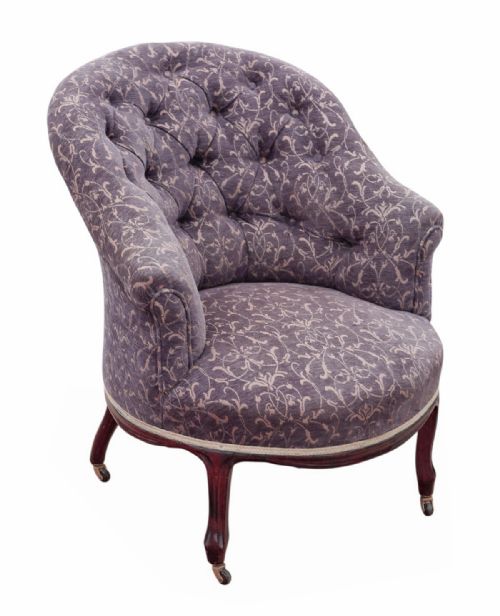
These edwardian ladies chair pieces are compact, sprung seats designed for the drawing room or parlour, offering refined comfort with period character.
Edwardian Ladies Chair
An edwardian ladies chair is a smaller, lower-scaled seating option designed for sitting comfortably while wearing period dress or reading by the fire. The selection ranges through earlier Victorian precursors in walnut and mahogany to lighter Edwardian iterations.
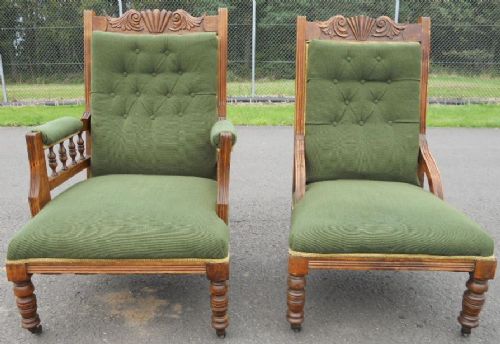
Most examples appear as solitary salon chairs, occasional pieces, or matched pairs alongside a larger gentleman's armchair. Forms include tub shapes, cameo backs, and nursing chairs with low profiles.
Makers utilised various timbers such as mahogany, walnut, rosewood, and ebonised wood, often shaping the frames with carved details or delicate inlay.
How they were made
Frames rely on solid hardwoods like mahogany and walnut, frequently carved by hand or turned into slender supports. Ebonised finishes and brass castors appear on specific models.
Upholstery techniques involve sprung foundations paired with button backs or tight padding, finished in materials such as velvet, leather, and fabric with rope trim.
Edwardian Ladies Chair Retail Price Guide 2026
Typical asking prices for edwardian ladies chair among the pieces listed under this phrase on Sellingantiques today, from the lower quarter to the upper quarter. They describe what is for sale here now, not the wider market.
Nursing chairs were built low to the ground so Victorian sitters could tend the hearth without scorching their ankles.
What varies in quality
The sophistication of the timber carving and the integrity of the frame construction distinguish finer examples from standard workshop production. Carved walnut and figured mahogany indicate higher ambition.
Subtleties in proportion, the use of complementary brass fittings, and the choice of textile coverings elevate individual pieces within their period.
The Edwardian Ladies Chair Glossary
- Cameo back
- An oval upholstered chair back resembling a carved cameo brooch. This style is frequently found on Victorian walnut parlor chairs.
- Button back
- An upholstery method where tufts are pulled tight and secured with buttons in a diamond pattern. It provides structural tension and distinct texture.
- Tub chair
- A curved, enclosed armchair where the back and arms form a continuous rounded rail. It offers a snug and supportive sit.
- Nursing chair
- A low-seated chair designed originally for feeding infants or tending a fire. The shortened legs place the sitter closer to the hearth.
Edwardian Ladies Chair: Frequently Asked Questions
How do I use an edwardian ladies chair today?
These compact seats fit easily into bedrooms, studies, or corners of a living room where a full-sized armchair takes up too much space. Their lower height makes them ideal for reading or dressing areas.
Pair them with a small side table or position one by a fireplace to make the most of their traditional scale and decorative silhouette.
What is the difference between ladies and gents chairs?
Ladies chairs are traditionally built smaller, lower, and narrower to accommodate the voluminous fashions of the nineteenth and early twentieth centuries. Gentlemen's chairs are wider and taller with more substantial armrests.
They often appear together in matching pairs designed for formal sitting rooms and drawing rooms.
How can I tell Victorian from Edwardian chairs?
Victorian frames generally feature heavier carved walnut or mahogany, darker finishes, and exuberant curves. Edwardian pieces tend to be lighter in weight, employing inlay, satinwood, or simpler mahogany lines.
Looking beneath the upholstery and examining the timber helps clarify the period of manufacture.
Are these chairs comfortable for daily sitting?
Most period examples provide a firm, supportive seat due to their traditional sprung or webbed construction. Their compact proportions suit shorter periods of reading or conversation rather than lounging.
Restored pieces maintain their original firmness while offering clean, usable upholstery.