

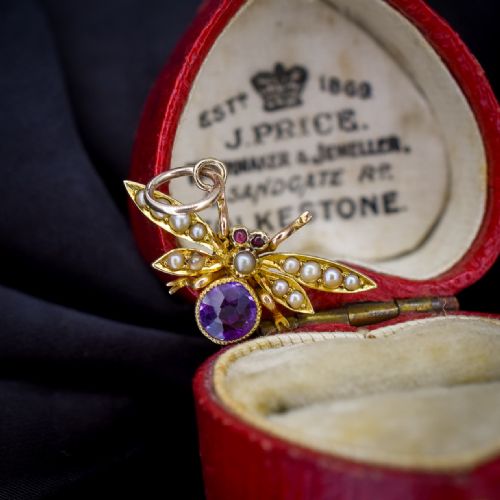


Edwardian Insect Jewellery
Edwardian insect jewellery captures the natural world in precious metals and gemstones, offering delicate winged forms to wear.
Edwardian Insect Jewellery
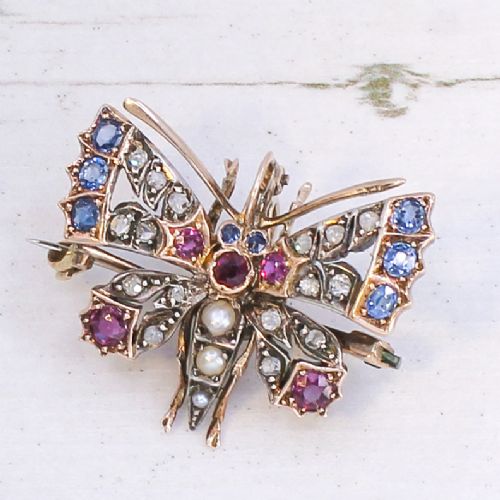
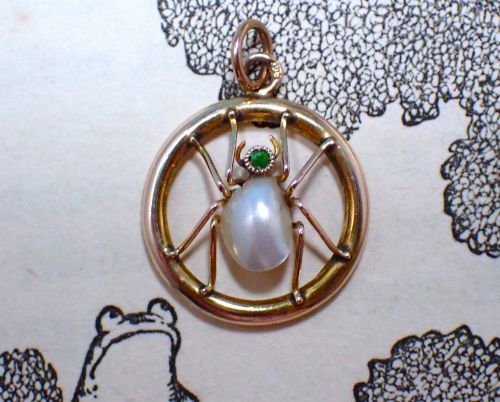
When you search for edwardian insect jewellery, you are looking at whimsical representations of butterflies, dragonflies, flies, spiders, scorpions, and scarabs rendered in gold, silver, and precious stones. These pieces range from refined multi-gem butterfly pendants to sterling silver scorpion and moonstone brooches.
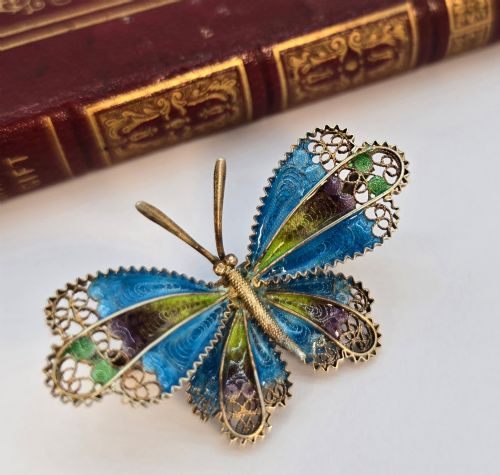
The versions you are most likely to meet on this page span the Victorian, Edwardian, and Art Deco periods, crossing into later decades like the 1930s with silver gilt and enamel butterfly brooches. Forms appear predominantly as brooches, pendants, charms, and hatpins.
Makers utilised various styles including Victorian, Edwardian, Art Nouveau, and Art Deco to shape these small creatures. Natural pearls, diamonds, rubies, sapphires, emeralds, amethyst, and moonstones bring colour and realism to the wings and bodies.
Materials and construction
Goldsmiths and jewellers worked with 9ct gold, 15ct yellow gold, sterling silver, silver gilt, pewter, and base metals to form the bodies and settings. Gemstones such as diamonds, rubies, sapphires, emeralds, amethysts, and moonstones were meticulously flush-set, claw-set, or silver-set.
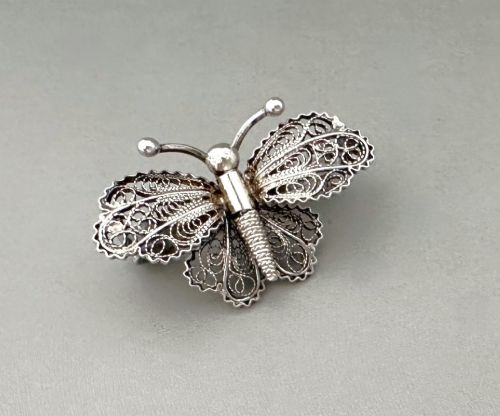
Natural pearls and seed pearls added luminous texture, while enamel and butterfly wing panels introduced vibrant colour to wings and carapaces. Filigree wirework was employed to construct delicate, lightweight frames for butterfly brooches.
Specialised techniques allowed for combined brooch and pendant fittings, offering versatility in how these winged and multi-legged ornaments were worn.
Edwardian Insect Jewellery Retail Price Guide 2026
Typical asking prices for edwardian insect jewellery among the pieces listed under this phrase on Sellingantiques today, from the lower quarter to the upper quarter. They describe what is for sale here now, not the wider market.
Listings feature insect motifs across the Victorian, Edwardian, Art Nouveau, and Art Deco eras, executed in gold, silver, pewter, and enamel.
Distinguishing quality
The standard of gem-setting and the choice of stones dictate the upper tiers of these pieces. Multi-gem butterfly brooches featuring matched diamonds, rubies, sapphires, and emeralds sit above simple silver gilt and enamel pieces.
The intricacy of the metalwork separates fine examples from standard production. Hand-formed filigree, detailed engraving on gold bodies, and the use of natural pearls rather than glass substitutes indicate superior workshop output.
Preservation of fragile elements like enamel work, delicate antennae, and securely mounted gemstones preserves the integrity and visual impact of each insect motif.
Rene Lalique
The Edwardian Insect Jewellery Glossary
- Bar brooch
- A slender horizontal metal pin designed to secure garments, often featuring a central insect motif such as a ruby, diamond, and pearl spider or fly.
- Filigree
- Fine metal wire twisted and soldered into openwork patterns, commonly used to construct lightweight butterfly wings.
- Silver gilt
- Silver that has been coated with a thin layer of gold, providing the warmth of gold over a silver base.
- Scarab
- An ornament shaped like a beetle, derived from ancient Egyptian symbolism and frequently utilised in Art Nouveau and Victorian designs.
- Hatpin
- A long, decorative pin used to secure women's hats to their hair, often topped with a distinct insect charm or winged subject.
Edwardian Insect Jewellery: Frequently Asked Questions
How do I wear an insect brooch?
Insect brooches pin securely to lapels, scarves, or hats using traditional pin and C-clasp or safety catch mechanisms. Many pieces also feature hidden loops to convert the brooch into a pendant.
Heavier multi-gem gold pieces require sturdy fabrics like wool or velvet, while lighter silver filigree designs suit finer silks and cottons.
Are these pieces fragile?
Delicate elements like antennae, thin legs, and natural pearls require careful handling and storage. Enamel and butterfly wing panels should be kept away from moisture and direct sunlight.
Storing each piece in an individual padded box prevents bending and gemstone abrasion.
How do I date an insect piece?
Dating relies on material composition, gemstone cuts, and stylistic markers associated with Victorian, Edwardian, Art Nouveau, and Art Deco periods. Hallmark stamps and metal purities like 9ct, 15ct, or sterling silver offer chronological clues.
Natural pearls and old mine cut diamonds typically point towards nineteenth and early twentieth-century origins.
What insects were commonly depicted?
Butterflies and dragonflies dominate the designs due to their symmetry and colourful wing potential. Spiders, flies, scorpions, and scarab beetles also appear frequently, reflecting Victorian and Edwardian fascination with natural history.
Each insect carried symbolic meanings related to transformation, nature, and the sciences.