
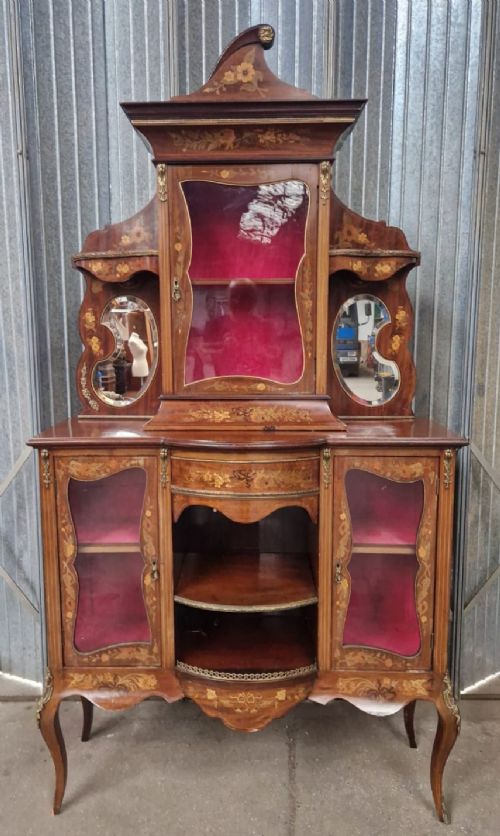
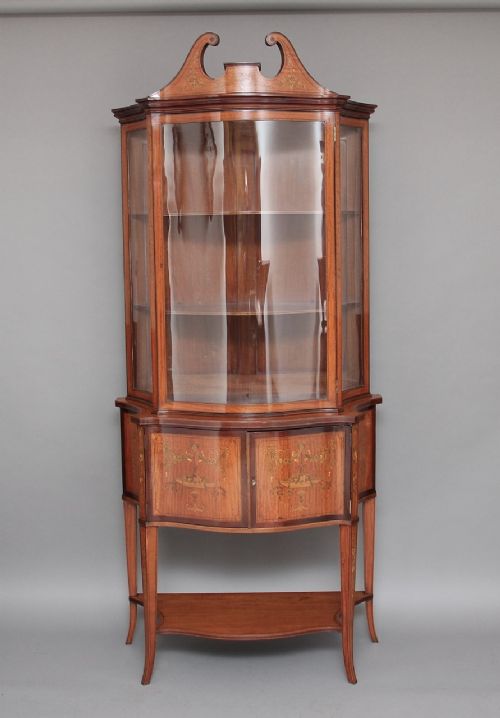
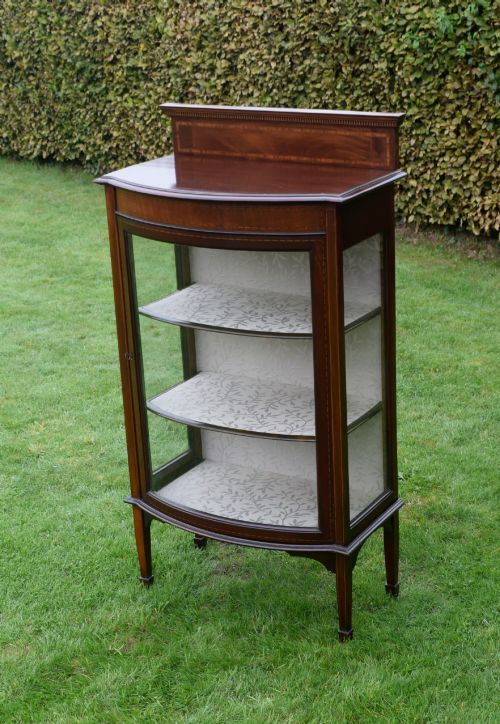
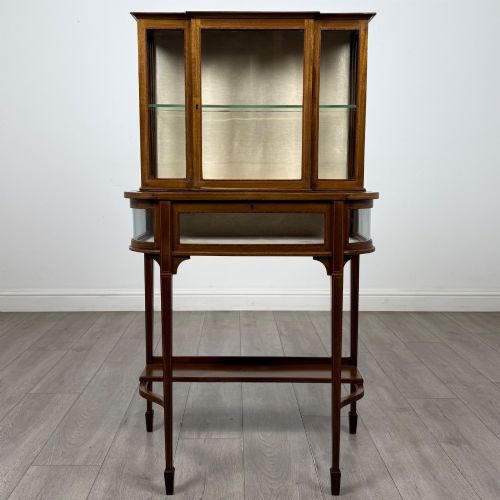

Edwardian Inlaid Glass Cabinet
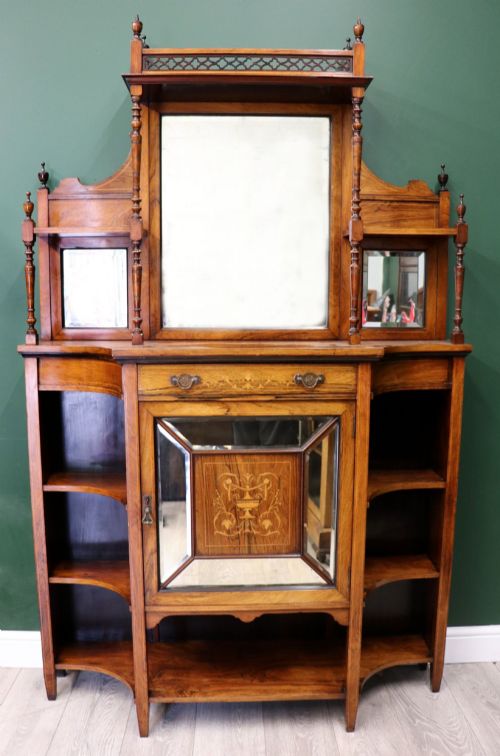
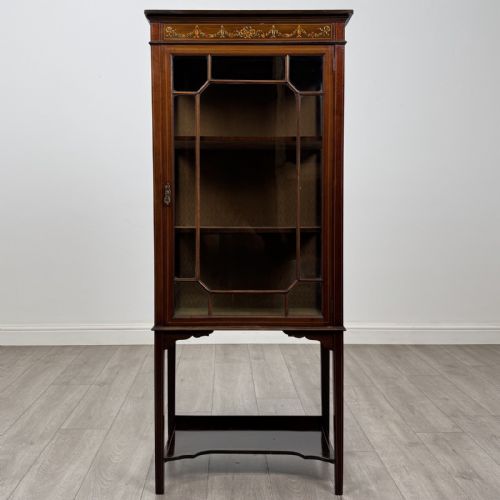
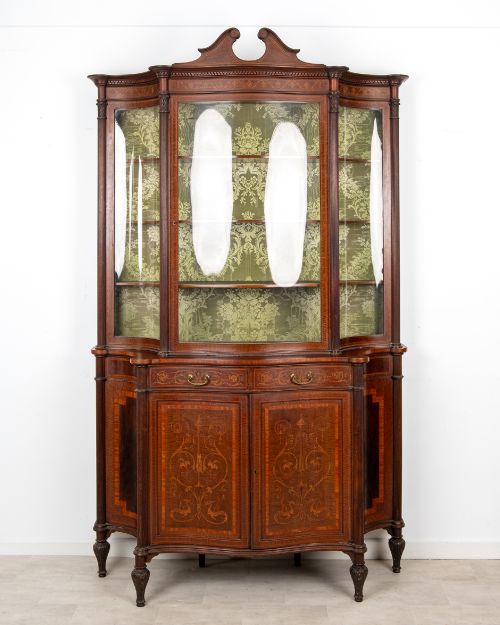
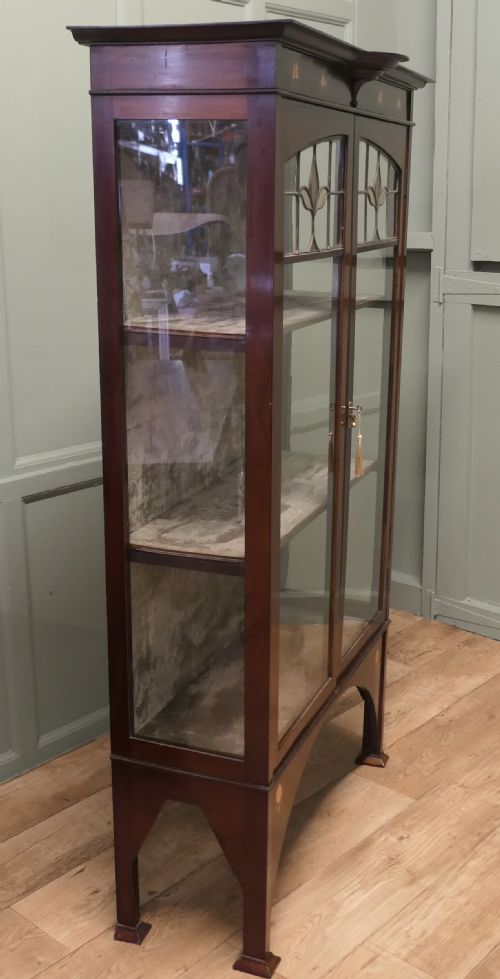
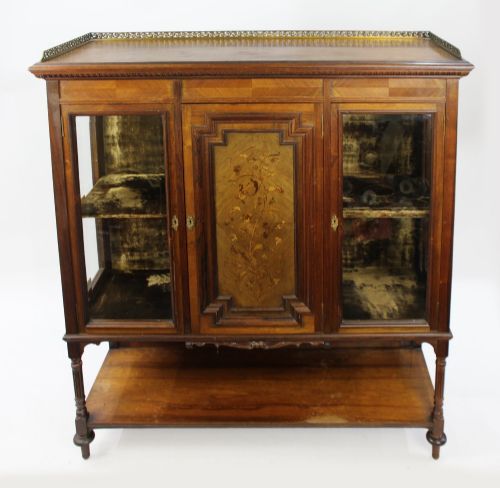
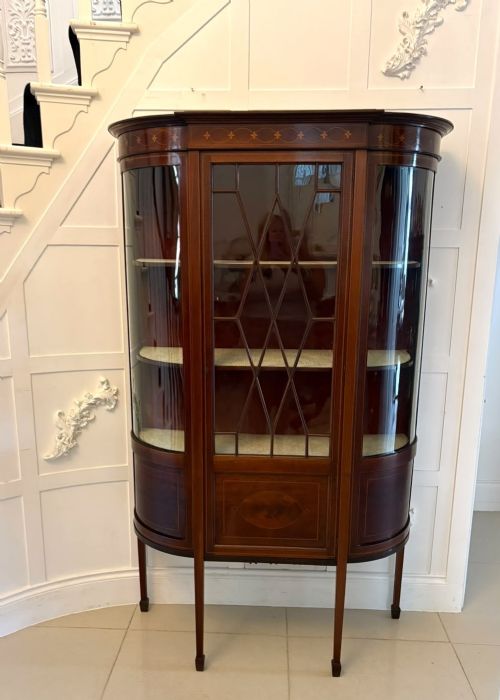
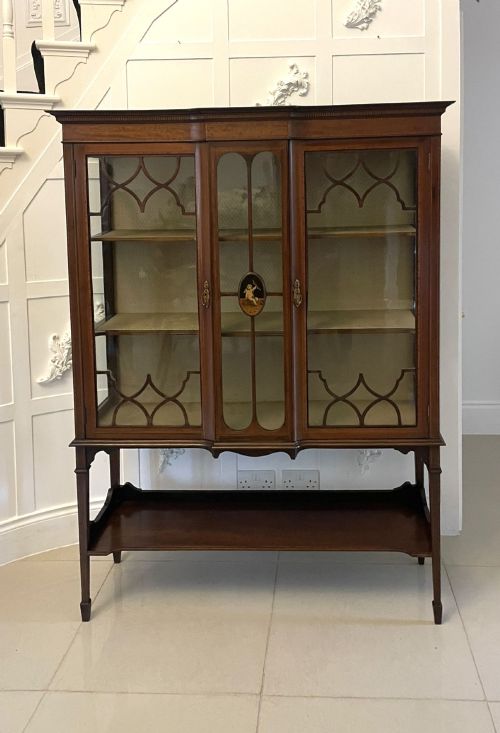
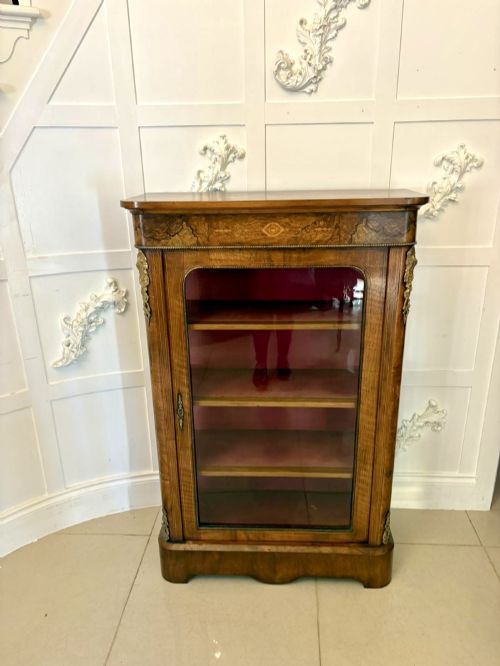
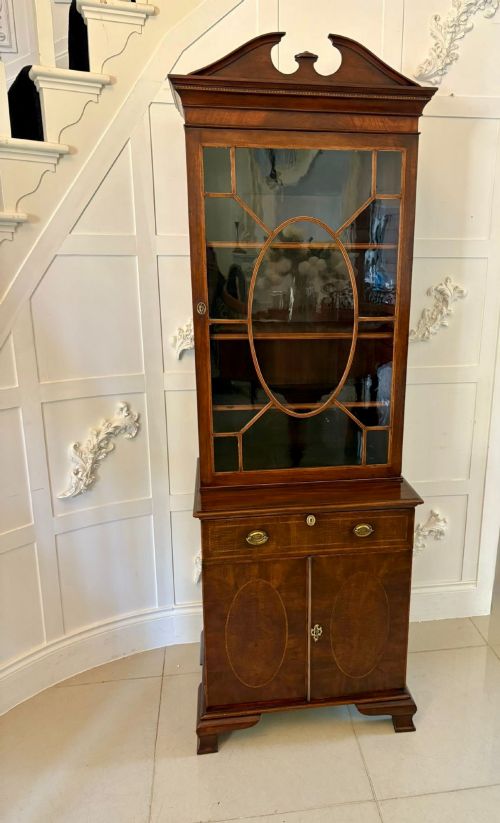
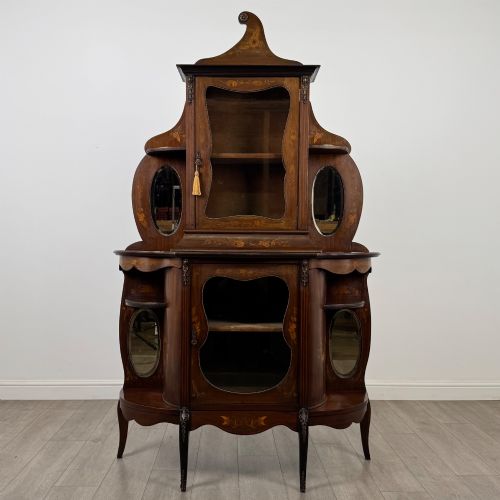
An edwardian inlaid glass cabinet brings lightness and refined timber work to a room, designed specifically to showcase prized ceramics and collected objects.
Edwardian Inlaid Glass Cabinet
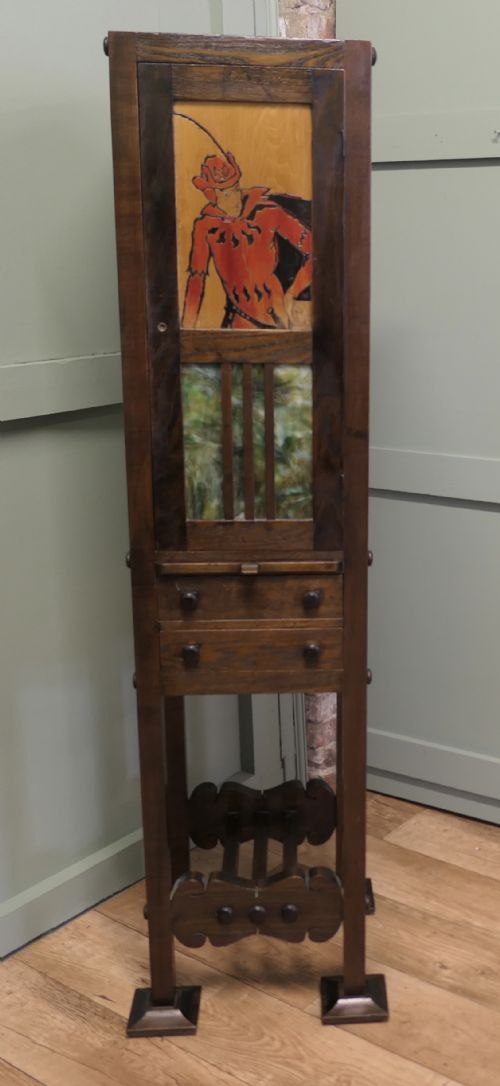
When searching for an edwardian inlaid glass cabinet, buyers encounter glazed display furniture primarily rooted in the Edwardian period and the late nineteenth century. These pieces take forms such as tall freestanding display cabinets, side cabinets, and smaller table-top or pedestal variants designed for domestic interiors.
The materials recorded span mahogany, satinwood, burr walnut, and oak, frequently embellished with contrasting wood inlays and marquetry. Alongside standard upright display cases, the selection includes related glazed furniture like bureau bookcases and bijouterie tables with glass panels.
Edwardian examples frequently show Sheraton Revival influences, deploying symmetrical satinwood stringing and floral motifs on mahogany carcases. Victorian predecessors tend toward burr walnut or darker mahogany timbers with subtler internal shelving and simpler glazing bars.
How they were made
Cabinet makers constructed the carcases predominantly from solid mahogany, walnut, or oak, often applying veneers of figured mahogany or exotic satinwood to large flat surfaces. Glazing bars divided the door glass into geometric or arched panes, holding single or multiple sheets of window glass securely in place.
Inlay and marquetry required precise hand-cutting of contrasting timbers such as boxwood, ebony, and dyed woods to form floral sprays, ribbon ties, or delicate stringing lines. Brass hardware, including hinges, locks, and small cabinet keys, completed the construction alongside fabric-lined internal shelving.
Some delicate table-top mirror cabinets combined morning vanity preparation with tiny velvet-lined ledges for holding daily jewellery.
What varies in quality
Quality rests significantly on the precision of the timber preparation and the fineness of the inlay work. Finer examples display meticulously fitted marquetry with sharp joints between contrasting woods, whereas simpler pieces rely on painted lines or basic boxwood stringing.
The selection of primary timbers and veneers also dictates the grade of the piece, with richly figured burr walnut and carefully chosen satinwood commanding greater artisanal attention. Original glass, sound internal fabric linings, and intact brass fittings further separate standard production items from workshop-attributed furniture.
Edwards & Roberts·Shapland and Petter·Maple & Co.·D. Hill Carter & Co.
The Edwardian Inlaid Glass Cabinet Glossary
- Marquetry
- A decorative technique applying fitted pieces of wood veneer to a structural carcase to form pictorial designs or floral motifs. It differs from simple inlay by covering the entire surface with a composed picture.
- Stringing
- Thin strips of contrasting wood inlaid into channels cut into the primary timber to outline panels and drawers. This linear embellishment defines Sheraton Revival and Edwardian cabinet work.
- Pier cabinet
- A slender cabinet designed specifically to stand against the flat wall space between windows. These pieces often feature a single glazed door and shallow depth to fit narrow architectural spaces.
- Bijouterie table
- A glazed display table with a hinged or lifting top intended for viewing small portable valuables and curiosities. They frequently stand on slender legs with lower stretchers.
- Sheraton Revival
- A late nineteenth and early twentieth century design movement drawing inspiration from the neoclassical furniture of George Sheraton. It uses light satinwood timbers, painted details, and symmetrical neoclassical ornamentation.
Edwardian Inlaid Glass Cabinet: Frequently Asked Questions
What is an edwardian inlaid glass cabinet used for?
These cabinets were built to display porcelain, silver, and decorative objects safely behind glass doors while protecting them from household dust.
Today, they serve the exact same function in domestic settings, offering visible storage that keeps collections organised and framed by period woodwork.
How do I tell Edwardian pieces from Victorian ones?
Edwardian examples generally feature lighter satinwood framing, airier proportions, and delicate Sheraton Revival motifs. Victorian pieces tend to use darker mahogany or burr walnut with heavier cornices and denser structural mass.
Examining the secondary timbers inside the carcase and the style of the inlay helps confirm the manufacturing era.
Are the glass panels usually original?
Many cabinets retain their original window glass, which can often be identified by minor surface ripples, tiny air bubbles, and slight thickness variations. Replacement glass tends to be perfectly flat and uniform.
Checking the putty or wooden glazing beads inside the door reveals whether the panels have been re-glazed at a later date.
How should I clean the inlaid wood surfaces?
Wood surfaces benefit from occasional dusting with a soft, dry cloth and minimal application of traditional beeswax to nourish the polished grain. Avoid modern liquid polishes containing silicones that can penetrate cracked varnish.
Inlay work requires particular care around edges to prevent moisture from lifting the delicate contrasting wood veneers.