


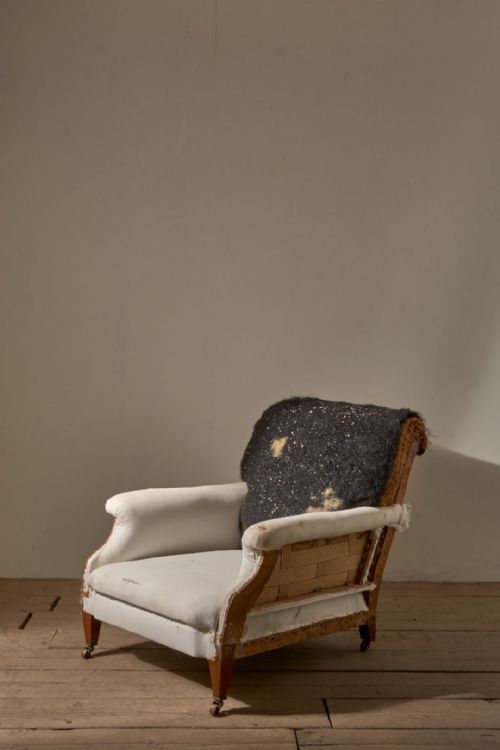


Edwardian Howard Chair
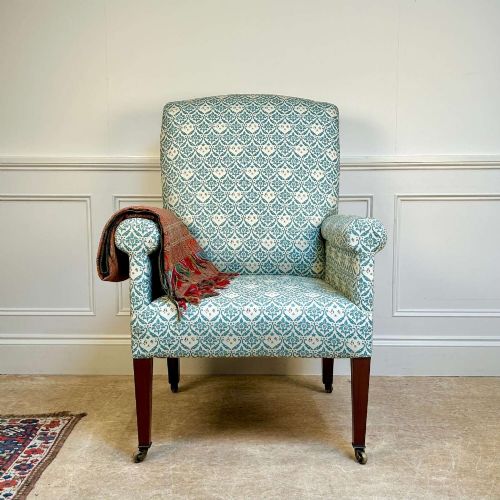
An Edwardian howard chair brings deep-seated English country house comfort to a room through low-slung proportions and generous upholstery.
Edwardian Howard Chair
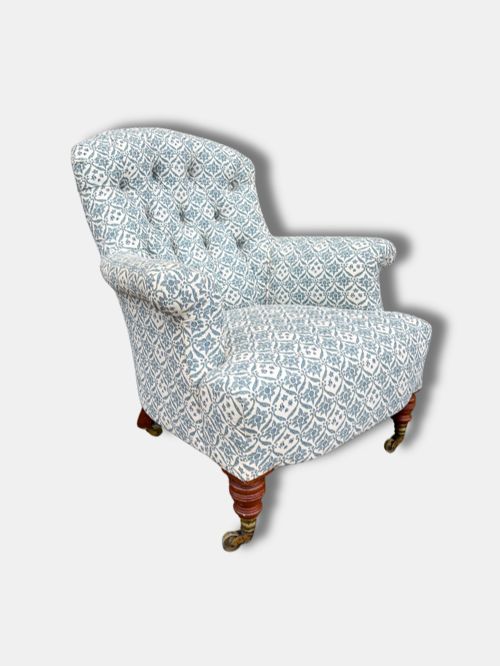
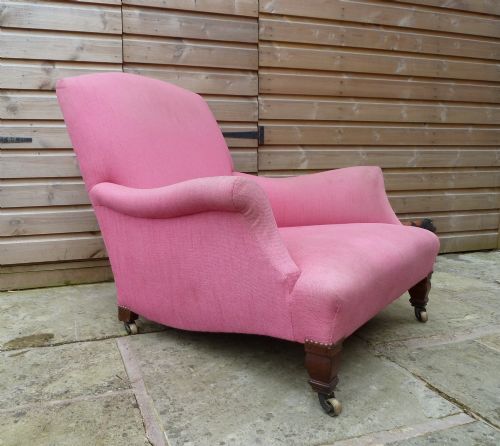
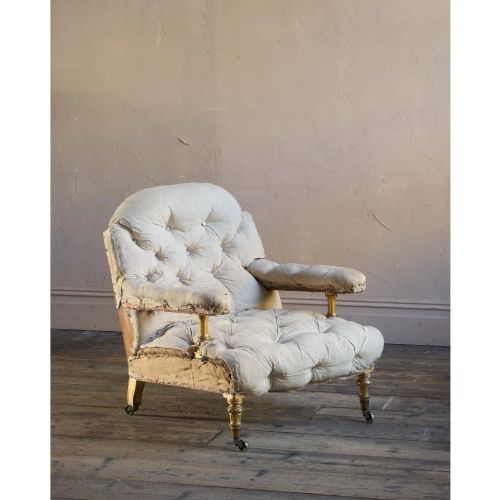
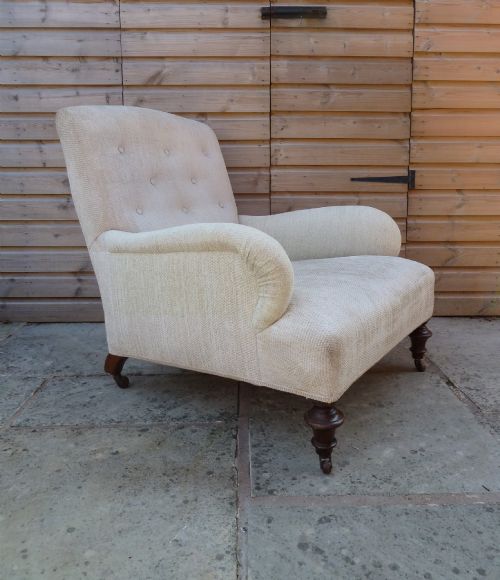
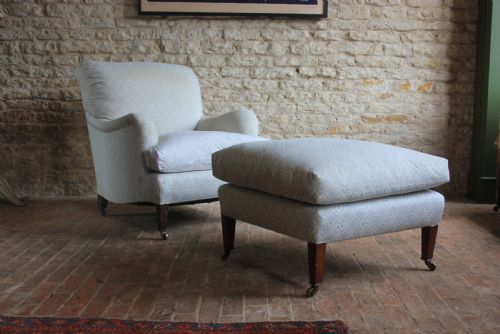
An edwardian howard chair sits low and deep, designed specifically for relaxation within late nineteenth and early twentieth century English interiors. The form prioritises a heavy, padded seat over visible woodwork, often paired with low rolled arms or high buttoned backs. While many examples bear direct maker stamps, others follow the distinctive aesthetic established by the firm.
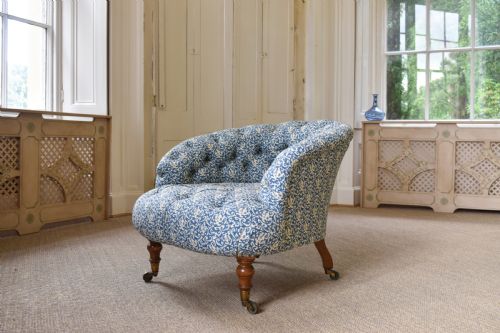
The selections available here span formats ranging from large club armchairs and bridge-water models to open armchairs, slipper chairs, and reclining daybeds. Pieces from the Edwardian period sit alongside Victorian iterations and later interpretations, reflecting a sustained demand for this specific style of seating.
Makers such as Howard and Sons set the standard for these deep-seated chairs, while contemporary cabinet makers like Robert Strahan and Trollope and Sons also produced related forms. Alongside stamped pieces, the listings include numerous armchairs executed in the recognised Howard style.
Materials and construction
Underneath the upholstery, these chairs rely on sturdy internal timber frames constructed from hardwood, walnut, and mahogany. Visible wooden elements remain minimal, restricted primarily to short legs terminating in brass castors that allow the heavy seat to move easily across floorboards.
The characteristic plump cushioning relies on traditional stuffing enclosed by calico before receiving a top layer of decorative fabric. Historic upholstery choices recorded across the listings include ticking, pink velvet, gold velvet, and patterned textiles such as William Morris designs and Ushak Turkey carpets.
Edwardian Howard Chair Retail Price Guide 2026
Typical asking prices for edwardian howard chair among the pieces listed under this phrase on Sellingantiques today, from the lower quarter to the upper quarter. They describe what is for sale here now, not the wider market.
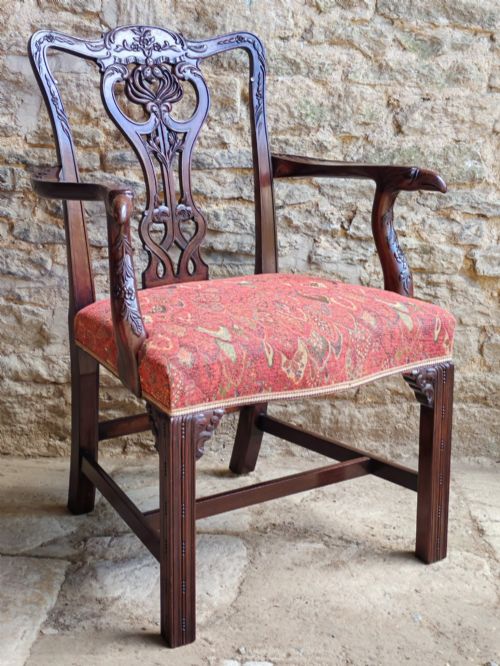
One remarkably comfortable armchair arrived upholstered in an authentic Ushak Turkey carpet, proving that Victorian comfort could also double as floor covering.
Assessing quality and authenticity
Distinction between pieces rests on the presence of maker attribution, original stamped brass castors, and intact internal webbing. Early examples retain specific patent markings on the castors or stamps on the rear legs, which confirm the workshop origin.
Proportion and scale dictate the visual weight of the chair, with deeper seats and lower profiles commanding attention for country house interiors. The integrity of the frame construction beneath the fabric determines the structural longevity of each piece.
Howard and Sons·Robert Strahan·Trollope and Sons
The Edwardian Howard Chair Glossary
- Howard chair
- A deep-seated, upholstered armchair developed in the nineteenth century, known for low rolled arms and exceptional comfort. The form became a staple of English country house decor.
- Bridgewater armchair
- A specific armchair variant featuring low, soft arms that set back from the front edge of the seat. This design offers an expansive seating area.
- Button back
- An upholstery technique where buttons are pulled deep into the padding to create a diamond pattern. This method secures the internal filling while adding texture to the backrest.
- Calico
- A plain-woven cotton fabric used as the primary inner lining beneath the decorative outer upholstery. It provides a stable foundation for traditional stuffing materials.
- Castor
- A small wheel mounted on a swivel assembly attached to the base of each leg. Brass versions appear frequently on nineteenth and early twentieth century seating to ease movement.
Edwardian Howard Chair: Frequently Asked Questions
What defines an edwardian howard chair?
An edwardian howard chair is characterised by its deep seat, low profile, and heavily padded arms designed for lounging. The construction minimises exposed wood in favour of generous upholstery.
Most examples feature short wooden legs fitted with brass castors. This combination creates the signature English country house aesthetic.
How can I spot an original Howard and Sons chair?
Authentic pieces from the firm often feature stamped numbers on the back legs or maker marks stamped directly onto the brass castors. The internal webbing and frame construction also follow strict nineteenth-century manufacturing standards.
Many chairs produced by rival makers adopted the same comfortable proportions without bearing the original brand stamp.
What fabrics were originally used on these chairs?
Traditional upholstery materials included heavy ticking, plain cotton calico, and rich velvet in shades like gold and pink. Workshops also utilised patterned textiles such as William Morris prints and antique carpets.
Many surviving pieces have undergone reupholstery over the decades to preserve the fabric while maintaining the underlying shape.
Are these chairs suitable for daily seating?
The deep proportions and sprung seats make these chairs exceptionally comfortable for everyday use in a living room or study. Their robust hardwood frames support regular lounging.
Placing them away from direct sunlight helps preserve historic fabrics and internal stuffing materials.