
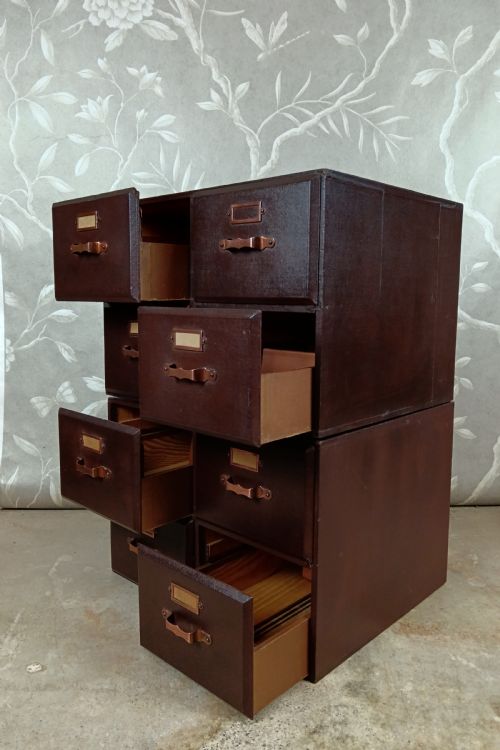


Edwardian Haberdashery Unit
An Edwardian haberdashery unit offers compartmentalised storage, typically built from mahogany or oak with multiple drawers and glass fronts for mercantile display.
Edwardian Haberdashery Unit
An edwardian haberdashery unit encompasses multi-drawer banks, display cabinets and storage shelving originating from the early twentieth century and the late nineteenth century. These pieces serve commercial and domestic settings alike, providing numerous small compartments for orderly organisation.
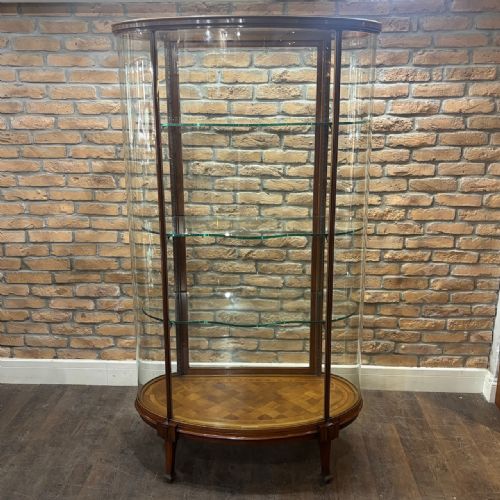
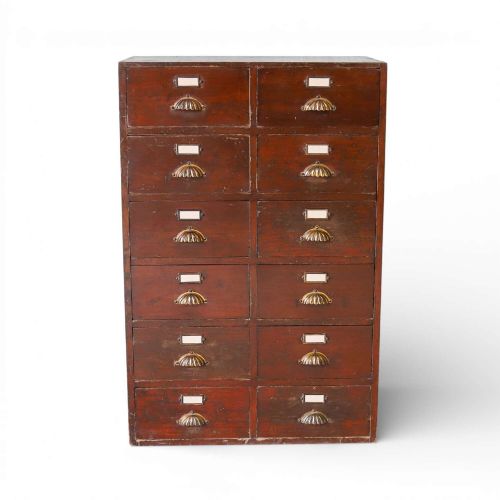
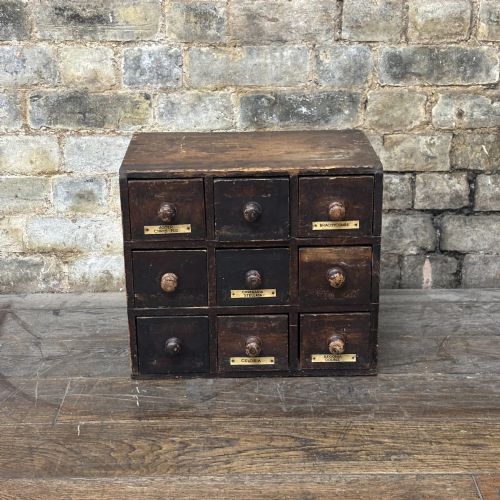
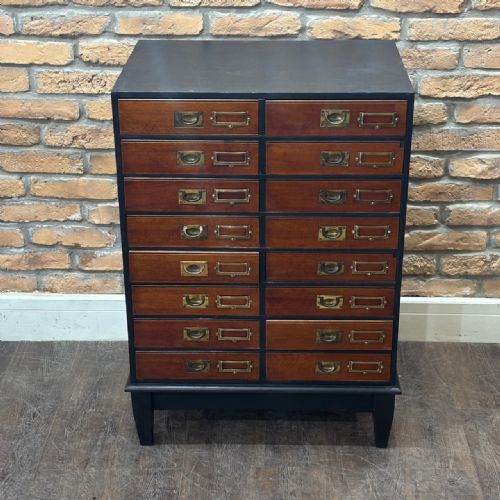
The versions most commonly met on this page include mahogany and oak banks of drawers, alongside glass-fronted display pieces and specialist filing cabinets. They reflect the utilitarian and commercial requirements of shops, offices and florists from the period.
How they were made
Makers utilised timber such as mahogany, oak, satin walnut and deal, constructing sturdy frames to withstand daily mercantile use. Brass and iron hardware, including original shell pulls and label holders, were fitted to the numerous small drawers.
Joinery methods focused on durability and practical function, accommodating glass panels for display purposes and pigeon hole configurations for document sorting. Painted wood surfaces and metal accents also appear across industrial and commercial examples.
Original brass shell pulls still retain tiny paper labels detailing long-forgotten shop inventory.
What varies in quality
The standard of timber selection and cabinetmaking distinguishes different examples, with dense hardwoods like mahogany and figured oak sitting above simpler deal constructions. Finer pieces retain matching sets of original brass hardware and well-fitted glass rather than replaced components.
Construction depth and scale create variation, ranging from compact satin walnut drawer banks to very large multi-drawer cabinets designed for heavy shop use. The presence of patent mechanisms or named commercial makers adds distinct character to individual units.
F. Sage & Co
The Edwardian Haberdashery Unit Glossary
- Haberdashery cabinet
- A multi-drawer storage unit originally designed for holding small sewing items, ribbons and fasteners in a shop. These pieces feature banks of shallow drawers, sometimes with glass fronts.
- Shell pull
- A pressed metal handle shaped like a scallop shell, frequently combined with a label holder on mercantile drawers. They provide a secure grip for frequently opened compartments.
- Filing cabinet
- A piece of office furniture designed to hold documents systematically, often constructed with numerous small drawers or card index trays. Examples from this era utilise robust wood and brass fittings.
- Display stand
- A raised structure or cabinet utilising glass and wood to showcase merchandise or collections. These items prioritize visibility while protecting contents from dust.
- Deal
- Softwood timber, typically pine or fir, commonly used for secondary furniture construction or smaller utilitarian cabinets. It offers a pale grain that takes staining readily.
Edwardian Haberdashery Unit: Frequently Asked Questions
What is an edwardian haberdashery unit?
An edwardian haberdashery unit is a multi-drawer piece of furniture designed for organising and displaying small merchandise in a shop setting. These cabinets combine numerous shallow drawers with timber frames, often incorporating glass panels or brass label holders.
They reflect the commercial storage needs of the early twentieth century, prioritizing accessibility and systematic sorting. Today, they function effectively in homes as storage for collections, stationery or kitchen accessories.
How were these cabinets used?
Merchants utilised these units to store and display small goods such as ribbons, threads, buttons and haberdashery items where customers could view them easily. The numerous drawers kept stock separated by size, colour or type.
Offices and florists also employed similar multi-drawer formats, seed chests and filing sets for organising correspondence and seed packets. Their sturdy construction allowed them to endure constant handling throughout the working day.
How do I live with one?
Living with a haberdashery unit involves placing it where its multiple drawers can provide practical storage for everyday items. Their substantial timber presence suits studies, hallways or living rooms as feature furniture.
Regular care requires simple dusting of the wood and glass surfaces, while the original brass pulls benefit from gentle cleaning without harsh polishes. Their versatile scale allows them to adapt to various interior layouts.