
Edwardian Gold Curb Chain
An edwardian gold curb chain delivers interlocking links of rich rose or yellow gold that sit flat against the skin.
Edwardian Gold Curb Chain
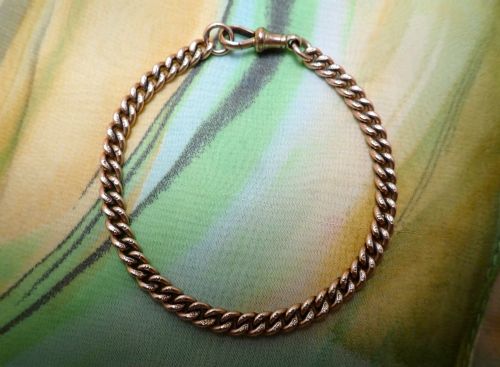
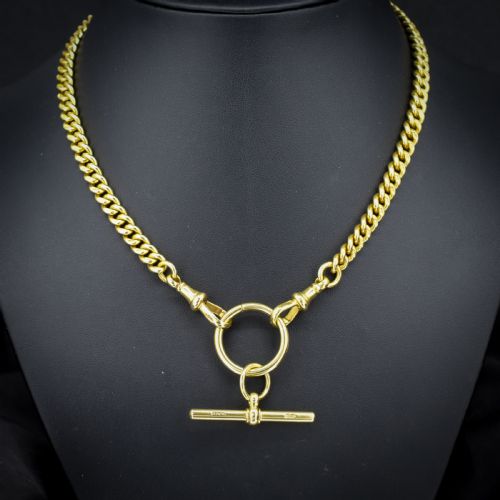
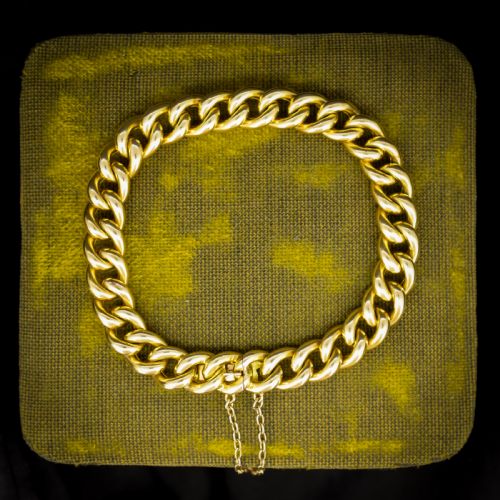
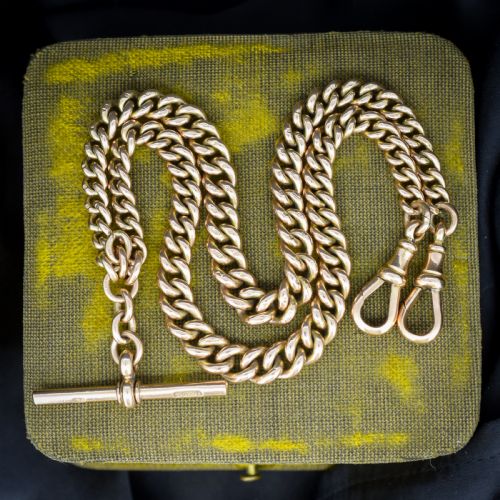
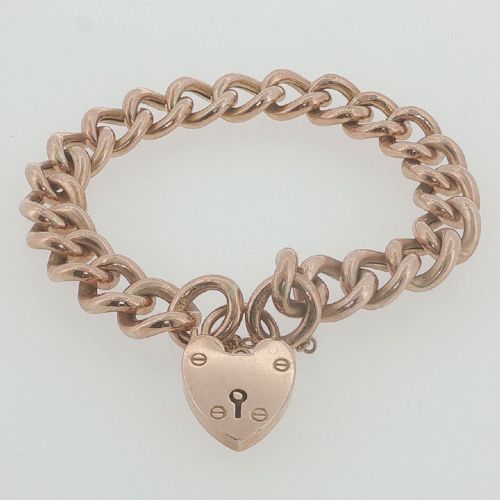
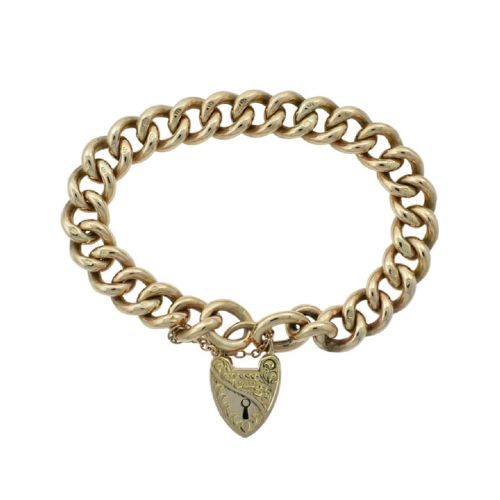
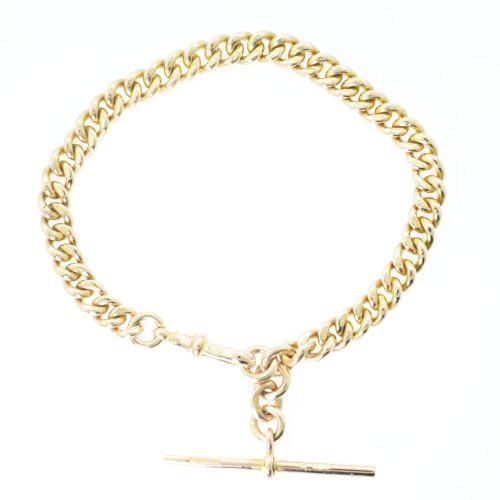
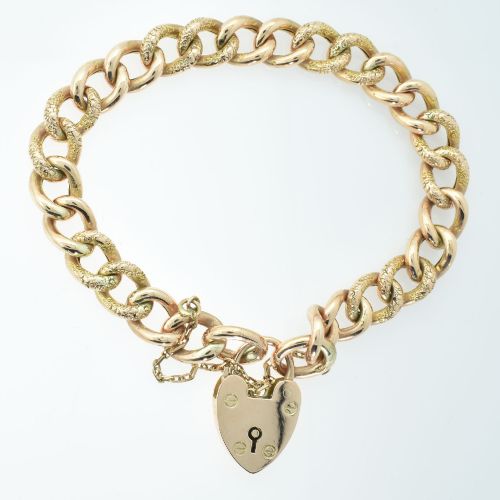
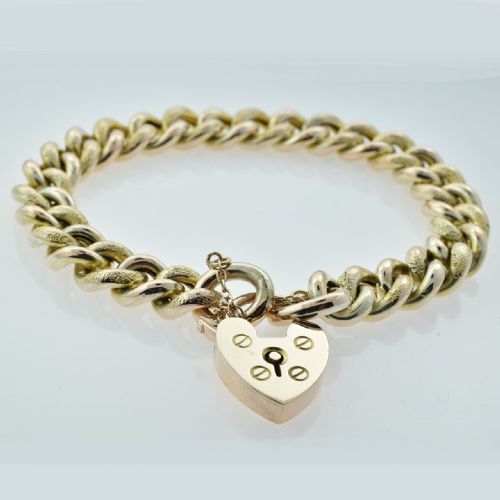
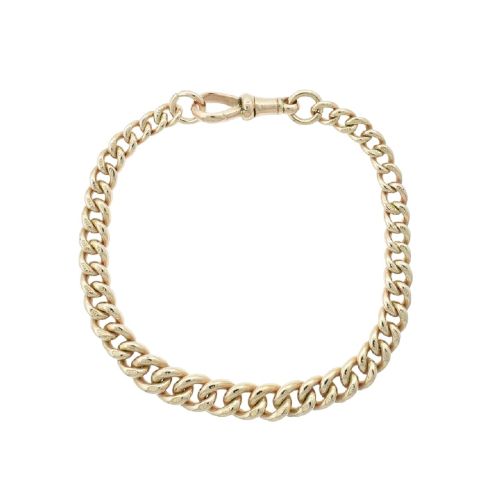
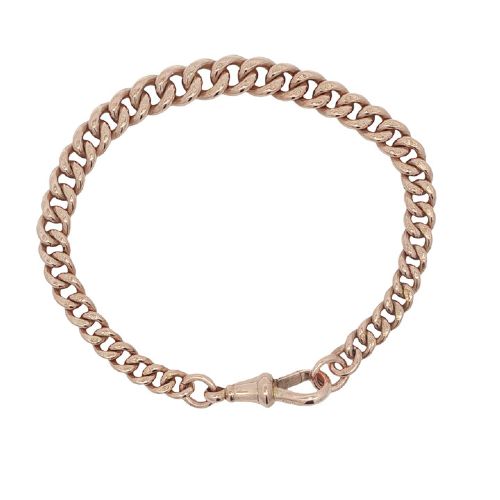
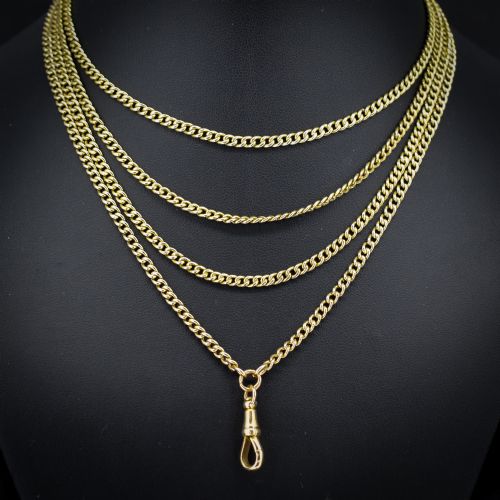
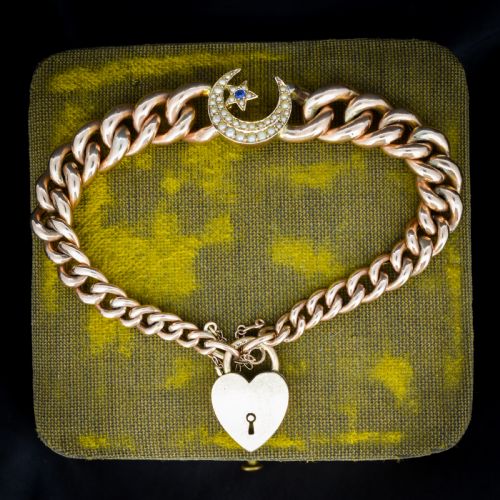
An edwardian gold curb chain takes the form of uniform or graduated interlocking links designed for daily wear. You will most frequently meet these pieces as substantial bracelets fitted with heart padlocks or as long pocket watch chains adapted for the neck.
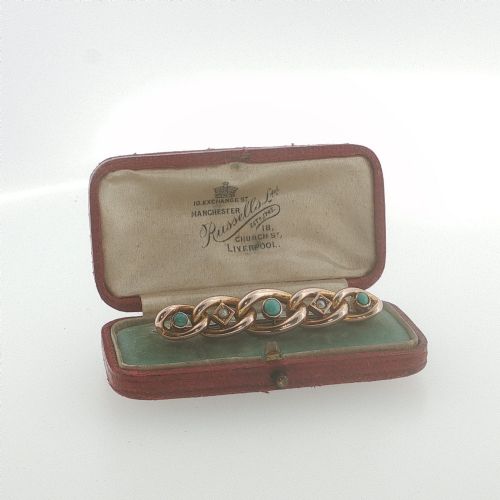
Makers of the period adapted heavy utility chains into personal ornaments by adding swivel clips, T-bars, and gemstone accents. The designs span from simple unadorned links to half-engraved patterns paired with turquoise and seed pearls.
How They Were Made
Goldsmiths worked primarily in nine-carat, fifteen-carat, and eighteen-carat gold, selecting rose hues most frequently alongside traditional yellow tones. Rolled gold alternatives offered durability at a lower cost through layered manufacturing techniques.
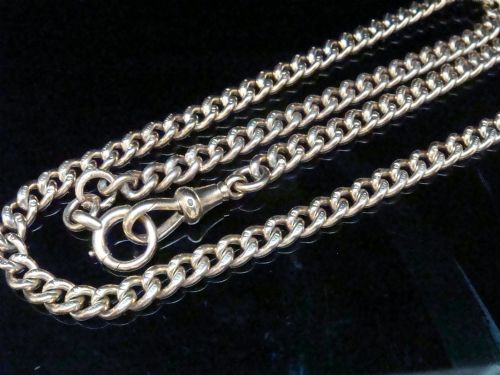
Individual links were shaped, soldered, and hand-finished, with many pieces receiving delicate half-engraving across the surface. Secure closures such as dog clips, bolt rings, and padlock clasps were integrated to handle the weight of daily pocket watch use.
Several chains retain their original hay-making intaglio fobs, preserving miniature carved scenes intended to bring good fortune to the wearer.
What Varies in Quality
Quality rests on the integrity of the individual links and the presence of complete hallmarks on every component. Chains that exhibit crisp hand-engraving and substantial metal weight demonstrate superior craftsmanship.
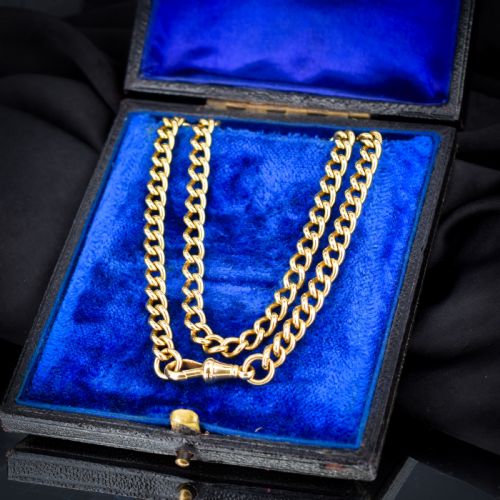
The sophistication of the original hardware, including fully functional dog clips and matching safety chains, elevates an example above standard utility pieces. Original fitted boxes and intact gemstone settings of turquoise or seed pearls further distinguish finer specimens.
The Edwardian Gold Curb Chain Glossary
- Curb link
- A type of jewellery chain featuring flattened, interlocking links that twist to lie flat against the wearer. This construction provides strength and a fluid drape.
- Albert chain
- A pocket watch chain named after Prince Albert, designed to attach from a waistcoat buttonhole to a timepiece in the pocket. Many survive today converted into necklaces.
- Dog clip
- A spring-loaded snap hook used on watch chains to secure pocket watches or charms. They often appear on antique bracelets as fastening mechanisms.
- T-bar
- A horizontal metal bar attached to the centre of a watch chain, designed to slip through a waistcoat buttonhole. It remains a decorative feature on many converted chains.
- Rolled gold
- A material made by bonding a thin sheet of gold to a base metal core under heat and pressure. It offers the appearance of solid gold with greater durability than plating.
Edwardian Gold Curb Chain: Frequently Asked Questions
How do I wear a pocket watch chain as a necklace?
Many edwardian gold curb chain pieces originally served as watch chains and arrive at a length suitable for wearing directly around the neck. You can fasten the dog clip to a jump ring or connect the ends using the existing T-bar as a toggle.
Shorter lengths sit high on the collarbone, while longer guards and double albert chains wrap around or drape lower down the chest. The weight of the original links allows the metal to curve naturally without twisting.
What is the difference between rose gold and yellow gold?
Rose gold gains its distinct pinkish hue through a higher proportion of copper alloyed with pure gold. Yellow gold balances copper with silver to maintain a warmer, traditional metallic colour.
Both alloys appeared frequently in jewellery production during the early twentieth century. Many individual pieces combine warm rose links with contrasting yellow gold clasps or decorative mounts.
How do I secure a padlock clasp?
The heart-shaped padlock functions using a small internal spring mechanism operated by pressing a tiny protruding pin or lever. Once depressed, the hinged bail opens to accept the designated jump ring.
Releasing the pressure snaps the mechanism shut securely. Many period bracelets include a fine safety chain attached nearby to provide extra security during wear.
Are all links hallmarked?
Not every link on an antique chain receives a full hallmark stamp due to the small surface area of individual components. Makers often struck only the primary clasp, the T-bar, or alternate links.
When individual hallmarks do appear on every link, they indicate strict adherence to regional assay office standards. Stamping typically reveals the exact gold purity standard alongside maker marks and date letters.