



Edwardian Glassware Pair
These edwardian glassware pair selections bring matched drinking vessels and barware into the home with period style.
Edwardian Glassware Pair
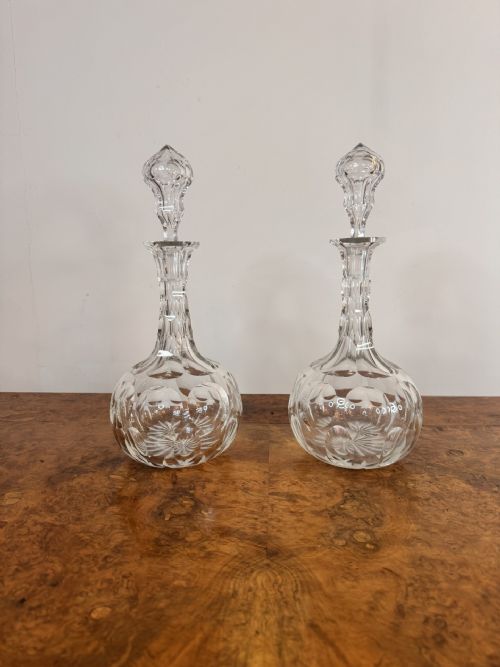
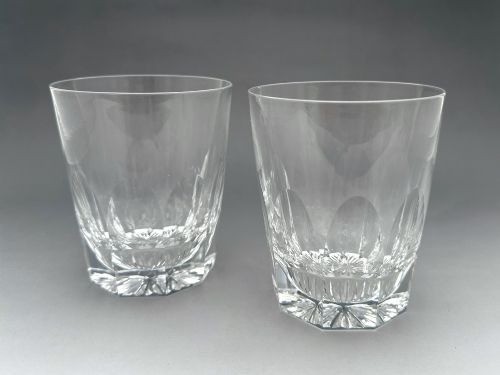
When searching for an edwardian glassware pair, collectors encounter matched drinking vessels, decanters, and barware originating from the Edwardian era alongside surrounding periods like the Victorian age and the early twentieth century. The selection on this page centres on coordinated pairs intended for table service, featuring forms such as whisky tumblers, wine glasses, champagne coupes, and spirit decanters.
Most examples span from the late nineteenth century into the 1930s, encompassing styles from Arts and Crafts and Art Nouveau to Art Deco and Jugendstil alongside traditional Edwardian designs. Buyers find both simple clear crystal vessels and decorative coloured glass pieces, often ornamented with cutting or engraving.
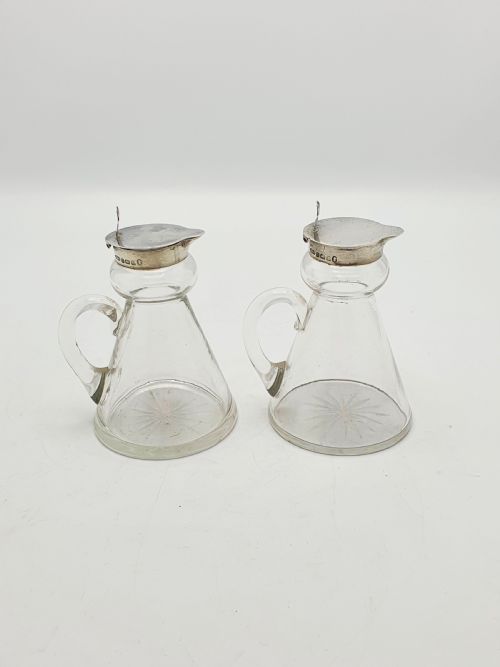
Originating from British makers as well as continental European workshops in places like Germany and Austria, these pairs reflect the social dining and drinking habits of their respective decades. The forms range from functional noggins mounted in sterling silver to large engraved ale glasses and optically blown decanters.
How they were made
Makers utilised lead crystal, clear glass, and cased glass, often employing optical blowing techniques to shape the vessels while hot. Artisans achieved decorative surface patterns through wheel-cutting, hand-engraving, and enamel decoration applied directly to the glass surface.
Mounts and hardware incorporate sterling silver and pewter, sometimes combining metalwork with green glass bodies to create contrasting textures. Individual pieces show the marks of both glassblowers and specialist metalworkers, particularly on items like whiskey noggins and jug mounts.
Edwardian Glassware Pair Retail Price Guide 2026
Typical asking prices for edwardian glassware pair among the pieces listed under this phrase on Sellingantiques today, from the lower quarter to the upper quarter. They describe what is for sale here now, not the wider market.
Listings feature items spanning from the Victorian period through Edwardian times up to 1930.
What varies in quality
Quality separates simple utility vessels from finer display pieces through the crispness of the glass cutting and the precision of the hand-engraving. Heavier lead crystal and deeply refractive surfaces indicate superior material selection, while well-balanced optical blowing demonstrates high manufacturing skill.
The integration of precious materials like sterling silver mounts or detailed enamel work elevates certain pairs above standard production items. Preservation of the original matching pair without replacement components or mismatched shades of coloured glass remains central to the standing of any set.
James Powell·Theresienthal
The Edwardian Glassware Pair Glossary
- Cased glass
- Glass formed of two or more distinct layers of different colours, allowing artisans to cut through the top layer to reveal the contrasting colour beneath.
- Lead crystal
- High-clarity glass containing lead oxide, which increases the weight, brilliance, and refractive index of the material.
- Optically blown
- A glassblowing technique where molten metal is inflated in a ribbed mould to create subtle internal patterns or ridges within the walls of the vessel.
- Whisky noggin
- A small decanter or spirit jug, frequently fitted with a sterling silver collar and handle, designed for individual serving.
- Vitreous enamel
- A coloured glass paste fused to a surface through high-temperature firing, used here to add decorative motifs to crystal glassware.
Edwardian Glassware Pair: Frequently Asked Questions
What is an edwardian glassware pair used for?
These matched sets serve for formal dining, entertaining, and displaying vintage barware on a sideboard or drinks trolley.
Many pieces function practically for serving wine, spirits, and champagne, while others remain decorative cabinet items.
How do I distinguish Edwardian glass from Victorian pieces?
Edwardian glassware often lighter and more restrained in profile than heavy Victorian designs, though stylistic overlap occurs.
Makers working around the turn of the twentieth century frequently adopted cleaner lines influenced by the Arts and Crafts movement.
Are these pairs suitable for everyday dining?
Sturdy cut lead crystal and robust decanters handle careful regular use, though older antique pieces benefit from hand washing.
Enamelled items and delicate silver-mounted noggins require more careful handling to preserve the decorative surfaces.
What materials appear most often in these sets?
Lead crystal and clear glass dominate the selections, frequently paired with hand-cut or engraved ornamentation.
Some examples incorporate coloured cased glass, sterling silver mounts, and pewter frames from continental workshops.