


Edwardian Glass Oil Bottle
These edwardian glass oil bottle examples bring practical elegance to the table, combining cut crystal and silver plate for daily dining.
Edwardian Glass Oil Bottle
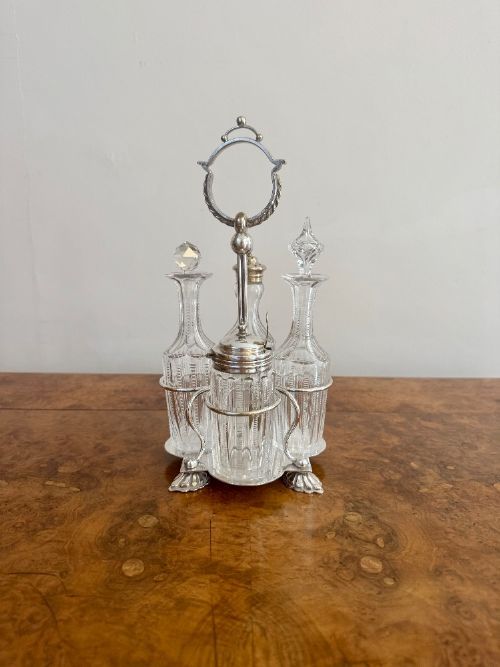
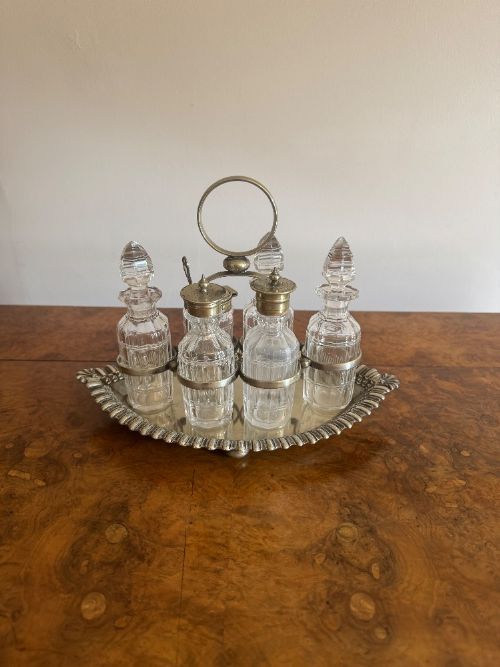
An edwardian glass oil bottle typically appears as part of a larger cruet set or as a standalone vessel for the dining table. These pieces generally date from the nineteen hundreds, reflecting the domestic habits of the period.
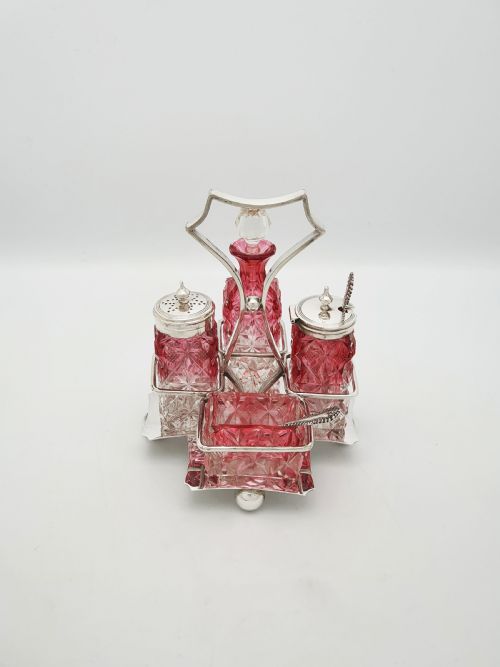
Most examples found here combine clear cut glass or cranberry glass with silver plate mounts and collars. Cruet sets and individual decanters form the primary types available to the buyer.
How they were made
Maker workshops utilised heavy cut glass and crystal to form the bodies of these bottles, often incorporating flashed cranberry glass for visual depth. The glass surfaces feature geometric cutting that catches the light during use.
Mounts, collars and frames consist of silver plate or sterling silver, securely fitted to the glass necks. Many examples pair the glass vessels with fitted stands manufactured by established firms.
Dining tables of the period required dedicated oil bottles because salads were dressed live by the host before dinner guests.
What varies in quality
The weight and clarity of the glass set the standard for each piece, with deeper cutting and unblemished crystal indicating finer work. Silver plate thickness also determines durability across the mounts and associated frames.
Comprehensiveness affects overall standing, particularly where complete cruet sets retain their original matching bottles and silver plated stands without replacement components.
Walker & Hall
The Edwardian Glass Oil Bottle Glossary
- Cruet set
- A fitted frame holding multiple glass bottles for condiments, oil, and vinegar at the dining table. These assemblies often include silver plated handles and feet.
- Cranberry glass
- A rich red glass created by adding gold chloride to the molten batch during manufacture. This material frequently appears in Edwardian tablewares.
- Silver plate
- A layer of silver fused to a base metal foundation, commonly used for the frames and mounts of these bottles. It provided the look of solid silver at a lower cost.
- Cut glass
- Glass decorated by grinding facets and patterns into the surface using rotating wheels. Deeper cuts require greater skill from the glass cutter.
Edwardian Glass Oil Bottle: Frequently Asked Questions
What is an edwardian glass oil bottle used for?
These vessels held cooking oils and vinegars for dispensing at the dining table during meals. They allowed hosts to serve dressings directly while keeping the table orderly.
Most examples formed part of larger cruet frames containing multiple condiment bottles. Today, they serve both as decorative table accents and usable dining accessories.
How do I clean an old glass oil bottle?
Warm water and mild soap safely remove residue from the interior of glass cruets without damaging the material. Avoid harsh abrasives that might scratch the surface or dull the cut facets.
Silver plated mounts require a soft cloth and dedicated polish to maintain their finish. Keep moisture away from any cork or stopper linings during the process.
Are all these bottles from the Edwardian period?
The majority of pieces date from the early nineteen hundreds, spanning the Edwardian era and surrounding decades. Stylistic markers and registration marks help place them within this timeframe.
Victorian and later Art Deco examples also appear among these listings, sharing similar glass and silver plate construction methods.