

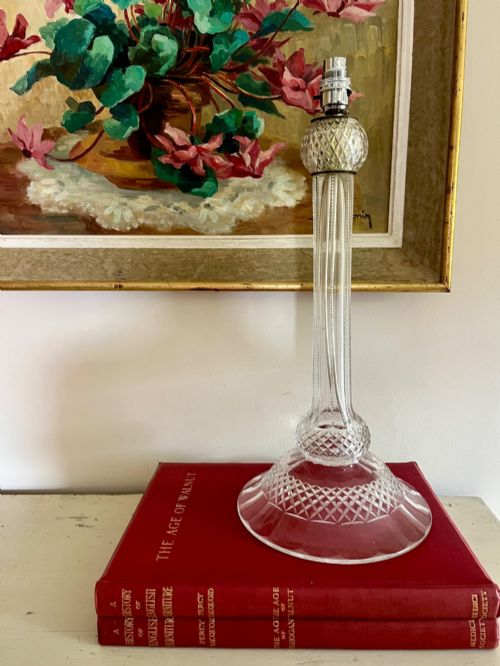
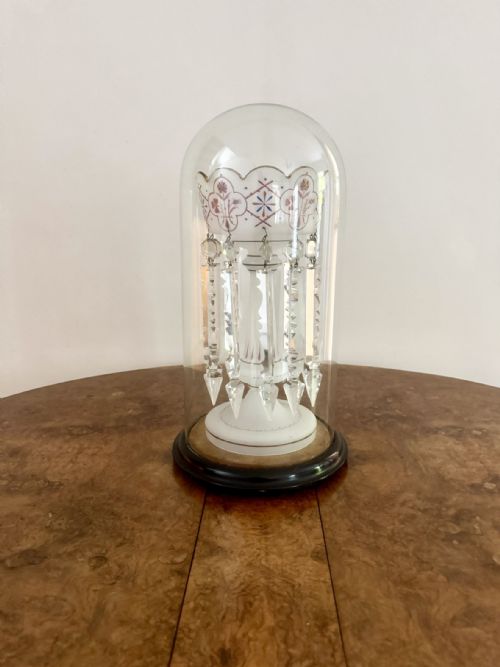


Edwardian Glass Candlestick
An edwardian glass candlestick brings bright period clarity to a room, offering practical illumination through clean refractive forms.
Edwardian Glass Candlestick
When searching for an edwardian glass candlestick, buyers encounter table lighting and candle holders spanning the late nineteenth century into the early twentieth century. The selection includes examples styled across the Edwardian era, the Victorian period, and occasional pieces reaching into the nineteen-twenties.
Forms extend beyond simple candle holders into related table objects such as table lamps, desk accessories, mantel lustres, and candelabra. Materials paired with the glass include brass, silver plate, and wood, reflecting the domestic metalwork and mounting techniques of the period.
How they were made
The objects combine blown or pressed glass components with metal mounts, incorporating cut crystal and cut glass detailing to catch the light. Brass and silver-plated elements provide structural support and decorative collars.
Manufacturing methods rely on traditional glass shaping alongside metal casting, uniting heavy crystal or opaline bodies with fitted brass mounts and patented burner assemblies.
Edwardian Glass Candlestick Retail Price Guide 2026
Typical asking prices for edwardian glass candlestick among the pieces listed under this phrase on Sellingantiques today, from the lower quarter to the upper quarter. They describe what is for sale here now, not the wider market.
Some items double as cornucopias to hold your ink, proving the Victorians wanted their stationery to resemble a horn of plenty.
What varies in quality
Quality rests upon the weight and clarity of the glass itself, distinguishing heavy cut crystal from lighter moulded alternatives. The crispness of the cutting and the purity of colour in tinted varieties define the upper tier.
The integration of metal mounts, such as solid brass or hallmarked silver details, provides a measure of craftsmanship. Superior examples show precise fitting between the glass body and its metal components.
The Edwardian Glass Candlestick Glossary
- Cricklite
- A patented trade name for night-light and candle lamps designed with specialised glass shades and holders. They provide a soft, protected flame.
- Mantel lustre
- An ornamental glass vase hung with crystal prisms, designed to sit on a fireplace mantel. These pieces reflect ambient room light.
- Opaline
- An opaque or translucent pale glass developed in the nineteenth century. It often imitates porcelain while retaining a soft vitreous glow.
- Candelabra
- A branched candlestick holding multiple lights on a single base. They serve as substantial centrepieces for dining tables or sideboards.
- Cornucopia
- A horn-shaped vessel symbolising abundance, adapted in these listings as a desk stand or inkwell. The form combines figural metalwork with glass or horn.
Edwardian Glass Candlestick: Frequently Asked Questions
Are these candlesticks suitable for daily use?
Most pieces function well with standard taper candles, though vintage holders may require narrower candles or fitted inserts. Check the stability of the base before lighting.
For pieces converted to table lamps or fitted with patent burners, ensure the wiring meets current safety standards if plugged into mains electricity.
How can I tell Victorian glass from Edwardian glass?
Victorian examples often feature heavier ornamentation, bolder colours like cranberry, or elaborate mantel lustre drops. The manufacturing leans towards ornate Victorian novelties.
Edwardian pieces generally favour simpler, brighter forms and cleaner crystal cuts. The transition reflects changing domestic tastes towards lighter interiors.
What is a mantel lustre used for?
Mantel lustres were decorative ornaments placed upon drawing room mantelpieces during the nineteenth century. The hanging glass prisms were intended to catch and multiply the flickering light of nearby candles.
While they held candles in some configurations, their primary role was visual enrichment within the formal interior.