






Edwardian Gem Set Ring
An edwardian gem set ring brings together delicate golds, platinum, and bright coloured stones in forms that define early twentieth century elegance.
Edwardian Gem Set Ring
An edwardian gem set ring gathers pieces created across the late nineteenth century and early decades of the twentieth century, with Edwardian examples forming the core of the selection. Buyers encounter cluster rings, starburst gypsy rings, and multi-stone settings featuring diamonds alongside rich emeralds, rubies, and sapphires.
Makers utilised both yellow gold and white metals like platinum, often combining stones in trefoil clusters or elongated panel arrangements. While the Edwardian period dominates, surrounding pieces stretch from Victorian roots into Art Deco designs.
The objects span simpler band variations and substantial statement pieces, each holding colourful gems secured in traditional claw or flush mounts. Collectors find distinct regional character, including British hallmarked items from Chester alongside continental European work.
How they were made
Goldsmiths worked primarily in eighteen carat yellow gold and emerging platinum settings, using the latter to secure diamonds with minimal visible metal. Stones were cut by hand, yielding old cut diamonds and varied emerald or sapphire facets that catch light softly.
Construction methods range from flush gypsy settings suited to daily wear to raised cluster and halo arrangements that showcase central gems. Shanks vary from standard solid bands to adjustable forms designed for practical twentieth century sizing.
Listings feature gold, platinum, and various gemstones spanning periods from the nineteenth century through the nineteen sixties.
What varies in quality
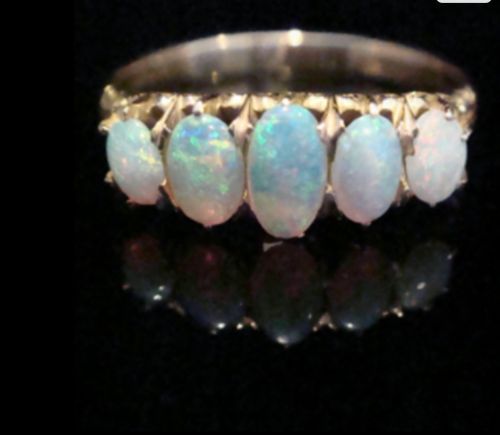
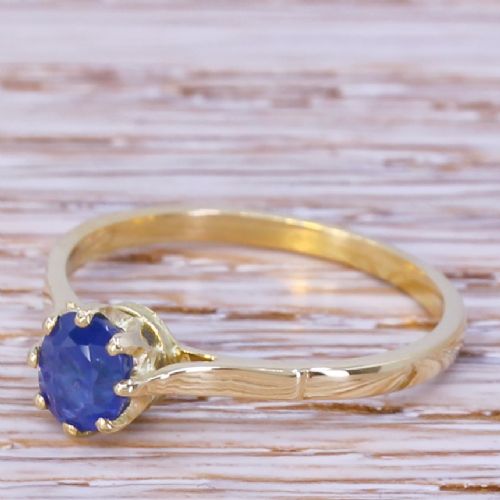
The distinction between standard examples and superior specimens lies in the saturation and clarity of the central gems, such as natural Burmese sapphires or solid opals. Fineness of handiwork around stone shoulders and the preservation of original claw settings also dictate distinction.
Material pairing influences overall success, particularly where contrasting diamonds highlight deep rubies or emeralds within balanced cluster formats. Hallmarks and clear maker provenance further elevate pieces that retain their structural integrity.
The Edwardian Gem Set Ring Glossary
- Cluster ring
- A design featuring a central gemstone surrounded by a tight border of smaller stones, usually diamonds. This arrangement maximises visual impact and light reflection.
- Gypsy ring
- A style where stones are flush-set directly into a thick, tapered gold band rather than held in raised claws. It offers a smooth profile popular in the late nineteenth century.
- Old cut
- A diamond facet style hand-cut prior to modern standardisation, characterised by a smaller table and deep pavilion. These stones exhibit a distinct, warm candlelit sparkle.
- Hallmark
- Official stamps pressed into precious metal indicating purity, origin assay office, and year of manufacture. British examples often provide precise dating.
- Trefoil cluster
- A three-stone configuration arranged in a clover leaf shape, frequently combining diamonds with coloured gems. It was a favoured motif in Victorian and Edwardian design.
Edwardian Gem Set Ring: Frequently Asked Questions
How do I care for an antique ring?
Clean these delicate settings gently using warm soapy water and a soft brush, avoiding harsh ultrasonic cleaners that can loosen fragile stones like opals or pearls.
Store each piece separately in a lined box to prevent scratching between harder diamonds and softer gold bands.
Can these rings be resized easily?
Most gold and platinum bands can be altered by a skilled jeweller, though patterned shoulders or full eternity gemstone channels require specialist attention.
Consult an expert who understands antique construction before attempting adjustments on older or adjustable shanks.
What defines the Edwardian aesthetic?
Edwardian jewellery relies on light, airy platinum work paired with yellow gold, favouring garlands, floral motifs, and high-contrast gemstone pairings.
The style prioritises feminine grace and intricate openwork metal structures over heavy Victorian solidity.
How are different periods identified?
Stylistic clues such as symmetrical platinum clusters point to the Edwardian era, while geometric lines suggest later Art Deco influences.
Internal hallmarks and traditional setting techniques also help narrow down the decade of creation.