



Edwardian Garden Artwork
Edwardian garden artwork captures domestic planting, country houses and rural scenes in watercolour and oil paint from the early twentieth century.
Edwardian Garden Artwork
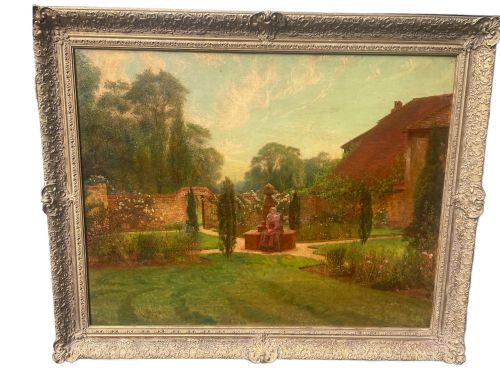
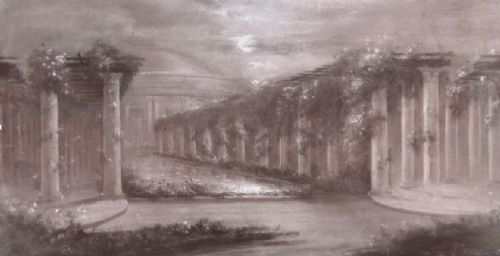
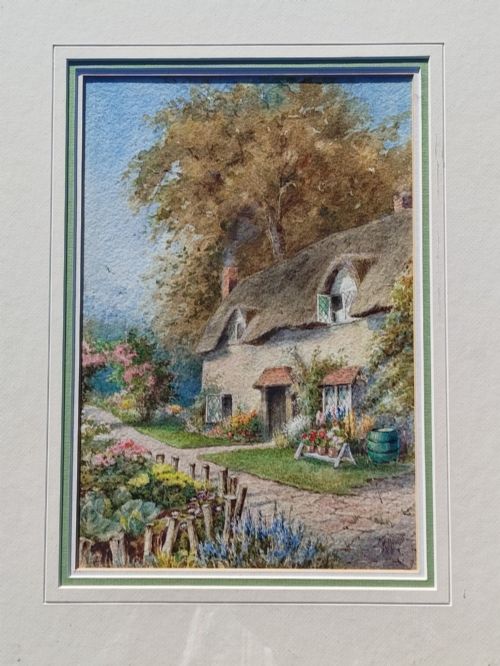
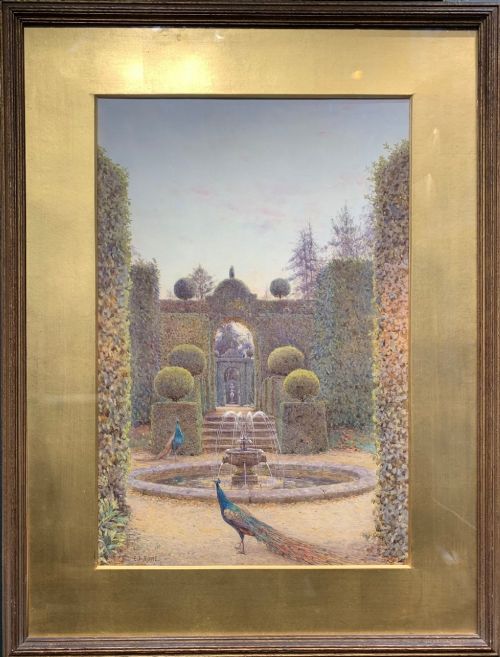
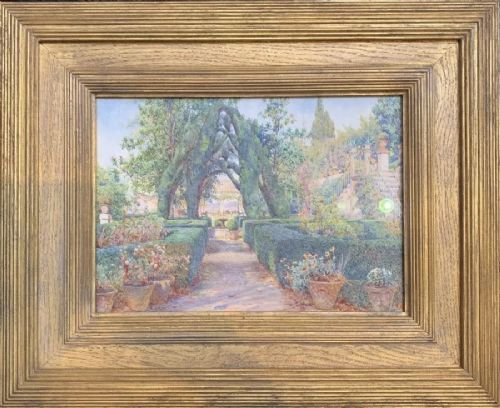
When someone searches for edwardian garden artwork, they find paintings depicting country house grounds, cottage floriculture and manicured lawns. These pieces range from delicate depictions of walled floral borders to broader landscape views of formal terraces and garden paths.
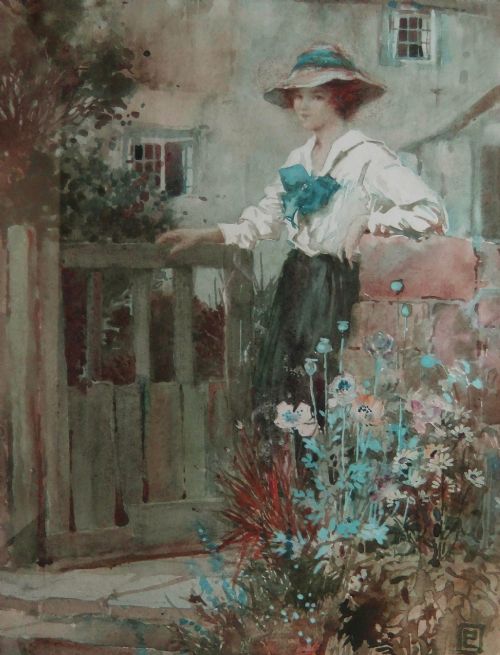
The version most commonly met on this page is the traditional British watercolour on paper, alongside a selection of oil paintings on canvas. Subjects frequently feature domestic pastoral life, including figures outside thatched cottages, children playing near flower beds and poultry feeding on lawns.
Originating predominantly from the early twentieth century, these works span Edwardian, late Victorian and British Impressionist sensibilities. They record a specific era of horticultural interest through tranquil pastoral scenes and detailed floral studies.
Materials and Technique
Artists relied primarily on watercolour pigment applied to paper, often mounted under glass within period frames, or used oil paint layered across canvas stretchers. Mixed media approaches also appear, combining charcoal and pigment to build texture in garden views.
Support materials such as wood stretchers and paper attached to canvas provide structural backing for these fragile mediums. The handling of watercolour balances transparent washes with controlled detail, while oil applications utilise thicker pigments to capture light upon foliage.
Edwardian Garden Artwork Retail Price Guide 2026
Typical asking prices for edwardian garden artwork among the pieces listed under this phrase on Sellingantiques today, from the lower quarter to the upper quarter. They describe what is for sale here now, not the wider market.
Hens, rabbits, and family dogs frequently wander into the garden compositions.
Assessing Quality
Quality rests upon the handling of light and the precision of botanical detail within the composition. Masterful works convey depth and atmosphere through confident pigment application, whereas lesser pieces rely on rigid outlines and flat colour washes.
The preservation of the paper or canvas surface dictates visual strength, with superior examples maintaining vibrant tones free from excessive fading or foxing. Strong framing and clear provenance further distinguish the finest examples in this field.
Ernest Arthur Rowe·Percy Lancaster·Theresa Stannard·Ernest Higgins Rigg·Kershaw Schofield·Lilian Stannard·Frank Moss Bennett·William Hatherell·David Woodlock·Thomas Nicholson Tyndale·Arthur Claude Strachan·Lester Sutcliffe·Henry John Sylvester Stannard·Benjamin D. Sigmund·Beatrice Parsons·George Frederick Nicholls·Fred Merriman·Arthur H Buckland·Minnie Smythe
The Edwardian Garden Artwork Glossary
- Watercolour
- A paint consisting of pigment suspended in a water-based solution, typically applied to paper. It allows for translucent layers that capture bright garden light.
- Canvas stretcher
- A wooden frame that holds a canvas taut during painting. It provides essential structural support for oil works.
- British Impressionism
- A painting style focusing on light and everyday subjects. Artists working in this manner emphasised natural outdoor illumination.
- Walled garden
- A traditional domestic garden enclosed by brick or stone walls. It serves as a frequent subject for botanical and pastoral painters.
- Provenance
- The documented history of ownership of an artwork. It helps establish authenticity and origin.
Edwardian Garden Artwork: Frequently Asked Questions
What subjects appear in these paintings?
These works depict domestic horticultural scenes, including cottage gardens, walled borders, and country house exteriors. Figures engaged in rural pastimes often inhabit the foreground alongside domestic animals.
Compositions frequently capture seasonal changes, from spring crocuses to summer floral displays and winter garden settings.
Which materials were used most often?
Watercolour pigment on paper forms the majority of these listings, accompanied by oil paintings on canvas. Some pieces incorporate mixed media elements such as charcoal.
Paper works usually require protective glass framing, while oil paintings are mounted on wooden stretchers.
How do I identify an Edwardian piece?
Dating relies on stylistic markers associated with British Impressionism and Edwardian pastoral scenes, alongside artist signatures and documented periods. Subjects reflect early twentieth-century rural life and horticulture.
Framing materials and paper types provide additional clues to the era of production.
How should I display these artworks?
Watercolours require placement away from direct sunlight to prevent the fading of delicate pigments on paper. Framing under glass protects the surface from atmospheric dust and moisture.
Oil paintings on canvas benefit from stable indoor humidity and gentle, indirect illumination to highlight the brushwork.