

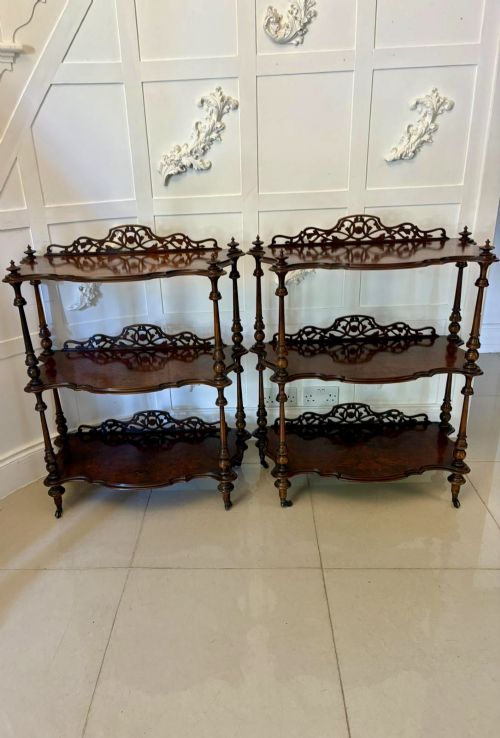
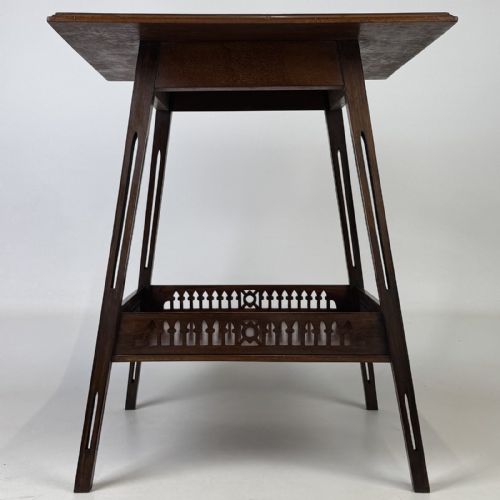
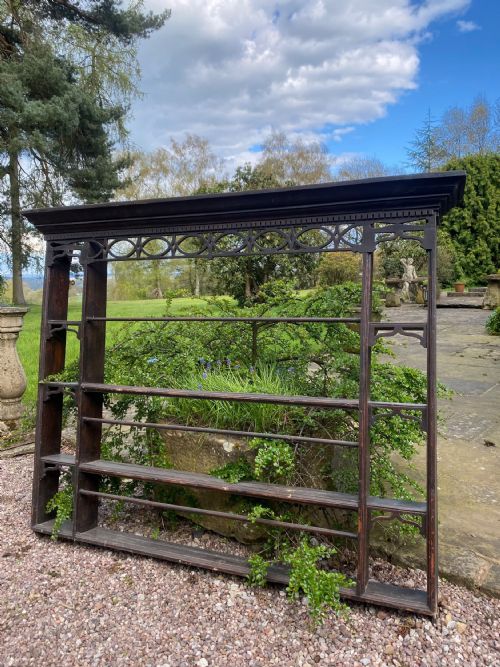


Edwardian Fretwork Shelf
An Edwardian fretwork shelf brings lightness and intricate pierced woodwork into a room, offering both display space and period charm.
Edwardian Fretwork Shelf
When you search for an Edwardian fretwork shelf, you encounter pieces that range from hanging wall shelves to floor-standing whatnots and side tables. The selection draws on broader periods including Victorian, Regency, and the eighteenth century, alongside Edwardian designs.
Forms include multi-tiered display shelves, waterfall bookcases, and corner units, often featuring pierced woodwork known as fret-cut or fretwork. These items served traditionally for displaying plates, books, and small ornaments.
Most pieces on show blend Edwardian manufacture with Victorian influences, utilising varied timber types and inlaid decoration to achieve a decorative domestic focal point.
Materials and construction methods
Makers utilised dense timbers such as mahogany, walnut, burr walnut, rosewood, and stained oak, frequently incorporating marquetry inlay and brass fittings. Fret-cut techniques allowed artisans to pierce the wood panels into intricate geometric or floral patterns.
Tiered structures and hanging wall brackets were assembled using traditional joinery to support multiple display levels, sometimes complemented by glass or mirrored backing panels.
Edwardian Fretwork Shelf Retail Price Guide 2026
Typical asking prices for edwardian fretwork shelf among the pieces listed under this phrase on Sellingantiques today, from the lower quarter to the upper quarter. They describe what is for sale here now, not the wider market.
Intricate fretwork panels were often dusted with specially shaped feather brushes sold specifically for ornate Victorian and Edwardian household woodwork.
Assessing quality in fretwork pieces
Quality rests in the crispness of the fret-cut piercing and the selection of timber veneers, such as figured burr walnut or rich mahogany. Finer examples display meticulous marquetry inlay and sound structural integrity across multiple tiers.
Simpler pieces rely on plain stained oak or straightforward mahogany frames without intricate inlay, reflecting different tiers of domestic expenditure during the period.
The Edwardian Fretwork Shelf Glossary
- Fretwork
- Ornamental woodwork pierced or cut into patterns with a fretsaw. This technique defines the pierced galleries and brackets of the shelves.
- Whatnot
- An open set of multi-tiered shelves used for displaying ornaments and books. These freestanding or hanging pieces became popular in the nineteenth century.
- Marquetry
- Decorative veneer work formed of small pieces of wood fitted together to create pictorial or geometric designs. It often embellishes the top surfaces and friezes.
- Burr walnut
- Timber taken from a walnut tree growth, showing intricate, swirling grain patterns. It was highly prized for high-end cabinet work.
- Waterfall bookcase
- A set of open shelves where each tier steps back from the one below. This creates a cascading silhouette.
Edwardian Fretwork Shelf: Frequently Asked Questions
What is an Edwardian fretwork shelf?
It is a decorative piece of wooden furniture featuring pierced or fret-cut panels designed for hanging on walls or standing on the floor.
These items provide tiered platforms specifically intended for displaying small decorative objects, plates, and books in a domestic setting.
How were hanging wall shelves used?
Hanging shelves were fixed to walls in parlours and drawing rooms to display prized ceramics, small volumes, and ornaments.
They maximised vertical space while adding a decorative architectural element to plain walls.
What is the difference between a whatnot and a shelf?
A whatnot is typically a multi-tiered freestanding or hanging display unit with several open platforms supported by slender columns or uprights.
A standard wall shelf often refers to a simpler single or double tier fixed directly to a wall surface.
How do I identify Edwardian styles?
Edwardian furniture often combines lighter timbers and refined proportions, drawing heavily on earlier Victorian and eighteenth-century design motifs.
Look for crisp fretwork, subtle inlay work, and polished walnut or mahogany surfaces characteristic of the period around nineteen hundred.