




Edwardian Floral Cluster Ring
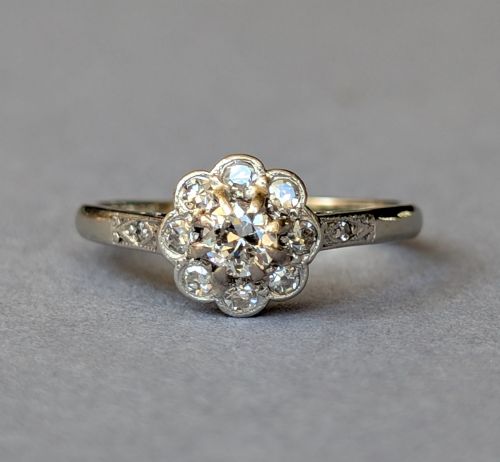
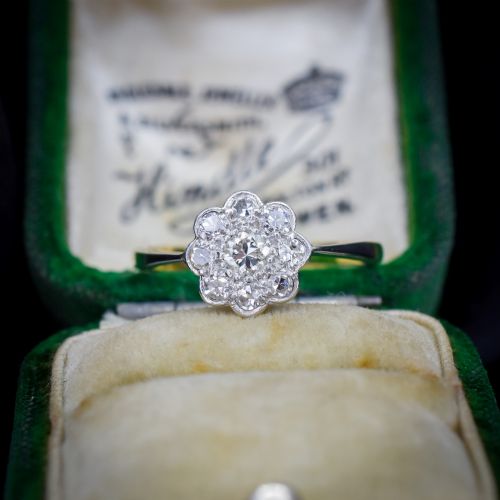
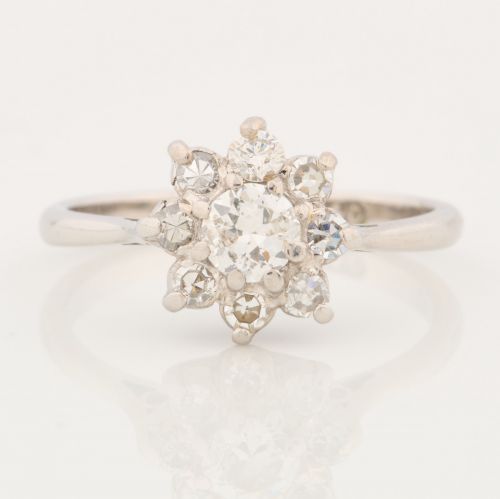
An edwardian floral cluster ring brings together central stones and surrounding gems to form a delicate botanical motif.
Edwardian Floral Cluster Ring
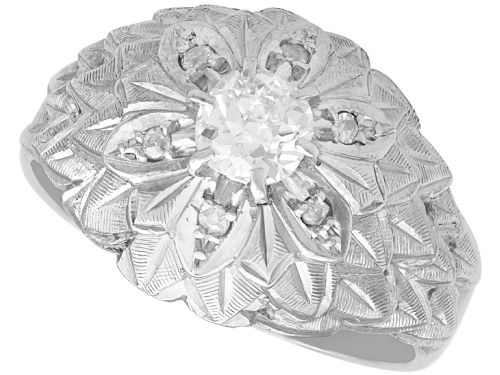
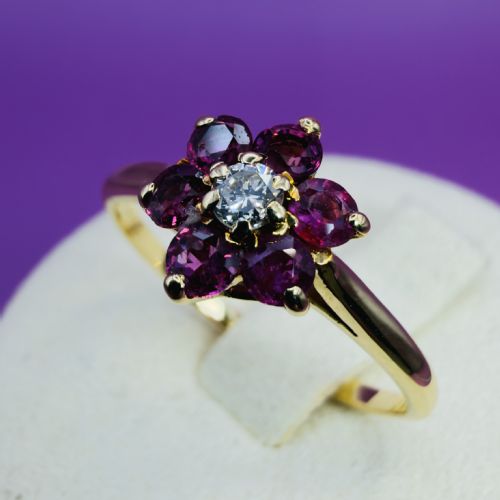
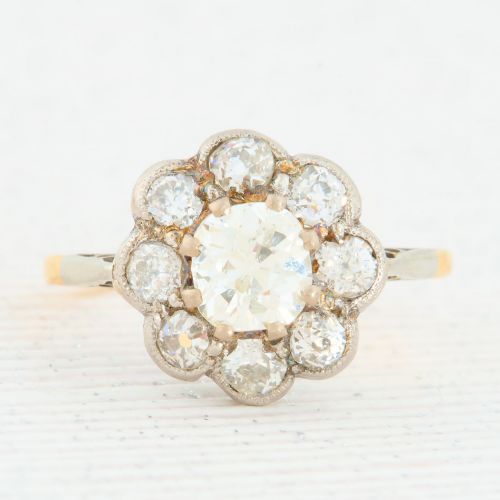
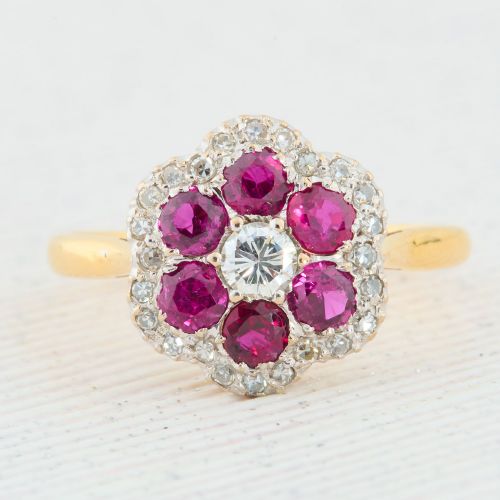
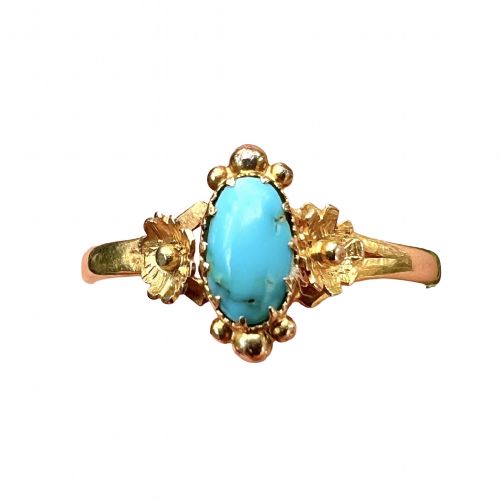
An edwardian floral cluster ring presents a central gem surrounded by smaller stones to form a blossom shape. This search phrase encompasses pieces spanning the Edwardian period, Victorian era, and later decades such as the nineteen-fifties and sixties.
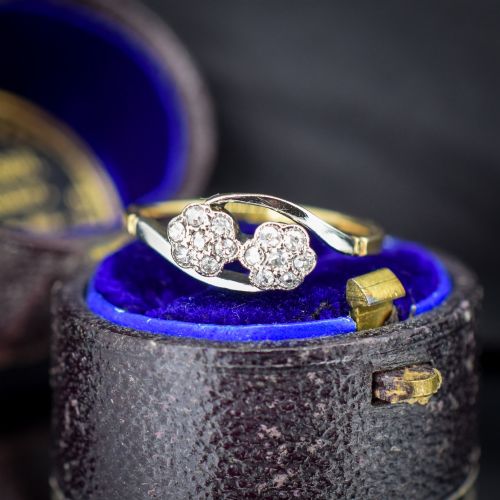
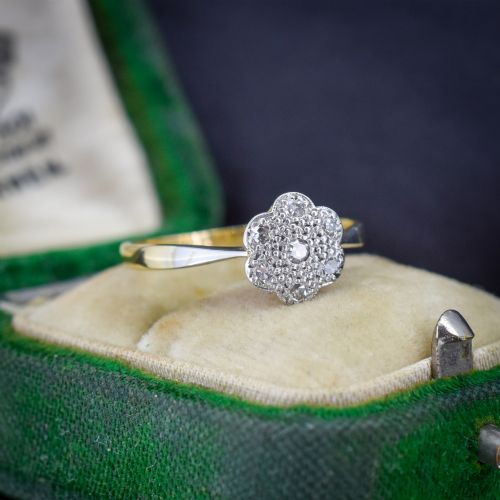
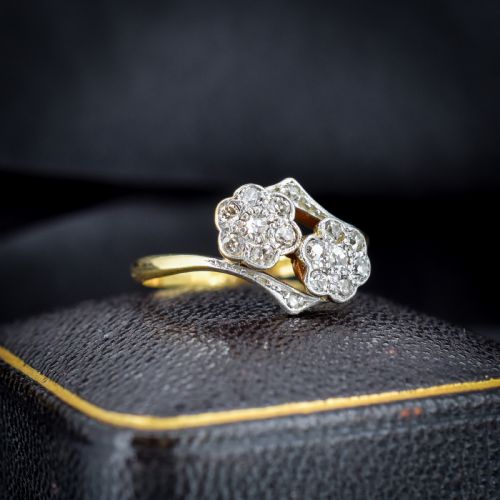
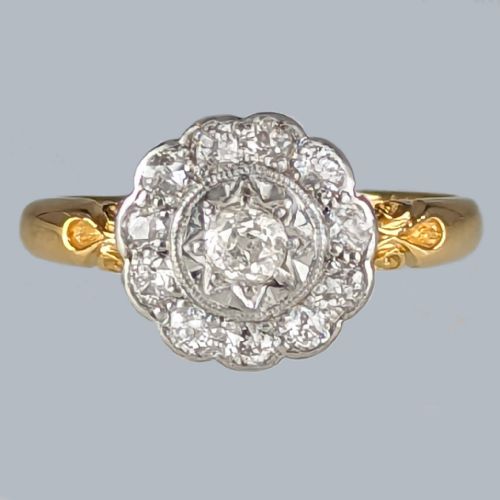
The version most commonly met on this page uses an eighteen-carat gold shank paired with platinum settings for the stones. These designs often feature old cut diamonds or coloured gems like ruby and turquoise arranged in daisy or flower motifs.
How they were made
Goldsmiths utilised eighteen-carat yellow and white gold alongside platinum to fabricate the bands and settings. Platinum integration allowed jewellers to create secure, fine claw and illusion settings that maximised the brilliance of old cut diamonds.
Stones were hand-set into floral configurations, sometimes incorporating double twist shanks or ornate gallery work beneath the cluster face.
Edwardian Floral Cluster Ring Retail Price Guide 2026
Typical asking prices for edwardian floral cluster ring among the pieces listed under this phrase on Sellingantiques today, from the lower quarter to the upper quarter. They describe what is for sale here now, not the wider market.
Some rings smuggle a tiny daisy onto your finger to keep summer alive through winter.
What varies in quality
The distinction between tiers rests on the proportion of the cluster and the finesse of the metalwork surrounding the stones. Finer examples display meticulous claw work in platinum and well-matched central and peripheral gems.
Weight and stone cut also dictate standing, with older old cut diamonds and natural rubies elevating the distinction of the piece.
The Edwardian Floral Cluster Ring Glossary
- Cluster ring
- A ring featuring a central gemstone encircled by a group of smaller stones. This arrangement creates a larger visual presence on the hand.
- Old cut
- A diamond facet style popular before modern brilliant cutting standards were established. These stones typically feature smaller tables and higher crowns.
- Daisy cluster
- A specific floral arrangement where round peripheral stones surround a single centre stone, resembling a daisy flower. It remains a staple of Edwardian and Victorian jewellery.
- Platinum
- A dense, durable white metal utilised in jewellery manufacturing. Its strength permits delicate setting work that securely holds small stones.
Edwardian Floral Cluster Ring: Frequently Asked Questions
How do I date an edwardian floral cluster ring?
Dating relies on hallmarks, metal combinations such as yellow gold shanks with platinum settings, and the cut of the stones. Old cut diamonds and specific gallery construction point toward the Edwardian and Victorian eras.
Later pieces from the mid-century adopt similar floral motifs but employ different manufacturing signatures and diamond cuts.
Were these rings used as engagement rings?
Many of these floral cluster designs served as engagement rings during the Edwardian and Victorian periods. The daisy motif symbolised affection and commitment.
Today, buyers continue to select them as distinctive engagement rings with historical character.
What metals are used in these rings?
The listings show combinations of eighteen-carat yellow gold, eighteen-carat white gold, and platinum. Platinum was frequently used on the face of the ring to securely hold white diamonds.
Gold forms the shank and body of the piece, appearing in both yellow and white varieties.
Can I wear an edwardian floral cluster ring daily?
Daily wear is possible with proper care, given the durability of gold and platinum settings. Consideration should be given to the height of the cluster and the security of older stone settings.
Consulting a jeweller for regular checks ensures the claws remain tight and secure.